
Dr. Wilhelm has performed implant dentistry for over 20 years, and has taken advanced courses, seminars, and hands-on training to provide his patients with dental implants using the latest technology and the very highest level of care. Patients often refer their friends and family members to us because of Dr. Wilhelm’s friendly communication style and most importantly for his smile-enhancing results.

Dental implants are the most stable and cost-effective solution when it comes to replacing missing teeth. But they also require specialized knowledge, expertise, instrumentation and equipment. Dr. Wilhelm is one of the few dentists in the state of Minnesota who can perform both the surgical placement and reconstructive phases of implants (placing the teeth themselves). This means you don’t have to see two or more doctors to complete your smile. In Dr Wilhelm’s office we use newly developed techniques and technology to make your visit easier, faster and more comfortable.

The following answers many of the questions our patients have about this procedure but please give Dr. Wilhelm a call at 651-227-2427 or contact us by email, if you would like to know more about the advantages of replacing missing teeth with dental implants.

What are implants?

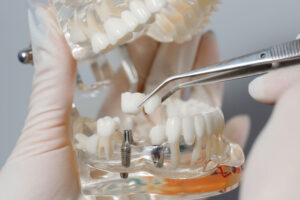
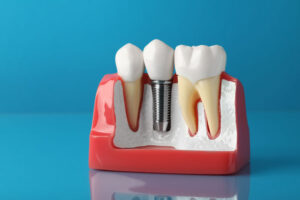
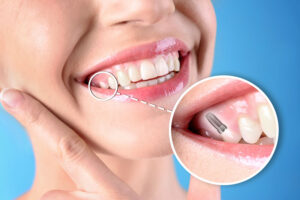
A dental implant is a man-made substitute that is created to replace a missing tooth’s roots. Implants are usually made of a space-age alloy or titanium and they come in various shapes and sizes to fit your individual needs. Most are cylinders placed into bone where your tooth was and allowed to heal undisturbed while bone heals around them, locking them in like an anchor. After a few months, the implants are used as a foundation for replacing the missing teeth. Prosthetic restorations, like porcelain crowns, bridge-work or dentures are attached to a post or abutment which is attached to the implant. So when you chew, the implant acts like the root of a tooth - it transmits force to the jaw and stimulates the bone. Implants are so comfortable you’ll soon forget you have them. Your body will think it’s your own, and so will you.

Am I a dental implant candidate?

If you are missing one or more teeth, dental implants are the perfect option for you. You may also be a candidate for dental implants if you have problems with existing crowns or bridges, or if you have loose dentures.

What are the benefits of dental implants?

First of all, you will be able to smile - a big, healthy, happy smile. And you will have a lot to smile about. Dental implants allow you to speak, eat, sing; everything you want to do with total confidence and self-assurance. United States denture wearers spend over $150 million a year on adhesives in an effort to hold their dentures in place. With implants, you don’t have to worry about loose dentures, an inconsistent fit, or other embarrassments such as unpleasant taste, bad breath or poor appearance. Dental implants are also not susceptible to dental decay (caries), root caries, or hot/cold sensitivity. And you can floss and brush as you do with your own teeth.

In addition to improving your self-esteem, dental implants also make a big difference in your overall physical health and appearance. As a result of losing one or more teeth, you inevitably lose mass in your jaw. This affects the overall skeletal structure of your face, which not only changes your profile, but also may result in thin lips, drooping muscles, jowls or witch’s chin appearance. Bone loss in the jaw affects the gums and ridges in your mouth, as well as the muscles and nerves in and around the mouth. These conditions, which are the inevitable consequence of tooth loss, are associated with a host of anatomic and clinical problems, ranging from increased tongue size, to looseness of remaining teeth, to loss of sensation, to severely painful conditions. These conditions may only be avoided through use of dental implants, because implants can halt and even reverse the bone loss that results from missing teeth.

How does the procedure work?

There are several steps to getting a dental implant, which we will explain here. However, the best way to learn more about this procedure and determine if implants will work well for you is to give Dr. Wilhelm a call at 651-227-2427 or contact us by email.

The first step requires the actual “implant”, a small grooved or threaded titanium post, to be planted into your jawbone. Another kind, one with a special base, can be attached on top of the jawbone, underneath your gum line. The thickness and type of bone at the implant’s location determines which style post should be used. Local anesthesia makes sure you are comfortable throughout this part of the procedure.

Your body immediately begins to “bond” with the titanium post, as if they were a natural part of your own body. This is a very important process and may take several months before the next step can begin. During this bonding process you can choose to wear a temporary denture.

Once the titanium implant is tightly in place, a wider post is attached to the titanium implant and your new tooth is attached to this second post with one of the world’s most secure space age adhesive. Bonding can literally last forever.

How do dental implants prevent bone loss?

Bone needs stimulation to maintain its form and density. That is why the astronauts lose bone mass while they are in space - their bones lack the stimulation that results from our everyday resistance to gravity. The bone in your jaw is constantly reinforced by the force applied by your teeth. It is as if implants “trick” the bone into thinking there is still a tooth present. By transmitting the natural forces of chewing to the jaw, implants increase bone density. Dental implants have been proven not only to stop bone loss, but in some cases actually reverse bone loss and restore the health of the jaw.

Can I still eat my favorite foods with implants?

Yes. Implants are remarkably strong, and remember - they stay put, unlike removable dentures. So you can eat and enjoy whatever you wish.

The maximum bite force of a traditional denture ranges from 5 to 50 pounds. Almost one-third of denture wearers are able to eat only soft or mashed foods, and 50 percent avoid many foods. 17 percent claim that they chew more effectively without dentures. By contrast, patients with dental implants may increase their bite force by 85 percent within two months of completing treatment, and by 300 percent after three years.

Are implant procedures painful?

In most cases these procedures produce very little, if any, discomfort. Your decision to use implants will help you to avoid pain and discomfort you may experience in the long term. As with any dental procedure, Dr. Wilhelm is equipped to provide you with appropriate pain relief treatment. For more information about the different sedation options Dr. Wilhelm provides, visit our sedation dentistry page.

What are Dr. Wilhelm’s patients saying about their dental implants?

“What impresses me most about Dr. Wilhelm and his staff is the high level of professionalism and compassion.”
Sue began seeing Dr. Wilhelm in 1995. Since then she has benefited from his “cutting edge technology and his endless search to find the best solutions for his patients.” In 1998 when she was faced with a failing bridge Dr. Wilhelm educated her about the wonders of dental implants. Since Sue works with people who strive to achieve the best cosmetically, she expected nothing less for herself. She turned to Dr. Wilhelm to restore her dynamic smile. “He is the best of the best and I’ve never been disappointed with the results!”

Sue L. - Cosmetic and Implant Dentistry Patient

“Dr. Wilhelm and his staff took the time to address my concerns and were very patient about answering all of my questions. The procedure and end result was everything Dr. Wilhelm told me it would be and more!”

Bernard W. - Cosmetic and Implant Dentistry Patient

“It’s the ONLY option for replacing missing teeth as far as I’m concerned! I would do it again!

Emilie -Dental Implant Patient