If you’re considering full-arch dental implants, you’ve likely come across the terms All-on-4 and All-on-X.
The main difference is that All-on-4 uses four implants for a fixed, cost-effective solution, while All-on-X lets your dentist place more implants to better fit your jaw and needs. This flexibility can mean improved stability and comfort, especially if you have more complex bone or bite issues.
Both options help restore your smile and function with strong, permanent teeth. But depending on your bone health, lifestyle, and budget, one may suit you better than the other.
Key Takeaways
- All-on-4 is a reliable method with four implants to support an entire arch.
- All-on-X offers personalized implant numbers for more stability and custom fit.
- Choosing the right option depends on your unique bone structure and needs.
What Are All-on-4 and All-on-X Dental Implants?
You can restore a full set of teeth using dental implants designed to support fixed, non-removable bridges.
These treatments replace all upper or lower teeth with a stable and strong solution that feels more natural than removable dentures.
Both All-on-4 and All-on-X involve placing implants in your jawbone to hold prosthetic teeth. The difference lies in how many implants are used and how they are positioned to fit your unique needs.
Definition and Basic Concepts
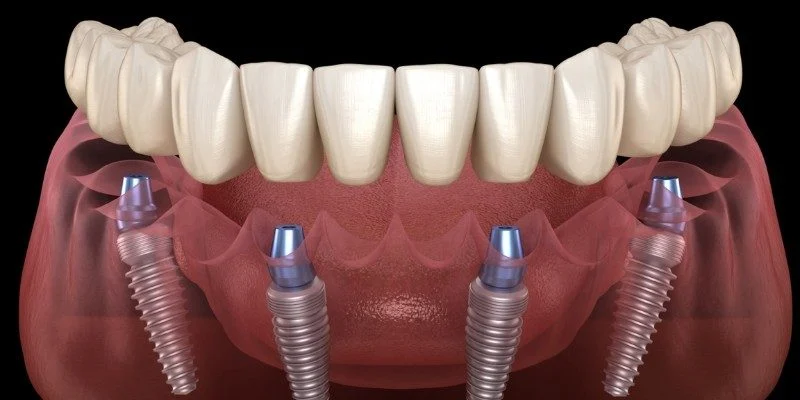
All-on-4 dental implants use exactly four implants to support a full arch of replacement teeth. Two implants are placed in the front, straight, and two at an angle in the back.
This angled placement avoids the need for bone grafts and maximizes support. All-on-X is a more flexible approach.
It uses between four and six implants, with the exact number based on your jawbone size and condition. This allows customization to your specific bone structure and bite needs, improving long-term stability.

Both systems offer a fixed set of teeth that stay in place, letting you eat, speak, and smile confidently.
You don’t remove these prosthetic teeth like traditional dentures.
Historical Evolution in Implant Dentistry
The All-on-4 technique was first developed to simplify full-arch tooth replacement using fewer implants. It became popular because it reduces surgery time and cost, while avoiding complicated bone grafts.
All-on-X evolved from this idea. It uses modern 3D imaging and guided surgery to tailor implant placement to each person’s anatomy.
This method improves outcomes for patients who have more bone loss or need a stronger fit.
Over time, advances like digital planning and new implant materials helped All-on-X become a preferred choice for complex cases needing more support.
Prosthetic Teeth and Restoration Options
Both All-on-4 and All-on-X attach a fixed bridge on top of the implants. This bridge looks and works like real teeth and is secured firmly to the implants.
Materials used for your new teeth can vary. Acrylic is common: in one survey, 78.2% of prosthodontists still use acrylic resin for full‑arch implant restorations.
Zirconia, however, is more durable: in long-term studies, zirconia prostheses showed a 5‑year survival rate of ~93.7%, compared to 83% for acrylic-based hybrids.
In terms of bone stability, a 6-year All‑on-4 trial showed significantly less marginal bone loss around ceramic/zirconia prostheses (1.43 mm) than acrylic ones (2.15 mm).
Your dentist will recommend the best option based on your bite strength, esthetic goals, and budget. These restorations restore your ability to chew, speak clearly, and maintain facial shape without removing teeth.
Key Differences Between All-on-4 and All-on-X
When deciding between All-on-4 and All-on-X implants, you’ll notice differences in how many implants are used, how customizable the treatment is, and how your jaw’s bone affects the process.
These factors all affect the support and durability of your new teeth.
Number and Placement of Implants
All-on-4 uses exactly four implants per arch. Two implants are placed straight in the front of your jaw, and two are angled toward the back.
This design helps avoid areas with poor bone and reduces the need for bone grafting. All-on-X lets you use more than four implants; usually between 4 and 6, sometimes more.
This means your dentist can place implants in spots that fit your jaw structure better. More implants can give extra support if you have bone loss or higher bite forces.
Customization and Flexibility
With All-on-4, the plan is more fixed. You get four implants, and the placement follows a standard pattern.
This makes the process simpler and often less expensive, but it offers less room for adjustment based on your unique jaw shape. All-on-X offers more flexibility.
Your dentist can decide the number and exact placement of implants based on your bone volume and needs. This tailored approach can be better if you have unusual bone shapes or need a stronger foundation for your teeth.
Bone Density and Bone Volume Considerations
Your jaw’s bone density and volume play big roles in which method works best for you. All-on-4 often suits those with moderate bone density and good bone in the front of the jaw.
The angled implants help avoid weaker areas in the back. If your bone is weaker or you’ve lost a lot of volume, All-on-X might be better.
Since it allows more implants, your dentist can find the strongest areas in your jaw to place them. This way, the implants will have a stronger hold even if your jawbone is less dense.
Load Distribution and Long-Term Stability
Load distribution means how the pressure from chewing spreads over your implants. With four implants in All-on-4, this load is balanced but limited by the number of support points.
All-on-X, having more implants, spreads the chewing forces over a larger area. This can reduce stress on each implant and improve long-term stability of your prosthetic teeth.
More implants often mean your restoration lasts longer and feels more secure.
Treatment Procedure and Technology
The process for both All-on-4 and All-on-X implants starts with careful planning and uses modern technology to improve accuracy.
You will experience a step-by-step procedure that includes an initial exam, precise implant placement, and healing with a temporary set of teeth.
Initial Consultation and Assessment
Your journey begins with a thorough dental exam. This includes digital scans and 3D imaging to check your jawbone quality and shape.
These images help your dentist see where implants can be placed. Your medical history and oral health play a big role.
The dentist at Imagine Your Smile,at Woodbury, MN will discuss your needs, like how many implants might be best, whether four or more in the All-on-X approach. This step ensures the treatment fits your bone structure and lifestyle.
You’ll also talk about costs, recovery time, and what to expect during surgery. Clear communication helps you feel ready and confident before moving on.
Implant Surgery and Guided Technology
During surgery, titanium posts are inserted into your jawbone to act as roots for your new teeth.
With the All-on-4 method, exactly four implants are placed, while All-on-X allows between four and six or more for better support. Advanced tools like surgical guides and digital planning software guide the implant placement.
This technology improves precision, reducing risks and speeding up recovery. Your dentist can often complete the implant surgery in one visit.
This full-arch guided surgery aims to place implants exactly where they will last and support your bite.
Temporary Prosthesis and Osseointegration
Right after surgery, you’ll be fitted with a temporary prosthesis. This gives you functional teeth while your jaw heals.
The implants undergo osseointegration, where the titanium posts bond with your jawbone over several months. This process is key to the strength and stability of your permanent teeth.
During this time, you’ll have follow-up visits to check healing and adjust the temporary teeth. Once fully integrated, your dentist will replace the temporary with a strong, custom prosthesis designed to last.
Benefits and Suitability for Different Patients
Choosing the right dental implant solution depends on factors like bone health, number of missing teeth, and your daily needs.
How well each option supports chewing, looks, and lasts varies.
Candidacy Criteria
If you have enough strong bone in the front part of your jaw, All-on-4 might be right for you. It uses exactly four implants in specific spots, so it works well if your bone is healthy enough to hold them.
All-on-X gives you more flexibility. It lets the dentist place between four and six implants or more.
If you have bone loss or need stronger support because you chew hard or want extra durability, this could be a better option. Your overall health, habits, and jaw shape also affect which implant works best.
A good exam and scan will help your dentist decide which fits your needs and bone condition.
Comparison of Outcomes
Both implant types improve eating, speech, and look natural, giving you back a confident smile. But the All-on-X option often offers better long-term stability by spreading the pressure over more implants.
The All-on-4 method is more cost-effective and tends to have quicker treatment times because it sticks to four implants. It’s been used successfully for many years.
Which one lasts longer and feels more secure depends mainly on how many implants your jaw can support and how well the healing goes.
Both reduce the risk of dentures slipping or causing discomfort.
Full-Mouth vs. Individual Tooth Loss Solutions
If you’ve lost all or almost all teeth on one arch, both options give full-mouth restoration, replacing an entire set of teeth with one fixed denture.
For missing just a few teeth, neither All-on-4 nor All-on-X might be ideal. You may need individual implants or bridges instead.
Both options are designed to replace full arches and improve your oral health by preventing bone loss. They also help avoid problems that come with loose or missing teeth, like jaw shrinkage or trouble chewing.
If your goal is a full-mouth solution that feels natural and stable, these implant systems are your best choices.
Cost, Longevity, and Maintenance
Choosing between All-on-4 and All-on-X implants means thinking about how much they cost, how long they last, and what kind of care they need.
These factors affect your comfort, budget, and how well your new teeth work in daily life.
Cost Factors and Considerations
All-on-4 implants usually cost less because they use only four implants per arch. You can expect to pay between $22,000 and $28,000 for one arch.
All-on-X uses more implants (sometimes six or more) and can run higher in price. Extra implants in All-on-X mean better support, which may be worth the added cost if you have severe bone loss.
Some insurance might cover part of the procedure, but coverage varies widely. Many clinics offer payment plans to help manage expenses.
Remember, costs include more than implants: new teeth, surgery, and follow-ups all add up. Ask your dentist for a detailed quote to avoid surprises.
Durability and Implant Failure Risks
Both All-on-4 and All-on-X implants can last for decades with good care.
Implant failure is rare but can happen due to poor bone health, infection, or improper healing. All-on-X tends to have a lower risk of failure because extra implants spread the chewing forces more evenly on your jawbone.
This can be especially important if your bone is weak or has shrunk over time. The success of your implants also depends on your overall health, habits like smoking, and following your dentist’s advice during recovery.
Keeping your jawbone healthy helps maintain a stable base for a natural-looking smile.
Oral Hygiene and Maintenance
Keeping your implants clean is key to avoiding problems like gum disease and implant failure. Both All-on-4 and All-on-X need regular brushing and flossing, plus professional cleanings.
Since All-on-4 has fewer implants, it can be a bit easier to clean around them. However, All-on-X provides extra support, which may require more careful attention to reach all implant areas.
You should also avoid habits that damage oral health, such as smoking or eating very hard foods. Regular dental check-ups help keep your removable dentures or fixed crowns in good shape.
Frequently Asked Questions
You’ll find key differences in how many implants are used and how customized the procedures can be. Costs vary based on the number of implants and materials.
Diet and recovery can change after the procedure, and insurance coverage is limited.
What are the differences between All-on-4 and other All-on-X dental implant systems?
All-on-4 always uses four implants placed in fixed positions. Other All-on-X systems use between four and six implants.
This gives more flexibility in implant placement based on your bone and jaw shape. All-on-X is more customizable for complex cases or bone loss.
What is the typical cost comparison between All-on-4 and All-on-6 dental implants?
All-on-4 usually costs less because it uses fewer implants and a simpler plan. All-on-6 can be more expensive due to extra implants and surgery time.
Costs also depend on materials, like acrylic or zirconia, and any added procedures.
Can patients expect a difference in the before and after results when choosing All-on-4 vs. All-on-X dental implants?
Both options deliver a fixed, full-arch smile that looks natural and works well. All-on-X may offer better stability for people with bone loss or unique jaw shapes.
Your final smile depends on the treatment plan and materials used.
Are there any specific dietary restrictions or limitations after getting All-on-4 dental implants?
You’ll need to avoid hard, sticky, or chewy foods for several weeks after surgery. Soft foods like soups, yogurt, and mashed potatoes are recommended during healing.
Over time, you can return to a normal diet but should avoid habits that stress your implants.
What are the common regrets or complaints patients have after All-on-4 procedures?
Some patients mention discomfort during healing, especially swelling or soreness. A few wish for more implant support if they had bone loss.
Others find they need more time to adjust to the feel of fixed bridges. Proper aftercare helps reduce issues.
Does Medicare provide coverage for any All-on-X dental implant procedures?
Medicare generally does not cover dental implants like All-on-X.
Some Medicare Advantage plans may offer limited dental benefits, but implants usually require separate dental insurance or out-of-pocket payment.