
Missing teeth can change more than just your smile. When you lose a tooth, the bone in your jaw starts to break down because it no longer gets the pressure it needs from chewing.
This bone loss can make your face look sunken or older than you actually are.
Dental implants work like natural tooth replacement by stimulating your jawbone, which helps maintain its strength and prevents the sagging or hollow appearance that often comes with tooth loss.
Unlike dentures that sit on top of your gums, dental implants integrate with your jawbone to provide lasting support for your facial structure.
The changes to your face from missing teeth happen slowly over time. Your cheeks may start to look flat, your lips might lose their natural fullness, and your jawline can lose its definition.
Understanding how dental implants help prevent jawbone loss can help you make the right choice for both your appearance and your long-term health.
Key Takeaways
- Dental implants prevent jawbone deterioration that causes facial sagging and an aged appearance
- Implants restore facial volume and definition in your cheeks, lips, and jawline better than traditional dentures
- The procedure offers both immediate aesthetic improvements and long-term health benefits for your jaw and face
Understanding the Link Between Tooth Loss and Facial Structure
When you lose teeth, your jawbone begins to change in ways that affect how your face looks. The bone that once supported your teeth starts to break down, leading to visible changes in your facial structure over time. Changes in the facial structure is one of the most common consequences of not replacing your missing teeth.
How Tooth Loss Alters Jawbone and Facial Aesthetics
Your teeth do more than help you chew food. They also keep your jawbone healthy and active through daily use.
When you lose a tooth, the jawbone in that area no longer gets the stimulation it needs. Your body sees this bone as unnecessary and begins to break it down. This process affects the support structure for your lips and cheeks.
The changes happen gradually over months and years. You might notice your cheeks look flatter or your lips appear thinner. The distance between your nose and chin can also become shorter, changing your facial proportions.
Front teeth provide internal support for your lips. Back teeth help maintain the fullness of your cheeks. When these teeth are missing, you lose that natural scaffolding that keeps your face looking full and youthful.
Bone Resorption and Its Visible Effects
Bone resorption is the medical term for how your body breaks down and absorbs bone tissue. This natural process speeds up after tooth loss.
Your jawbone relies on pressure from tooth roots during chewing to stay dense and strong. Without this stimulation, the bone gradually decreases in height and width. The rate of bone loss varies from person to person based on genetics, health, and how many teeth are missing.
The visible effects of bone resorption include:
- Sunken cheeks that create hollow areas in your face
- Deeper wrinkles and folds around your mouth
- A collapsed appearance in the lower third of your face
- Changes to your bite that affect jaw alignment
These changes can also raise your risk of losing more teeth because the supporting bone becomes weaker.
The Aging Process: Premature Changes from Missing Teeth
Missing teeth can make you look older than you actually are. The loss of bone and tissue support creates a sunken appearance that people typically associate with advanced age.
When bone resorption affects your facial structure, your face may develop premature aging signs. Your facial muscles begin to sag without the proper support underneath. This creates an aged look even if you’re relatively young.
The vertical dimension of your face can shrink as bone is lost. This means your chin moves closer to your nose, creating what many describe as a collapsed or shortened facial profile. Sagging cheeks and thin lips add to this prematurely aged appearance.
The good news is that these changes are not inevitable for everyone. The extent of facial changes depends on how many teeth you’ve lost, where they’re located, and how long they’ve been missing.
How Dental Implants Restore Face Shape and Jawline Definition
Dental implants work beneath the surface to rebuild the foundation that supports your entire facial structure. They preserve bone density, fill out hollow areas, and create the balanced appearance that makes your face look natural and youthful.
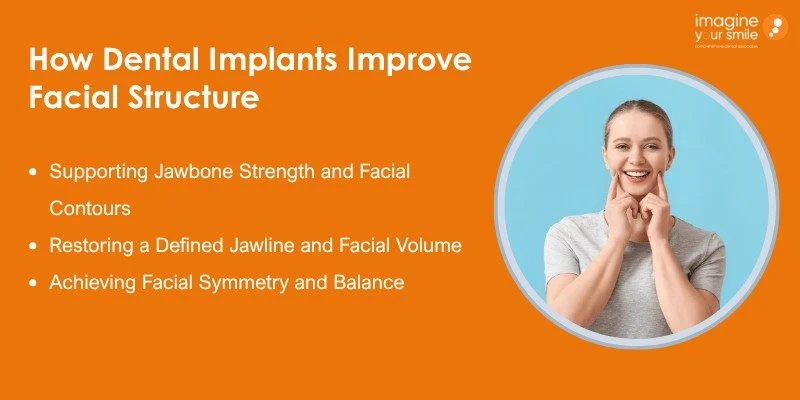
Supporting Jawbone Strength and Facial Contours
When you lose teeth, your jawbone begins to shrink because it no longer receives the pressure from chewing that keeps it strong. This process weakens the foundation that holds up your cheeks and lips.
Dental implants act like natural tooth roots by stimulating bone growth in your jaw. They transfer the forces from chewing function directly into the bone tissue. This keeps your jawbone active and healthy.
The result is maintained facial support that prevents the sunken look many people develop after tooth loss. Your facial contours stay full and properly shaped. The bone stays thick enough to support the soft tissues of your face, which keeps your natural face shape intact over time.
Restoring a Defined Jawline and Facial Volume
Missing teeth cause your face to lose volume in ways that age your appearance. Your cheeks may look hollow or flat. Your jawline can appear weak or saggy.
Dental implants fill the gaps and stabilize soft tissues, which lifts sagging areas of your face. They provide the structural foundation needed for proper facial volume. This brings back definition to your lower face.
Your jawline becomes stronger and more youthful-looking because the bone underneath maintains its original shape. The support from implants helps your cheeks look fuller and more natural.
Many people notice their lips and chin also appear better positioned after getting implants because the entire lower face gains the support it needs.
Achieving Facial Symmetry and Balance
An uneven bite from missing teeth can create noticeable asymmetry in your face. One side may look different from the other. Your jaw muscles might work harder on certain areas, causing imbalance.
Strategic implant placement can balance both sides of your jaw, enhancing facial harmony. Properly positioned implants ensure your bite distributes pressure evenly across your entire jaw. This prevents one side from deteriorating faster than the other.
The improved facial symmetry makes your whole appearance look more balanced and attractive. Your face functions the way it should, with equal support on both sides creating the harmonious look you had before tooth loss.
The Science Behind Dental Implants for Aesthetic Restoration
Dental implants work through a biological process that anchors artificial teeth directly into your jawbone, creating a stable foundation that mimics natural tooth roots.
This scientific approach addresses both the visible aspects of tooth replacement and the underlying bone structure that shapes your face.
Osseointegration: Stable Foundations for Your Smile
Osseointegration is the process where your jawbone fuses directly with the titanium implant post. This biological bonding happens over several months as bone cells grow around the metal surface.
Your body treats the titanium post like a natural tooth root. Bone tissue gradually attaches to the implant through advanced implant materials and design that promote stability and compatibility.
The osseointegration process typically takes three to six months to complete. During this time, your healthy jawbone creates a permanent connection that can last for decades with proper care.
This fusion is what makes dental implants different from dentures or bridges. The direct bone connection provides the strength needed to chew normally and maintains the stimulation your jawbone needs to stay healthy.
Key Components: Titanium Posts, Abutment, and Crowns
A dental implant system consists of three main parts that work together. The titanium post serves as an artificial tooth root that goes into your jawbone during implant placement.
The abutment connects to the top of the titanium post after osseointegration completes. This connector piece sits at or slightly above your gum line and creates a secure attachment point for the visible tooth replacement.
The crown is the final component that looks like your natural tooth. It attaches to the abutment and restores both function and appearance to your smile.
The three layers include:
- Titanium post: Embedded in jawbone (8-18mm length)
- Abutment: Connects post to crown
- Crown: Visible tooth replacement made from porcelain or ceramic
Each component plays a specific role in creating a restoration that blends seamlessly with your existing teeth.
Jawbone Preservation: Preventing Bone Loss and Facial Collapse
Your teeth do more than help you chew—they stimulate your jawbone through daily activities. When you lose teeth, your jawbone no longer receives this stimulation and begins to shrink through bone resorption.
Dental implants stop this process by transferring chewing forces directly into your jawbone. This maintains jawbone health the same way natural tooth roots do.
Without this stimulation, your jawbone can lose up to 25% of its width in the first year after tooth loss. This bone resorption changes your facial structure over time, leading to a sunken appearance around your mouth and chin.
Maintaining jawbone integrity through implants preserves your natural facial contours. Your cheeks, lips, and jawline maintain their proper support and position, preventing the aged look that often comes with missing teeth.
Comparing Dental Implants and Traditional Dentures for Facial Appearance
When you’re deciding how to replace missing teeth, understanding how each option affects your face is important. Dental implants and traditional dentures both restore your smile, but they support your facial structure in very different ways.
Facial Support Differences: Implants vs. Dentures
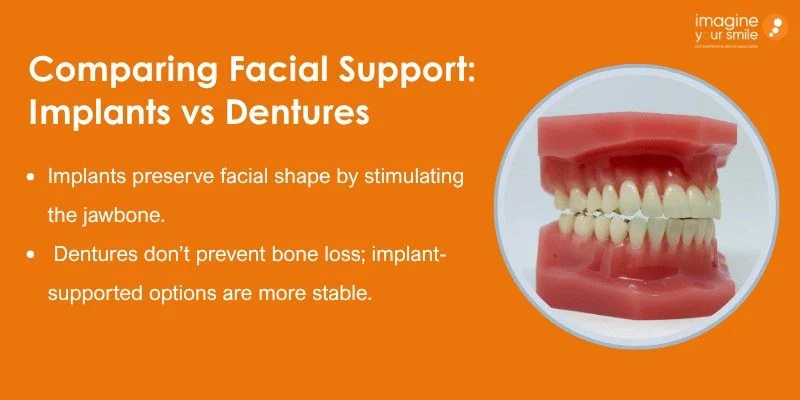
Dental implants provide facial support by anchoring directly into your jawbone, just like natural tooth roots. When you get implants, they stimulate the bone and keep it strong and healthy. This means your face keeps its natural shape and contours over time.
Traditional dentures sit on top of your gums without connecting to the bone below. While they help you chew and speak, they don’t stop bone loss in your jaw. Implant-supported dentures offer better stability than regular dentures because they attach to implants in your jawbone.
Your facial appearance depends heavily on the bone structure underneath your skin. Implants maintain this structure by giving your jawbone the stimulation it needs. Dentures can’t provide this benefit, which leads to changes in your face over time.
Risks of Dentures: Sunken Appearance and Sagging Cheeks
When you wear traditional dentures, your jawbone gradually shrinks because it doesn’t receive stimulation from tooth roots. This bone loss causes a sunken appearance in your lower face. Your cheeks may start to sag inward, making you look older than you are.
The lack of bone support affects your entire facial structure. Your lips may appear thinner and your chin can start to protrude forward. These changes happen slowly but become more noticeable as the years pass.
You might also notice wrinkles forming around your mouth as the bone deteriorates. The distance between your nose and chin gets shorter, creating that collapsed look.
Traditional dentures can lose their fit as your jawbone continues to change shape, making sagging cheeks and facial changes worse over time.
Benefits Beyond Aesthetics: Confidence, Oral Health, and Long-Term Value
Dental implants deliver meaningful improvements that extend well beyond how your smile looks. They strengthen your psychological well-being, restore proper mouth function, and provide lasting value for your oral health.
Boosting Confidence and Self-Esteem
Missing teeth can make you feel self-conscious about smiling, speaking, or eating in social settings. Dental implants give you back the natural appearance and feel of real teeth, which helps you engage more comfortably with others.
When you restore your smile with dental implants, you often feel more willing to smile openly and participate in conversations. This boost in confidence affects multiple areas of your life, from work presentations to social gatherings.
The psychological benefits run deeper than surface-level improvements. Many people report feeling more comfortable during meals and speaking without worrying about gaps or instability.
This sense of normalcy positively influences your mental health and social interactions, making daily life feel easier and more enjoyable.
Improving Bite Alignment and Chewing Function
Your bite alignment depends on having a complete set of teeth. When teeth are missing, the remaining teeth can shift out of position, creating problems with how your upper and lower jaws meet.
Dental implants prevent this shifting by filling the gaps and maintaining proper spacing. This protection keeps your bite aligned correctly and reduces your risk of developing jaw pain or uneven tooth wear.
Restoring full chewing power is another major functional benefit. You can eat a wider variety of nutritious foods without restriction, which supports your overall nutritional health. The ability to chew properly also aids digestion and helps you maintain cardiovascular and metabolic wellness.
Investing in Long-Term Oral Health and Youthful Looks
Dental implants represent a valuable long-term investment because they can last a lifetime with proper care. Unlike dentures or bridges that need replacement every 5 to 15 years, implants provide a permanent solution.
The titanium posts fuse with your jawbone and stimulate bone growth, preventing the bone loss that typically follows tooth extraction. This preservation maintains your facial structure and prevents the sunken appearance that can develop when jawbone deteriorates.
By maintaining bone density, implants help you keep a youthful facial contour and avoid sagging cheeks or a collapsed jawline.
This combination of functional restoration and facial support makes implants more cost-effective over time compared to other tooth replacement options that require ongoing maintenance and replacement.
Who Can Benefit and What to Expect From the Dental Implant Process
Getting dental implants involves multiple stages over several months, but the process is straightforward when you understand each step. Your success depends on having adequate jawbone density, healthy gums, and realistic expectations about the timeline and healing process.
Ideal Candidates and Bone Grafting Options

You might be a good candidate for dental implants if you have one or more missing teeth and your jawbone has reached full growth. You need healthy mouth tissues and enough bone to secure the implants.
Your jawbone must be thick enough to support the implant. If your bone is too soft or thin, you’ll need bone grafting before implant placement. This creates a solid base that can handle the pressure from chewing function.
Bone grafting options include:
- Natural bone from another location in your body
- Synthetic bone-substitute materials
- Bone from a human donor
- Bone from an animal source
The transplanted bone takes several months to grow enough new bone to support your implant. Sometimes minor bone grafting happens during the same procedure as implant placement. Your jawbone condition determines which approach works best for you.
You should not smoke tobacco, as smoking increases the risk of implant failure. You also need to commit several months to the full process.
The Implant Placement Journey: Step-by-Step
The dental implant procedure happens in stages with healing time between each step. Your surgeon makes a cut in your gum and drills holes into the bone where the metal post goes.
The implant sits deep in your jawbone like a natural tooth root. Your bone then grows into and fuses with the implant surface through a process called osseointegration. This takes several months but creates a solid foundation.
After osseointegration completes, your surgeon places the abutment—the piece that connects the implant to your crown. Your gums heal for at least two weeks before the final crown attaches. You can choose removable or fixed artificial teeth depending on your needs.
You may have swelling, bruising, pain, or minor bleeding after surgery. You’ll need to eat soft foods while each surgical site heals. Most implants succeed when you follow care instructions.
Expected Results and Setting Realistic Expectations
Most dental implants are successful and provide a long-lasting solution that looks and functions like natural teeth. Your new teeth restore chewing function so you can eat normally again.
The entire process from start to finish takes many months. Much of this time involves waiting for bone growth and healing between procedures. You cannot rush the timeline if you want your implants to succeed.
Your confidence improves when your smile looks natural again. The implants prevent bone loss that occurs with missing teeth, which helps maintain your facial structure and jawline.
You need realistic expectations about the recovery time and multiple appointments. Some bone may fail to fuse properly with the implant, especially if you smoke. If this happens, your surgeon removes the implant, cleans the bone, and you can try again in about three months.
With proper care and regular dental visits, your implants can last a lifetime. You must keep your implants and gum tissue clean just like natural teeth.
Frequently Asked Questions
Dental implants protect your jawbone from shrinking and help maintain the natural volume in your cheeks and lower face. They work by acting like natural tooth roots to keep your facial structure stable over time.
What benefits do dental implants offer for facial structure support?
Dental implants provide support by stimulating your jawbone just like natural teeth do. When you lose teeth, the bone underneath starts to shrink because it’s no longer being used. This process is called bone resorption.
Implants prevent bone loss by keeping your jawbone active and healthy. The titanium post placed in your jaw acts as an artificial root that encourages bone growth around it.
This ongoing stimulation helps maintain your facial shape. Your cheeks stay fuller and your jawline keeps its definition instead of becoming weak or sunken.
How do dental implants prevent changes in facial appearance?
When teeth go missing, your face can start to look older than it actually is. Your cheeks may sink in and your lips can appear thinner.
Dental implants preserve your facial structure by replacing both the tooth and its root. This keeps your bone strong enough to support the muscles and soft tissue in your face.
Without this support, your face can develop a collapsed or sagging appearance. The implants hold everything in place so you maintain your natural look.
Can getting dental implants lead to a more youthful facial contour?
Yes, dental implants can help you look younger by restoring volume to your face. Missing teeth cause facial aging because they lead to bone loss and sagging skin.
Implants rebuild the foundation that supports your facial features. Many people notice their face looks fuller and more balanced after treatment.
Your lips gain better support and your cheeks regain their natural contour. This happens because the implants maintain the bone structure that keeps your face looking vibrant.
In what way do dental implants enhance your cheekbones and facial symmetry?
Dental implants help restore volume in your cheeks by preventing the hollow look that comes with tooth loss. The bone they preserve provides a solid base for your soft tissue.
When you’re missing teeth on one side of your mouth, it can create an unbalanced appearance. Implants placed strategically help even out your facial features by ensuring both sides of your jaw are properly aligned.
Your cheekbones appear more defined when the underlying bone structure stays strong. This natural support eliminates the flat or sunken appearance that often develops with missing teeth.
Does the placement of dental implants impact the definition of your jaw?
The placement of dental implants directly affects how defined your jawline looks. When implants are positioned correctly, they stimulate bone growth that keeps your jaw strong and well-shaped.
Implants help maintain your natural facial shape by preventing the loss of bone that makes your jaw look weak or receded. Without teeth, your jawbone can shrink and change the entire lower portion of your face.
Proper implant placement also improves your bite alignment. This reduces stress on your jaw joints and helps both sides of your face work evenly, which contributes to better symmetry.
How long after getting dental implants might I notice an improvement in my facial aesthetics?
You may notice some changes right away once your temporary teeth are placed. However, the full benefits develop gradually as your implants heal and fuse with your jawbone.
This healing process typically takes three to six months. During this time, the implant stimulates your bone and helps it grow stronger around the post.
The most noticeable improvements in your facial appearance usually become visible after your permanent teeth are attached. Many patients say they look and feel more like themselves once the complete restoration is finished.