
If you have missing or damaged teeth, you might wonder if dental implants are the right choice for you. Dental implants are a strong and lasting option that can bring back your smile, help you chew better, and improve your overall oral health.
You may need dental implants if you experience problems like missing teeth, loose dentures, chronic pain, or difficulty chewing and speaking. These signs often mean your teeth or jawbone need support that implants can provide.
Knowing these signs can help you decide when to see a dentist about dental implants. Paying attention to these warning signs early can save you from more serious dental issues later on.
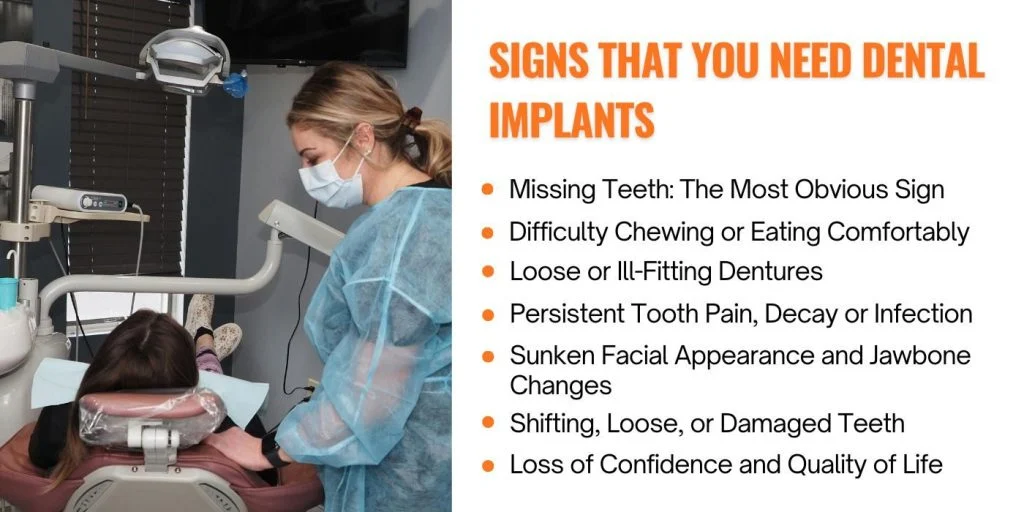
8 Signs That You Need Dental Implants
- Missing Teeth: The Most Obvious Sign
- Difficulty Chewing or Eating Comfortably
- Loose or Ill-Fitting Dentures: When Replacement Is Needed
- Persistent Tooth Pain, Decay or Infection
- Sunken Facial Appearance and Jawbone Changes
- Shifting, Loose, or Damaged Teeth
- Loss of Confidence and Quality of Life
- Other Treatment Limitations and Considerations
1. Missing Teeth: The Most Obvious Sign
When you have one or more missing teeth, it doesn’t just change how you look. It also affects how you chew, speak, and the health of your mouth. Missing teeth can cause problems that grow worse over time if left untreated. There are strong, lasting options that can help you replace those teeth and protect your smile.
Consequences of Untreated Tooth Loss
Missing teeth can lead to several dental issues. When teeth are gone, nearby teeth may shift into the empty space. This can cause your bite to become uneven and make chewing harder.
Your jawbone also needs stimulation from tooth roots to stay healthy. Without this, bone loss can happen where the teeth are missing. This can change the shape of your face and cause a sunken look.
Missing teeth also make it easier for other teeth to become loose or damaged. You might notice more jaw pain or feel discomfort while eating. Leaving tooth loss untreated could affect your confidence, and oral health.
Dental Implants as a Permanent Tooth Replacement
Dental implants act like natural tooth roots. They are placed in your jawbone with a minor surgery, creating a stable base for artificial teeth. Unlike dentures or bridges, implants don’t move or slip.
Implants help keep your jawbone strong because they provide the stimulation bone needs. They also look and feel like real teeth, making it easier to eat and speak normally.
Because implants become part of your bone, they can last many years with proper care. This makes them a reliable and permanent option for replacing missing teeth and restoring your smile.
Schedule your dental implant consultation with Imagine Your Smile in Woodbury, MN and discover a lasting solution for missing teeth.

2. Difficulty Chewing or Eating Comfortably
If you find that eating is becoming a struggle, it might be due to problems with your teeth or dental appliances. This can affect more than just meals—it can also have a bigger impact on your overall health and enjoyment of food.
Pain or Discomfort While Eating
When your teeth are damaged or missing, chewing can cause pain or discomfort. You might avoid certain foods because they are too hard to chew or cause sharp pains. This could be from broken teeth, loose dentures, or weak spots in your mouth.
Dental implants are designed to act like natural teeth. They attach securely to your jawbone, so you don’t have to worry about pain when biting down. This helps you eat without irritation or soreness, making every meal more comfortable.
Nutritional Impact and Bite Force
Difficulty chewing often means you end up eating soft or less healthy foods. Over time, this can reduce the nutrients your body gets, affecting your overall well-being. Missing teeth or poor dental support can lower your bite force, making it hard to break down tougher foods.
Dental implants restore your bite force close to natural levels. This allows you to eat a wider variety of foods, including fruits, vegetables, and proteins that might have been too difficult before. Strong, stable teeth improve your oral health and help maintain good nutrition and quality of life.
3. Loose or Ill-Fitting Dentures: When Replacement Is Needed
If your dentures slip or cause discomfort, it might be time to think about a replacement. Ill-fitting dentures can lead to sore spots, trouble eating, and even affect your speech.
Problems with Traditional Dentures
Traditional dentures rely on suction and the fit against your gums to stay in place. Over time, your mouth changes shape, which can cause dentures to become loose or shift when you talk, eat, or laugh.
This slipping can create sore spots and irritate your gums. You might find it harder to chew food properly, leading to changes in your diet. Dentures that don’t fit well also make it harder to speak clearly.
Constant slipping can make you feel self-conscious or frustrated. Getting adjustments or a new set of dentures can help, but often the changes in your mouth mean dentures won’t fit perfectly for long.
Implant-Supported Dentures for Stability
Implant-supported dentures attach to small implants fixed in your jawbone, giving you better grip and stability. This means your dentures won’t slip or move like traditional ones can.
These implants also help keep the jawbone strong, unlike regular dentures, which can sometimes lead to bone loss over time. With implants, your jaw stays healthier and your dentures feel more natural.
You’ll likely find implant-supported dentures more comfortable. They improve your ability to chew and speak, reducing irritation and the need for frequent denture adjustments. They do cost more but offer a secure, long-term solution.
Contact Imagine Your Smile today to learn how implant-supported dentures can restore your confidence and transform your daily life.
4. Persistent Tooth Pain, Decay or Infection
You may experience ongoing tooth pain caused by decay or infections that do not improve with regular treatments. Sometimes, the damage is severe enough that replacing the tooth becomes the best option. This section explains what to watch for and when implants might be needed.
Chronic Toothache and Root Canal Failures
If you have a toothache that lasts for days or weeks, it could mean the infection or decay has reached the tooth’s nerves. Root canals are often used to save such teeth by removing the infection inside.
But sometimes, root canals don’t work or the tooth becomes damaged beyond repair. This can cause persistent pain or sensitivity. You might feel pain when biting or notice swelling near the tooth.
If your pain continues despite treatment, your dentist may recommend removing the tooth. Leaving a painful tooth untreated can lead to more serious infections.
When Extraction and Implants Are Necessary
When a tooth is severely damaged or infected, extraction may be the only choice. In these cases, dental implants can replace the missing tooth.
Implants are strong and fit into your jawbone, acting like natural tooth roots. They prevent bone loss and keep your jaw healthy. Implants also stop nearby teeth from shifting out of place.
Choosing implants after extraction helps restore your smile and lets you chew and speak normally. Your dentist will guide you if implants are the right solution for your tooth pain and damage.
5. Sunken Facial Appearance and Jawbone Changes
Missing teeth can cause changes in your jawbone that affect how your face looks. When the jawbone weakens or shrinks, your face may look sunken or aged. These changes can affect your appearance and make future dental work harder.
Causes and Impact of Bone Loss
Your jawbone needs tooth roots to stay strong. When teeth are missing, the bone no longer gets the stimulation it needs. This causes jawbone deterioration, also called bone loss.
Without this support, the jawbone starts to shrink. Over time, this can lead to a sunken facial appearance. You might notice thinner lips, wrinkles around your mouth, or a collapsed chin.
Bone loss not only changes how you look but can also affect how your dentures fit. This may make eating and speaking harder. Sometimes, your dentist may recommend bone grafting to rebuild lost bone if implants aren’t immediately possible.
How Implants Restore Facial Structure
Dental implants act like natural tooth roots. They go into your jawbone and provide the stimulation needed to keep the bone healthy.
By supporting the jawbone, implants stop bone loss and help your face keep its shape. This prevents the sunken or aged look that can happen after tooth loss.
Implants also support your facial muscles, which helps maintain a more youthful appearance. They give you a stronger jaw and better chewing ability, improving both how you look and function.
Schedule your bone grafting consultation with Imagine Your Smile in Woodbury, MN to rebuild your foundation for a healthy, lasting smile.
6. Shifting, Loose, or Damaged Teeth
When your teeth begin to move, feel loose, or are damaged, it can create discomfort and affect your daily life. These issues are signs that your dental health needs attention to avoid jaw pain, further tooth loss, and lowered self-esteem.
Signs of Instability or Movement
If you notice any of your teeth feeling loose or changing position, this is a sign of instability. Teeth should feel firm in your mouth. Movement can mean advanced gum disease or bone loss around the roots.
You might also feel discomfort when chewing or notice spaces forming between your teeth. These changes can lead to jaw pain as your bite shifts. A damaged tooth, such as one with cracks or deep decay, often causes pain and may not heal with simple treatments.
Pay attention if your teeth are becoming sensitive or you start avoiding certain foods. These are important red flags to see a dentist soon.
How Dental Implants Prevent Further Issues
Dental implants replace the tooth root and crown, which helps keep your jawbone healthy. Unlike bridges or dentures, implants stop the bone loss that causes teeth to become loose or shift.
By securing the jawbone, implants reduce the risk of jaw pain caused by changes in your bite. They support your facial structure, helping you avoid a sunken look that can lower your self-esteem.
Once you have implants, your bite becomes stable again. This helps protect nearby natural teeth from moving or becoming damaged. Implants also restore your ability to chew without discomfort, improving your overall dental health and confidence.
7. Loss of Confidence and Quality of Life
Missing teeth can affect much more than your mouth. They can change how you feel about yourself and make daily activities harder. This can affect your confidence and overall happiness in many ways.
Psychological Impact of Missing Teeth
When you lose teeth, you might start to feel self-conscious about your smile. You may avoid social situations or hesitate to speak and laugh. This can lower your confidence and make you feel less outgoing.
Missing teeth can also affect your self-esteem. You might worry that others judge you or notice the gaps. These feelings can affect your mood and make you feel less positive about yourself.
The changes in your confidence can impact your quality of life. You might skip events or avoid certain foods because chewing is difficult. These small changes can add up and limit your daily enjoyment.
Restoring Smile and Self-Esteem with Implants
Dental implants can help bring back your natural smile, restoring your confidence. Because they look and feel like real teeth, you are less likely to feel awkward or shy about your appearance.
With implants, you can speak, eat, and smile comfortably again. This helps boost your self-esteem and encourages you to be more social and active. Feeling good about your smile often leads to a better quality of life.
Choosing implants also helps you avoid the worry of loose dentures or visible gaps. You get a stable, reliable solution that feels secure and natural. This peace of mind lets you focus on enjoying life without constant dental concerns.
8. Other Treatment Limitations and Considerations
Choosing the right tooth replacement is important for your long-term oral health. Different treatments have their pros and cons, and understanding these can help you make a better decision. You also need to think about how much care and maintenance each option requires.
Dental Bridges Versus Implants
Dental bridges use the teeth next to a gap for support, which means those healthy teeth need to be filed down. This process is permanent and can weaken those teeth over time.
Bridges don’t replace the tooth root, so the jawbone beneath the missing tooth can still shrink. This can affect your facial structure and the fit of the bridge eventually.
Implants, on the other hand, replace both the tooth and root. They help keep your jawbone healthy and stop bone loss. While the implant procedure can take longer and sometimes needs surgery, it usually lasts much longer than a bridge.
Long-Term Oral Hygiene and Maintenance
With implants, you still need to brush and floss like natural teeth to avoid gum disease. Implants can fail if you don’t keep the surrounding gums clean.
Dental bridges require careful cleaning under the false tooth part to stop plaque buildup. You may need special floss or tools to clean there properly.
Regular dental visits are important for both implants and bridges. Your dentist will check for any problems early and help keep your smile in good shape.
Frequently Asked Questions
Knowing if dental implants are right for you involves looking at your oral health, overall health, and specific symptoms. There are clear signs and conditions that help decide when an implant makes sense.
How do you know if you’re a good candidate for a dental implant?
You’re usually a good candidate if you have healthy gums and enough bone to support the implant. Your general health matters too, as some conditions or habits can affect healing.
What signs indicate a dental implant might be necessary?
Missing teeth, difficulty chewing, or shifting teeth nearby are signs to watch for. Bone loss or changes in your jaw shape also suggest it may be time to consider implants.
Are there specific symptoms that suggest a tooth should be replaced with an implant?
If a tooth is loose, painful, or damaged beyond repair, it might need replacing. Repeated infections or decay can also point to the need for an implant.
Can you identify any red flags that mean you might need a dental implant?
Pain when biting, difficulty chewing, and visible gaps are red flags. If you notice changes in your facial structure or speech, those are signs too.
What would a dentist look for to decide if a dental implant is right for you?
Dentists check your bone density, gum health, and overall mouth condition. They also consider your medical history and lifestyle habits like smoking.
How does tooth loss impact the decision to get dental implants?
Losing teeth can lead to bone loss and affect how you eat and speak. Implants help preserve bone and improve function, making them a good option when teeth are missing.