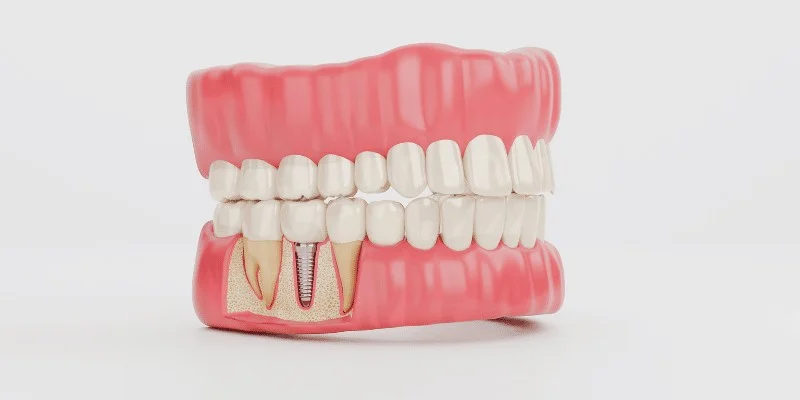
Every time you chew, speak, or clench your teeth, pressure travels through your smile.
The relationship between bite force dental restorations is important because excessive or uneven force can affect how long crowns, veneers, fillings, and implants last. Every time you chew or clench, you place force on your teeth and restorations.
Strong or uneven bite forces can increase the risk of chips, cracks, and restoration failure if your dentist does not properly evaluate and manage them.
Research on the relationship between bite force, bruxism, and fractures of teeth and restorations shows a clear link between higher forces and more fractures. Grinding and clenching can add even more stress, especially during sleep.
You can protect your smile by making sure your dentist checks your bite before and after treatment. A careful bite evaluation and proper alignment help your cosmetic and restorative work last longer and feel more comfortable.
Key Takeaways
- Your bite force affects how long veneers, crowns, and implants last.
- Clenching and grinding can raise the risk of cracks and fractures.
- Careful bite analysis helps improve comfort and long-term results.
Understanding Bite Forces in Dentistry
Your teeth and restorations handle pressure every time you chew or clench. Dentists study bite force, how it is measured, and why it varies from person to person to protect crowns, veneers, fillings, and implants from damage.
What Is Bite Force?
Bite force is the amount of pressure your upper and lower teeth create when they come together. Dentists often describe this pressure in newtons (N), which is a unit of force.
When you chew, speak, or swallow, your teeth create small occlusal forces. When you clench as hard as you can, you produce your maximum bite force. This number shows how much load your teeth and restorations must handle at peak effort.
Higher forces can increase the risk of cracks or chipping. A long-term study on the relationship between bite force, bruxism, and fractures of teeth and prostheses found that fracture rates rose as maximum bite force increased.
That does not mean strong bites are bad. It means your dentist must design restorations that can handle your specific force levels.
How Bite Force Is Measured
Dentists use bite force measurement tools to record how much pressure you create. One common method uses a small sensor that you bite down on for a few seconds. The device records force in newtons.
In research settings, clinicians often use a calibrated force transducer placed near the premolars. You bite as hard as you can, rest, and repeat. The dentist then averages the readings to find your maximum bite force.
In daily practice, dentists may also use digital tools such as a T-Scan system. This device maps how your occlusal forces spread across your teeth. It does not just show how hard you bite. It shows where you bite hardest.
That detail helps your dentist adjust a crown or veneer so it does not carry too much pressure on one small area.
Variability Among Individuals
Not everyone bites with the same force. Your maximum bite force depends on several factors, including:
- Age
- Sex
- Number of natural teeth
- Muscle strength
- Presence of bruxism
- Type and number of restorations
Research shows that bite force can vary widely between people. The same study on maximum bite force and fracture risk reported large differences among participants, even within similar age groups.
You may also produce different forces at different times. For example, sleep bruxism can create high forces without you knowing it.
Because of this variation, your dentist cannot rely on averages. They must assess your occlusal forces to plan restorations that fit your bite and reduce the risk of wear, cracks, or failure.
Bite Force and Its Impact on Dental Restorations
Your bite can place steady pressure or sharp force on your teeth many times each day. That pressure affects how well your dental restorations hold up, how long they last, and whether they fail early.

Longevity of Fillings and Crowns
When you chew, you create repeated occlusal forces on fillings and crowns. Small contact points between teeth can raise stress in one area and lead to cracks, especially in ceramic materials.
Research on the impact of occlusal forces on the longevity of restorations shows that both force level and material choice affect survival time.
If you grind your teeth, you raise the risk of fractures. A long-term study on the relationship between bite force, bruxism, and fractures of teeth and veneer porcelain found a clear link between high bite force, grinding habits, and broken porcelain.
Your dentist can use tools like a T-Scan for digital occlusal analysis. This test shows where your bite hits first and how force spreads across your teeth. By adjusting high spots, your dentist can lower stress on crowns and large fillings.
Vulnerabilities in Bridges and Prosthetic Restorations
Bridges and other prosthetic restorations must handle force across more than one tooth. If one side takes more load, the entire structure can bend or loosen over time.
The mechanical behavior of dental restorative materials depends on design, material strength, and how much force your bite produces. A bridge placed in the back of your mouth must resist higher chewing pressure than one in the front.
Dental implants also respond to bite force. A study on the impact of bite force on the stability of dental implants tracked force levels after implant placement and showed that stability relates to how force transfers to the bone.
If your bite shifts over time, your bridge may not contact evenly. That uneven load can cause screw loosening, porcelain chipping, or bone stress around implants.
Materials and Resistance to Occlusal Forces
Different materials handle pressure in different ways. Composite fillings flex more than porcelain, while zirconia crowns resist cracking better than many other ceramics.
Finite element studies on occlusal bite forces and stress on teeth show that higher forces raise stress in the root and surrounding bone, especially when bone support drops. This matters if you have gum disease or bone loss.
Your dentist considers:
- Location of the tooth
- Amount of remaining tooth structure
- Your bite strength and grinding habits
- Opposing tooth material
Stronger materials help, but design and fit matter just as much. Careful occlusal analysis and proper material choice reduce overload and improve how long your dental restorations last.
Influence of Bite Forces on Prosthetics and Tooth Replacement Options
Your bite force affects how long your prosthetic work lasts and how comfortable it feels. The type of restoration you choose changes how force moves through your dental arch and into the bone or soft tissue.
Challenges With Implant-Supported Prostheses
Implant-supported prostheses attach directly to bone. Unlike natural teeth, they do not have a periodontal ligament to absorb shock.
This means your bite force transfers straight to the implant and surrounding bone. High or uneven force can lead to screw loosening, porcelain fracture, or bone loss around the implant.
Research in biomechanics in dental implants shows that implant design and force direction both affect long-term stability. Angled forces often create more stress than vertical forces.
You also need precise bite adjustment. Even small high spots can overload one implant while others carry less force.
Dentists often recommend:
- Careful occlusal adjustments
- Night guards if you grind your teeth
- Even distribution of contact across the dental arch
These steps help protect the bone that holds your implant-supported prostheses in place.
Bite Force Differences: Fixed Partial vs. Removable Dentures
A fixed partial denture (bridge) connects to natural teeth or implants. It shares bite force across the supporting teeth and the span of the bridge.
Studies on bite forces in restored teeth show that restored teeth do not always match the force of healthy teeth. When a bridge anchors to natural teeth, those teeth must handle extra load.
If you clench or chew hard foods, you may increase stress on the supporting teeth. Over time, this can affect the periodontal ligament and surrounding bone.
Removable dentures sit on the gums and sometimes attach with clasps. They usually generate lower bite force than fixed restorations because they move slightly during chewing.
Digital studies on how restorations affect occlusal force show that the type of prosthetic can change how much force you apply and where you apply it across the arch. That movement can reduce peak force, but it may also limit chewing efficiency.
Considerations for Edentulous Patients and Complete Dentures
If you are fully edentulous, your bite force often drops compared to when you had natural teeth. Complete dentures rest on soft tissue, not bone-anchored roots.
Without a periodontal ligament, your body has less feedback about pressure. You may not sense overload until sore spots develop.
Complete dentures also distribute force over a wider area of the dental arch. This lowers pressure in one spot but reduces overall chewing strength.
You may notice:
- Less ability to chew tough foods
- More movement during biting
- Changes in jaw comfort
Implant-supported overdentures can improve stability and increase usable bite force. They anchor the denture while still allowing removal for cleaning.
Your dentist must balance force, comfort, and bone health. Proper fit, regular adjustments, and even contact points help protect your gums and jawbone over time.
Factors That Intensify Bite Forces and Associated Complications
Strong bite forces do not happen by chance. Certain habits and joint problems can raise pressure on your teeth and dental work, which increases the risk of wear and fractures.
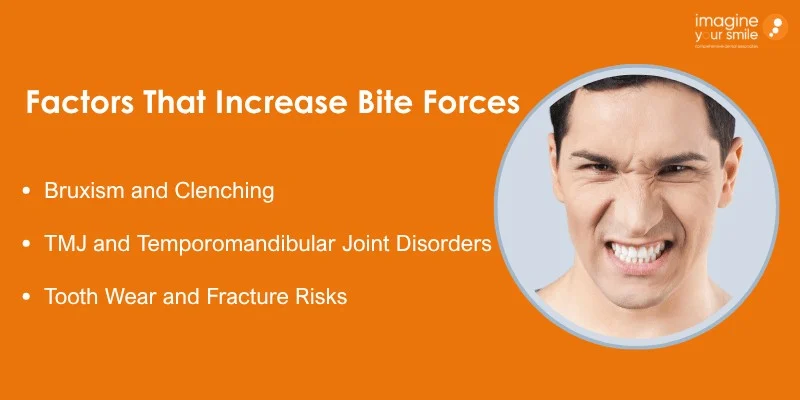
Bruxism and Clenching
Bruxism means you grind or clench your teeth, often during sleep. You may not notice it, but your partner might hear the grinding sounds.
Research on the relationship between bite force, bruxism, and fractures of teeth and porcelain veneers shows that higher bite force links to more tooth and restoration fractures.
In that study, fracture rates increased as maximum bite force increased.
When you clench, you create steady pressure on crowns, veneers, and implants. This force can exceed normal chewing loads.
Even if your average bite force seems normal, repeated clenching can still damage porcelain and enamel over time.
You may also wake up with jaw pain, tight muscles, or headaches. These signs suggest that your restorations face extra stress each night.
TMJ and Temporomandibular Joint Disorders
Your temporomandibular joint (TMJ) connects your jaw to your skull. It guides how your teeth meet when you bite.
If you have a TMJ disorder, your bite may not close evenly. This uneven contact shifts pressure to certain teeth. Those teeth then absorb more force than they should.
Clenching often worsens TMJ symptoms. Muscle tension increases joint loading and can change how your jaw moves. Over time, this pattern may place repeated stress on specific crowns or bridges.
You might notice clicking, jaw locking, or pain near your ears. When your jaw does not move in a stable path, your cosmetic dental work faces a higher risk of chips or cracks.
Tooth Wear and Fracture Risks
Tooth wear reduces the natural height and shape of your teeth. As enamel thins, teeth lose their ability to spread out force.
Smaller contact areas can raise stress on restorations during strong bites. Studies on maximum voluntary bite force and contact points note that small contact areas can increase the stress a restoration undergoes during heavy biting.
As bite force rises, fracture rates also rise. The same long-term study on bite force and dental fractures found a clear link between higher maximum bite force and more fractures of teeth and veneer porcelain.
If you already have worn teeth, your crowns and veneers carry more load. This increases the risk of chipping, cracks, and full fractures, especially if bruxism or clenching continues.
Optimizing Cosmetic and Restorative Outcomes Through Bite Analysis
When you measure and adjust bite forces with precision, you protect veneers, crowns, and implants from early damage. Clear data on occlusal contact, muscle activity, and chewing patterns helps you guide treatment decisions with confidence.
Role of Digital Tools in Occlusal Analysis
You cannot rely on articulating paper alone to judge force intensity. It shows contact points, but it does not measure how hard each tooth hits.
Digital systems such as the T-Scan record timing and relative force during closure. Studies on digital bite analysis in modern restorative dentistry show how real-time data improves treatment planning and long-term stability.
With a T-Scan, you can:
- Detect high-force contacts on new veneers
- Measure imbalance between left and right sides
- Track changes after adjustments
- Reduce overload on implants
Research using T-Scan bite force distribution data shows that molars carry most of the load during maximum bite. If you ignore this, you risk placing cosmetic work in areas that absorb heavy force without proper design.
Digital occlusal analysis gives you numbers, not guesses. That clarity helps you adjust restorations before cracks or fractures develop.
Masticatory Performance and Muscle Training
Your chewing muscles affect how force spreads across teeth. Strong, unbalanced muscles can overload one side of your mouth.
Bite force links closely to fractures in teeth and prostheses, especially in patients with bruxism. Research on the relationship between bite force, bruxism, and fractures shows that higher forces increase the risk of damage.
You can improve masticatory performance through:
- Guided chewing exercises
- Night guards for clenching control
- Simple masticatory muscle training routines
Muscle training does not mean building strength alone. You focus on coordination and balanced activation. When both sides work evenly, you lower stress on cosmetic restorations and reduce the risk of chipping porcelain.
Personalizing Treatments for Long-Term Success

No two bites act the same. The number of natural teeth, the size of restorations, and the contact area all change force patterns.
Research on the impact of natural dentition and rehabilitation on occlusal force shows that different restoration types alter bite force and contact area. This means you must tailor each treatment plan.
You should evaluate:
| Factor | Why It Matters |
| Remaining natural teeth | They absorb and distribute force |
| Implant position | Implants lack periodontal ligament cushioning |
| Occlusal contact area | Smaller areas increase pressure |
| Parafunction habits | Clenching raises peak force |
When you personalize occlusal analysis and adjust contacts carefully, you protect cosmetic results. You also improve comfort, chewing efficiency, and long-term stability of your restorative work.
Frequently Asked Questions
Strong chewing pressure, clenching, and grinding can crack porcelain, loosen implants, and wear down fillings. Dentists measure bite force in newtons and adjust your bite to spread pressure more evenly across your teeth and restorations.
How can strong bite forces affect the longevity of crowns, veneers, and fillings?
Strong bite forces place repeated stress on crowns, veneers, and fillings. Over time, this stress can cause small chips, cracks, or full fractures.
Research on the relationship between bite force, bruxism, and fractures of teeth and veneer porcelain shows that higher bite forces link to more fractures in both natural teeth and fixed prostheses. Even well-made restorations can fail if heavy pressure continues.
Uneven pressure also speeds up wear. A crown or filling may lose its shape, which can change how your teeth meet and create new stress points.
What bite force levels are considered risky for cosmetic dental work, and how are they measured?
There is no single “danger” number that applies to everyone. Risk depends on your habits, the material used, and how your teeth contact each other.
Dentists measure maximum bite force in newtons using a small device that you bite on. Some studies use strain gauge tools to record how hard you can bite for a few seconds.
Your dentist may also perform a detailed bite check because bite analysis matters for cosmetic dentistry success. This helps identify areas where pressure is too high before damage occurs.
How does bite force influence the stability and long-term success of dental implants?
Dental implants do not have the same shock-absorbing fibers as natural teeth. When you apply high force, the stress transfers directly to the bone and the restoration.
Excess pressure can loosen screws, chip porcelain, or strain the surrounding bone. Over time, this may affect implant stability.
Clinics that explain why your bite matters in dental restorations stress that balanced contact protects implants from overload. A stable bite helps spread forces across multiple teeth instead of one implant.
Which restorative materials are best suited for patients with heavy biting or grinding habits?
If you grind or clench, your dentist may choose stronger materials such as zirconia or metal-supported crowns. These materials resist fracture better than some layered porcelains.
The choice depends on how your upper and lower teeth meet. The impact of occlusal forces on the longevity of restorations shows that both force and material type affect long-term results.
Your dentist may also suggest a night guard. This device reduces direct stress on your restorations while you sleep.
What are the most common signs that high bite forces are damaging dental restorations?
You may notice small chips along the edge of a veneer or crown. Fillings may feel rough or appear worn down.
You might also feel sensitivity when biting. In some cases, you hear clicking or feel pressure in your jaw.
Changes in how your teeth fit together can signal trouble. Even slight shifts can increase stress on certain restorations.
How can a dentist adjust the bite to protect cosmetic and restorative dental work over time?
Your dentist can reshape small areas of enamel or restoration material to improve contact. This process helps distribute force more evenly.
They may also adjust full-coverage crowns with careful polishing and contouring. Managing functional occlusion and bite alignment in full-coverage restorations reduces high-pressure spots.
Regular checkups allow your dentist to monitor wear and make small corrections early. These simple adjustments can extend the life of your cosmetic and restorative dental work.