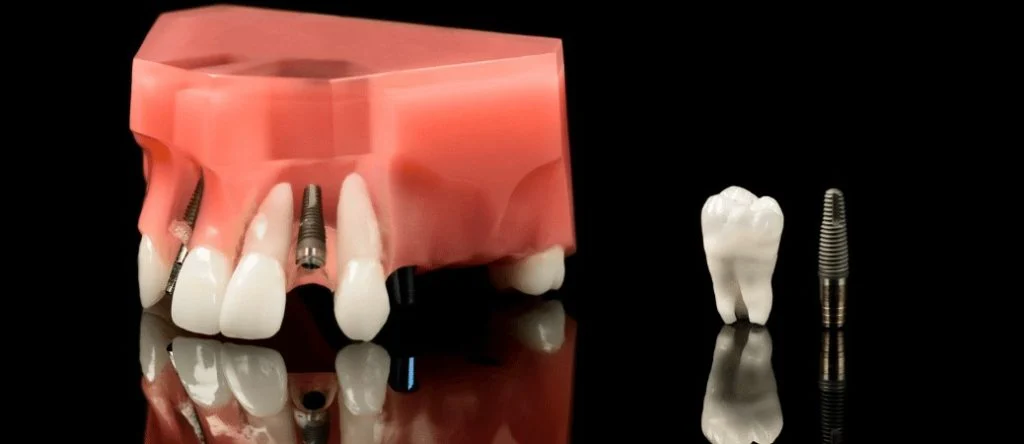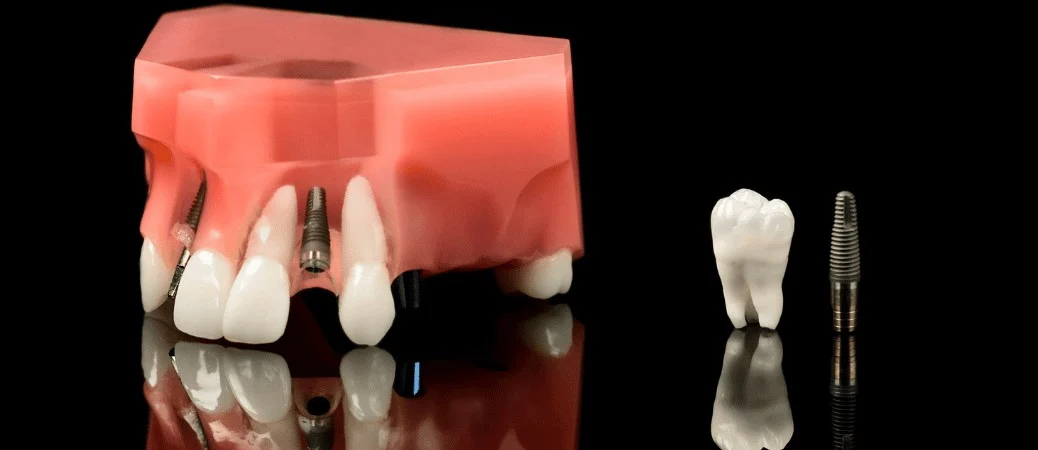
If you’re missing a tooth and looking into tooth replacement, you’ve probably run into two names over and over: zirconia vs titanium dental implants .
Both work well, and both are used for dental implants that can support a crown designed to look and feel like a real tooth.
Titanium is usually the better fit if you need strength, flexible design options, or have limited bone, while zirconia makes more sense if you have thin gums, want a metal-free option, or have a known sensitivity to metal.
Neither one wins for everybody, and the right implant depends on your anatomy, bite forces, and treatment goals.
The cost of dental implants matters too. Titanium implants often run $3,000 to $6,000 per tooth, while zirconia tends to fall between $4,000 and $8,000, depending on your case.
Below, you’ll see how these two implant materials compare on healing, looks, durability, and long-term oral health, along with important questions to ask before making your decision.
Key Takeaways
- Titanium and zirconia are both reliable, but each suits different mouths and goals.
- Your gum thickness, bone quality, bite strength, and metal sensitivity all shape the best choice.
- Titanium has a longer track record and lower cost, while zirconia offers a metal-free, tooth-colored option.
The Quick Answer: Matching the Material to Your Needs
Titanium usually wins when your bite is heavy, your case is complex, or you need bone grafting, while zirconia often shines in the front of your mouth when you want a metal-free look. The right pick depends on your bone, your gums, your bite, and your goals, not on which material sounds more modern.
| What matters to you | Likely better fit |
| Heavy chewing or grinding | Titanium |
| Visible front tooth, thin gums | Zirconia |
| Full-arch or angled placement | Titanium |
| Metal-free preference | Zirconia |
When Titanium Is Usually the Better Fit
Titanium dental implants have the longest track record in dental implantology, with reported success rates of over 90% with decades of use.
Titanium is often recommended if you:
- Grind or clench your teeth
- Need back teeth replaced, where chewing forces are strongest
- Are having multiple teeth or a full arch restored
- Need angled implant placement or major bone grafting
The other advantage is flexibility. Titanium systems come in many sizes and parts, so your implant dentist has more ways to adjust the plan if your anatomy is tricky.
That range of restorative components can make a real difference in complex dental implant treatment.
When Zirconia May Be the Better Fit
Zirconia dental implants are made from zirconium oxide, a white ceramic. Because they are tooth-colored, ceramic implants can help you avoid a gray shadow near the gumline.
That makes them worth asking about if you:
- Are replacing a front tooth where looks are a top priority
- Have thin gum tissue that might show darker material underneath
- Prefer a metal-free option or have a known metal sensitivity
- Have healthy bone and moderate bite forces
There is a trade-off. Zirconia is more brittle than titanium and has fewer years of long-term data behind it, so careful case selection really matters here.
Why Personalized Implant Planning Matters
No material can fix a plan that ignores your anatomy. Good implant planning starts with CBCT imaging, a look at your bone and gum health, and a bite analysis.
At Imagine Your Smile, Dr. Mark W. Wilhelm carefully plans dental implant treatment around your bone, gums, bite, and final restoration.
This personalized approach helps determine whether titanium or zirconia is better suited to your needs.
- Bone density and volume
- Gum disease and daily hygiene
- Smoking and uncontrolled diabetes
- How your bite spreads out pressure
Cost varies too, and it depends on more than the post itself. Case complexity, restoration type, and technology used all play a role.
Ask your implant dentist why they recommend one material for your mouth. A clear answer is a good sign.
How Titanium and Zirconia Differ
Titanium is a metal and zirconia is a ceramic, and almost every other difference between these two implants grows out of that one fact.
Their makeup affects how bone attaches to them, how much biting pressure they handle, and how many parts the implant can be built from.
Material Composition and Biocompatibility
Most titanium implants are made from commercially pure titanium (grades 1 through 4) or a titanium alloy called Ti-6Al-4V, which mixes titanium with aluminum and vanadium for extra strength.
Zirconia implants are made from zirconium dioxide, a white ceramic that is usually stabilized with a small amount of yttrium oxide to keep it from cracking.
Both materials have a long record of good biocompatibility, meaning your body accepts them without a harmful reaction.
True titanium allergy is rare, but if you have tested positive for a metal sensitivity, zirconia gives you a metal-free choice.
One more practical point: titanium is gray, so it can show as a dark shadow under thin gums. Zirconia is tooth-colored, which is why some people choose it for front teeth.
Bone Integration and Osseointegration
Osseointegration is the process where your jawbone grows tightly against the implant surface and locks it in place. It usually takes about three to six months.
Titanium sets the standard here. Roughened titanium surfaces reliably produce high bone-to-implant contact, and dentists have been placing and tracking titanium implants since the 1960s, so the long-term numbers are well known.
Modern zirconia implants with textured surfaces integrate well too, and short-term studies show similar bone contact.
The difference is time. Zirconia has fewer 10- and 15-year follow-up studies, so its long-term track record is thinner.
Smoking, uncontrolled diabetes, and poor bone quality slow healing with either material.
Strength Under Chewing Forces
Your back teeth can generate several hundred newtons of bite force, and grinding raises that pressure even more.
Titanium handles this well because it bends slightly instead of breaking. It has high tensile strength and does not shatter, which is why narrow titanium posts are still considered safe.
Zirconia is very hard and resists compression, but it is more brittle. Fracture resistance drops when the implant is made in small diameters, so most brands recommend a wider post for molars.
| Titanium | Zirconia | |
| Behavior under stress | Flexes slightly | Brittle, can chip |
| Narrow-diameter options | Widely available | Limited |
| Best documented for grinders | Yes | Less data |
If you clench or grind your teeth, mention it early. It changes the recommendation.
Implant Design and Restorative Flexibility
Titanium implants are typically two-piece: the post goes in the bone, and a separate abutment screws on later.
That splits the surgery from the crown work and lets your dentist correct angles, change the abutment, or switch to an angled part if your bone sits at an awkward tilt.
Many one-piece zirconia implants combine the post and abutment into a single unit. Placement has to be nearly perfect the first time, since there is little room to adjust afterward.
Two-piece zirconia systems now exist and add some flexibility, though the selection of parts is still smaller. Titanium also offers more sizes, tapers, and options for full-arch and multi-tooth cases.
Appearance, Gums, and Metal-Sensitivity Considerations
The way an implant looks at the gum line depends a lot on how thick your gum tissue is, and metal sensitivity is a real but uncommon reason some people pick ceramic.
Properly caring for your dental implants matter for both materials.
Managing Thin Gums and the Smile Zone
Titanium is gray. If your gum tissue is thin and a little see-through, that gray can sometimes show as a faint shadow near the gum line.
Zirconia is off-white, so it doesn’t create that shadow. That’s why ceramic is often suggested for front teeth with thin gums or when someone strongly prefers metal-free care.
Still, thin tissue isn’t an automatic reason to skip titanium. A grayish margin can often be managed with careful crown design, a lighter-colored abutment, or placing the implant slightly deeper.
Your dentist may also suggest soft tissue grafting to add thickness around the implant. A soft tissue graft can hide color and give the gum a fuller, more natural shape.
What Metal Sensitivity and Titanium Allergy Mean
True titanium allergy is very rare. Most reported reactions involve trace alloying metals like nickel or vanadium found in some titanium grades, not pure titanium itself.
Symptoms people describe include gum redness that won’t settle, itching, or a rash. These signs can also come from plaque, a poor bite, or an unrelated skin condition, so testing matters before you decide.
If you already know you react to jewelry, snaps, or orthopedic hardware, ask about patch testing or a MELISA blood test.
Confirmed metal sensitivities are one of the clearest reasons to choose zirconia over titanium.
One more thing worth knowing: no scientific evidence links titanium implants to cancer. Titanium has a long safety record in both dentistry and medicine.
Gum Health and Plaque Control
Some studies suggest zirconia surfaces gather slightly less plaque than titanium. The research is promising, but the long-term effect on gum health is still being studied.
Don’t read that as permission to relax. Plaque accumulation around any implant can cause peri-implant mucositis, and untreated inflammation can turn into bone loss.
Your daily routine matters more than the material:
- Brush twice a day, angling the bristles toward the gum line
- Clean between teeth with floss, implant-safe floss, or a water flosser
- Use interdental brushes around wider implant crowns
- Keep professional cleanings on schedule, usually every three to six months
Smoking and uncontrolled diabetes raise your risk with both implant materials, so bring those up during planning.
Your Bone, Bite, and Type of Restoration
The right implant material depends a lot on how much healthy jawbone you have, how hard you chew, and how many teeth you are replacing.
When planning dental implants for an uneven bite, your dentist also needs to consider how chewing forces are distributed before choosing between titanium and zirconia.
Titanium and zirconia both work well, but they behave differently once you add angled placement, heavy bite force, or a full arch of teeth.

Bone Quality, Bone Volume, and Grafting Needs
Your jawbone has to be thick enough and dense enough to hold the implant steady while it heals.
If you lost a tooth years ago, the bone in that spot may have shrunk. In that case, your surgeon may suggest bone grafting to add width or height, or a sinus lift if you need an implant in the upper back jaw.
Titanium comes in more sizes, including narrow and short posts, so it often works in tighter spots. Zirconia implants usually need a bit more bone width because of how they are shaped.
Healing time is also worth asking about. Titanium usually needs 3 to 6 months to fuse with bone, and zirconia may take a similar or slightly longer stretch.
Single-Tooth Replacement and Complex Tooth Replacement
For one missing tooth with good surrounding bone, both materials are reasonable choices.
Zirconia is white, so it can be a nice fit for a front tooth if your gums are thin and you worry about a gray shadow showing through. Your bone quality, bite, gum tissue, and esthetic goals all factor into that call.
Things change when the case gets more complicated. If the implant has to go in at an angle, or you are replacing several teeth in a row with a bridge, titanium gives your dentist more parts to work with.
Many zirconia implants are one-piece, which means the post and abutment are joined.
That limits how much your dentist can correct the angle later, which is why titanium is often picked for maximum flexibility and broad prosthetic options.
Full-Arch Options Including All-on-4 and All-on-6
If you are replacing a whole arch of teeth, titanium is the standard choice today.
All-on-4 and All-on-6 use four or six implants to support a fixed bridge. The back implants are often tilted to avoid the sinus or a nerve, and that tilt requires angled abutments that pair with titanium.
All-on-x also puts steady pressure across every implant. Titanium’s strength and versatility hold up well under that spread-out load.
Zirconia can still show up in your treatment as the crown or bridge material on top. Implant-retained dentures that snap onto attachments are almost always built on titanium posts.
Bruxism, Teeth Grinding, and High Bite Loads
Grinding your teeth at night puts far more force on an implant than normal chewing does.
Molars already handle the heaviest bite force in your mouth. Add bruxism, and you raise the risk of chipped crowns, loose screws, and in rare cases a fractured implant.
Zirconia is a strong ceramic, but ceramics are more brittle than metal. Because of that, many dentists lean toward titanium for back teeth in heavy grinders.
A few steps help either way:
| Step | Why it helps |
| Custom night guard | Cushions the implant while you sleep |
| Wider or longer implant | Spreads force over more bone |
| More implants in the arch | Shares the load instead of stressing one spot |
| Bite adjustment at delivery | Keeps contacts even so no single tooth takes the hit |
Tell your dentist if you wake up with a sore jaw or worn front teeth. That detail changes which implant fits your anatomy and planned restoration.
Evidence, Longevity, Costs, and Risks
Titanium has decades of research behind it, while zirconia is the newer option with a shorter paper trail and a higher price tag.
Here’s what the studies show, what you can expect to pay, and how to protect your investment.
What Clinical Evidence Says About Long-Term Outcomes
Research shows that the titanium implants have a 25-year-plus track record with success rates above 95%. That’s a lot of patients, followed for a long time.
Zirconia looks promising, but the follow-up periods are shorter. One comparison of 5-year survival and success rates found zirconia performs well in the medium term, though it can’t tell you what happens at year 20.
A systematic review of titanium, titanium-zirconium, and zirconia implants compared survival rate, marginal bone loss, bleeding on probing, and plaque control.
When you look at titanium vs zirconia implants across those measures, the gaps are small, but the volume of clinical evidence still favors titanium.
Understanding Implant Cost and Zirconia Implant Pricing
Zirconia implants cost more than titanium, usually 20% to 40% more per tooth. Fewer companies make them, fewer dentists place them, and the material itself is pricier.
| What affects your bill | Why it matters |
| Material choice | Zirconia carries a premium over titanium |
| Bone grafting or sinus lift | Adds a separate procedure and fee |
| Crown material | Zirconia crowns cost more than metal-backed ones |
| Number of implants | Multi-unit bridges lower the cost per tooth |
| Provider experience | Zirconia specialists often charge more |
Insurance usually treats both the same way, and some plans pay only the crown portion. Ask for a written treatment plan with itemized fees before you commit.
Comparing pros, cons, and cost of both materials with your dentist helps you avoid surprises.
Reducing the Risk of Implant Failure
Most implant complications trace back to a few things you can actually influence.
- Quit smoking, at least during healing. Smoking slows blood flow to the gums and raises failure rates.
- Control diabetes and blood sugar, since poor control interferes with bone healing.
- Clean around your implant daily with floss or an interdental brush to prevent peri-implantitis.
- Wear a night guard if you grind. Zirconia is strong but more brittle than titanium under heavy load.
- Keep every checkup, so small bone changes get caught early.
One more thing worth knowing: many zirconia implants are one-piece designs. If the abutment portion gets damaged, you may need to replace the whole implant instead of just a part.
Choosing and Caring for Your Implant
The material matters, but the people planning your treatment and the habits you keep afterward often matter more.
A good decision starts with the right team, honest questions, and a clear plan for keeping your gums and bone healthy.
Building a Team With an Implant Dentist and Oral Surgeon

Most implant cases involve two roles. A dentist places the post in your jaw. A restorative dentist designs and attaches the crown, bridge, or denture on top.
When those two people talk to each other early, you get better results. The surgeon can angle the implant so the final tooth fits your bite instead of fighting it.
Ask whether your practice uses CBCT imaging for digital implant planning. This 3D scan shows bone height, bone width, and nerve position, which tells your team if bone grafting is needed before placement.
If you want a zirconia implant, ask how many the surgeon has placed. Zirconia requires different drilling protocols and tighter case selection than titanium.
Questions to Ask Before Treatment
Bring a short list to your consultation. Clear answers help you compare offices fairly.
- Which material do you recommend for my case, and why? The answer should mention your bone, bite, and gum thickness, not just general material pros and cons.
- Is my implant one piece or two pieces? Many zirconia implants are one piece, which limits angle correction and requires a longer healing period without load.
- Do I need bone grafting or a sinus lift first? This adds months and cost.
- What is the total price? Ask for surgery, abutment, crown, and follow-up visits separately.
- What is your warranty if the implant fails?
- Who handles complications, and where?
Also ask about timing. Healing before the final crown usually takes about three to six months, depending on bone quality.
Protecting Your Long-Term Implant Result
Implants don’t get cavities, but the gum and bone around them can still get sick. Peri-implantitis is the leading reason implants fail years after placement.
How do you care for your dental implants in the long-term matters the most? Daily habits do most of the work:
- Brush twice a day with a soft brush and non-abrasive paste.
- Clean between teeth with floss, implant floss, or a water flosser.
- Use a nylon-coated interdental brush, not metal, near the implant neck.
- See your hygienist every three to six months for checks and cleaning.
Smoking, uncontrolled diabetes, and untreated gum disease all raise your risk, and oral hygiene and gum health affect both materials.
If you grind your teeth, wear a night guard. Grinding puts stress on the crown and the bone that holds the implant.
Frequently Asked Questions
Choosing between zirconia and titanium comes down to your bone, your gums, your bite, and your budget.
Here are straight answers to the questions patients ask most, including price gaps of $500 to $1,500 per implant, fracture risk, and what science actually says about metal sensitivity.
Should I choose a zirconia or titanium dental implant?
There isn’t one right answer for everyone. Titanium is the better pick if you need an implant in the back of your mouth, have limited bone, or want a two-piece system that lets your dentist angle the crown.
Zirconia makes more sense if you’re replacing a front tooth, have thin gums that might show a gray shadow, or you simply want a metal-free option.
Your dentist looks at your X-rays, gum thickness, and how hard you clench before recommending either one. A thorough consultation is the fastest way to narrow it down.
What are the main differences between zirconia and titanium implants?
The biggest differences are material, design, and track record.
| Feature | Titanium | Zirconia |
| Material | Metal alloy | Ceramic |
| Color | Gray | White |
| Design | Usually two pieces | Usually one piece |
| In use since | 1965 | Roughly 2007 |
| Flexibility | Slightly flexible | Rigid |
Titanium implants have been used since 1965 and offer more strength and a bit of flex, while zirconia is newer, metal-free, and blends in with natural teeth.
Titanium also has a long record of strong osseointegration, which is the process where bone grows tightly around the implant.
Are zirconia implants safer or healthier than titanium implants?
Both materials are considered safe and biocompatible. Zirconia does have a few gum-related advantages worth knowing about.
Studies report that zirconia has a better soft-tissue response and biocompatibility compared with titanium. Its smooth surface also tends to collect less plaque.
Research also suggests zirconia integrates with bone just as well as titanium, with early healing sometimes moving a little faster.
That said, “healthier” depends on your case. A zirconia implant that fractures under a heavy bite isn’t healthier than a titanium one that lasts 20 years.
How much do zirconia implants cost compared with titanium implants?
Expect to pay more for ceramic. Zirconia implants generally cost $500 to $1,500 more than titanium per implant because they’re harder to manufacture.
Fewer labs and fewer dentists work with zirconia, which also pushes the price up.
Insurance usually treats both the same way, covering a set dollar amount rather than a specific material. Ask your provider for a written estimate for each option before you commit.
What are the potential problems or risks with zirconia dental implants?
Fracture is the main concern. Zirconia is hard but not flexible, so it can crack under heavy pressure instead of bending.
Some research has found that zirconia implants may carry a slightly higher risk of fracture than titanium, especially in the back of the mouth where chewing forces are strongest.
Titanium’s durability gives it an edge, since zirconia carries some risk of micro-fractures.
Most zirconia implants are one piece, too. That means less room to adjust the angle of your crown, and a damaged implant often has to be removed entirely. Long-term data is still catching up, though results look good so far.
Can titanium dental implants cause health issues, such as allergies or cancer?
True titanium allergy is rare, affecting a very small share of patients. Some people do report sensitivity, and a metal allergy test can tell you where you stand before surgery.
There’s no evidence that titanium implants cause cancer. Titanium has been used in hip replacements, bone plates, and dental implants for decades with a strong safety record.
A few patients notice a gray tint at the gumline if their tissue is thin, but that’s cosmetic rather than a health problem.
Zirconia is the usual metal-free alternative when patients prefer to avoid titanium for personal or sensitivity reasons.