Bleeding gums or loose teeth can feel scary to notice, especially when you’re not sure what they mean.
Maybe you’ve spit blood while brushing more times than you can count, or you’ve felt a tooth wiggle just slightly when you bite down.
You might have been told at your last dental visit that you now need something called periodontal maintenance instead of your usual cleaning, and you’re wondering what changed.
These signs often point to gum disease that has moved past the surface. One of the most common causes of bleeding gums and loose teeth is periodontal disease, which can damage the gum tissue and bone supporting your teeth.
When gums bleed easily, pull away from teeth, or teeth start to feel loose, a regular dental cleaning may no longer be enough to protect your smile.
Periodontal disease affects the bone and tissue holding your teeth in place, and it needs a different kind of ongoing care than a standard cleaning provides.
This doesn’t mean your situation is out of control. It means your mouth needs a more targeted plan, one built around your specific gum health rather than a one-size-fits-all visit every six months.
Key Takeaways
- Bleeding gums, gum recession, and loose teeth can signal that gum disease has damaged the bone and tissue around your teeth.
- Periodontal maintenance is a different type of care than a regular cleaning, designed to manage gum disease over time rather than just prevent it.
- Catching changes early, with the right treatment and a consistent maintenance schedule, gives you the best chance of keeping your natural teeth.
When Do Bleeding Gums or Loose Teeth Signal a Deeper Problem?
Bleeding gums and loose teeth deserve attention when they happen often, not just once in a while.
A little blood after aggressive flossing is different from gums that bleed almost every time you brush. Tooth mobility is never something to brush off, since healthy teeth should feel firmly anchored.
Which Symptoms Need a Prompt Periodontal Evaluation?
Several signs point toward needing a periodontal evaluation soon rather than waiting for your next routine checkup.
These include persistent gum bleeding, swollen gums, gum tenderness, and ongoing bad breath that doesn’t improve with brushing. Gum recession, tooth sensitivity, and pain while chewing also belong on this list.
Loose teeth or teeth that seem to be shifting position are among the more urgent signs. If you notice any of these changes, it makes sense to schedule a periodontal exam rather than wait.
Why Persistent Gum Bleeding Is Different From Temporary Irritation
Gum bleeding that shows up once after a new floss habit usually settles down within a week or two. Bleeding that continues day after day, especially with little pressure, suggests active gum inflammation rather than simple irritation.
Bleeding gums, especially when they bleed easily or without any obvious cause, can point toward periodontitis rather than early gingivitis.
The difference matters because gingivitis is reversible with better home care and a cleaning, while periodontitis needs a different treatment approach entirely.
How Receding Gums, Shifting Teeth, and Painful Chewing Can Progress
Gum recession often starts small, with teeth looking slightly longer than they used to. Depending on its cause and severity, soft tissue treatments may be considered as part of a broader plan for protecting the gums and exposed tooth roots.
Shifting teeth and painful chewing tend to show up later, once bone support has already started to weaken.
At this stage, advanced gum disease has usually caused enough damage that teeth lose some of their natural stability, which is why catching these signs early gives you far more treatment options.
Regular Cleaning vs. Periodontal Maintenance
A regular dental cleaning and periodontal maintenance both remove plaque and buildup, but they treat different starting points. A routine cleaning, sometimes called prophylaxis, keeps healthy gums healthy.
Periodontal maintenance manages gum disease that has already caused pocket depth or bone changes, cleaning both above and below the gumline on a documented history of periodontitis.
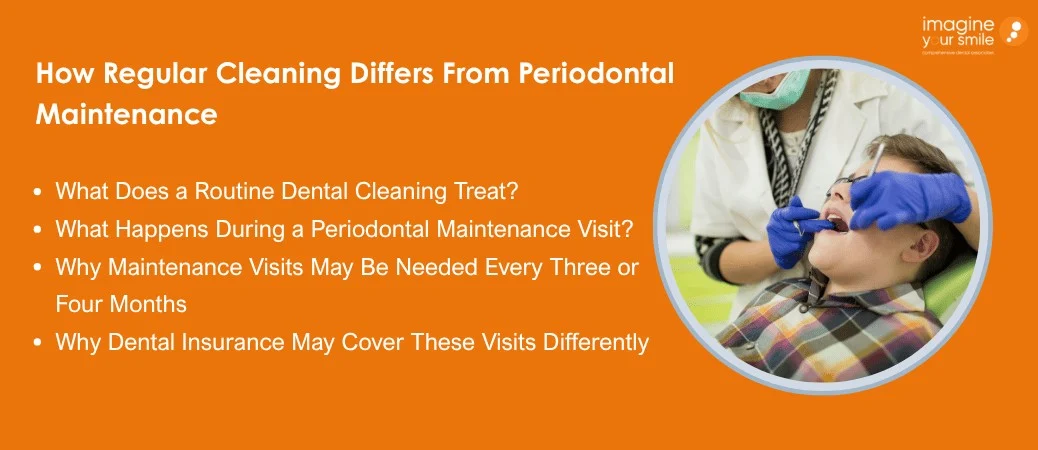
What Does a Routine Dental Cleaning Treat?
Routine dental cleaning removes surface plaque and calculus from teeth above the gumline. It’s designed for gums without active disease, keeping biofilm from building up between visits.
This type of professional dental cleaning works well for prevention. It isn’t built to reach deep gum pockets or treat root surfaces that have already been affected by periodontal disease.
What Happens During a Periodontal Maintenance Visit?
A periodontal maintenance visit includes cleaning below the gumline, checking pocket depth at multiple points around each tooth, and monitoring for new bleeding or bone changes.
Your dental team also cleans areas below the gumline where plaque and tartar can accumulate again after initial periodontal treatment.
The timing of maintenance visits depends on your disease history, pocket depths, bleeding, home care, and other individual risk factors.
This visit typically takes a bit longer than a standard cleaning because of that extra depth and monitoring.
Why Maintenance Visits May Be Needed Every Three or Four Months
Most people with a history of periodontitis need maintenance every three to four months instead of the usual six-month cleaning schedule. This shorter interval gives your dental team a chance to catch new bleeding, pocket changes, or bone loss before they cause more damage.
At Imagine Your Smile, periodontal maintenance schedules are personalized based on how your gums respond over time, not set by a fixed rule for every patient.
Why Dental Insurance May Cover These Visits Differently
Dental insurance often treats periodontal maintenance as a separate benefit category from routine cleanings, sometimes with its own frequency limits or coverage percentage.
Your general dentist or periodontist’s office can check your specific plan details, since coverage varies by insurer and policy.
How Gum Disease Progresses From Gingivitis to Periodontitis
Gingivitis causes red, swollen, or tender gums that may bleed easily.
Because it has not yet caused the attachment and bone loss associated with periodontitis, the inflammation can often be resolved with appropriate professional care and consistent oral hygiene.
How Plaque Buildup Turns Into Tartar Below the Gumline
Plaque forms constantly on your teeth from food particles and bacteria. If it isn’t removed through brushing and flossing, it hardens into tartar within a couple of days.
Tartar below the gumline is rougher than plaque, which gives bacteria more surface area to cling to. This creates a cycle where gum tissue becomes irritated, pockets deepen, and cleaning at home becomes harder to do effectively.
What Separates Gingivitis From Early Periodontitis?
Gingivitis involves inflammation without bone loss, while early periodontitis includes the first signs of attachment loss and bone changes.
The distinction matters because gingivitis can be reversed with a dental cleaning and consistent oral hygiene, while periodontitis requires ongoing management instead of a cure.
Once bone support starts to erode, even mild cases need a different treatment path than gingivitis alone.
How Bone Loss and Attachment Loss Affect Tooth Stability
Bone loss and attachment loss reduce the foundation holding your teeth in place. As moderate periodontitis develops, you may notice bleeding, gum recession, and teeth that feel less secure.
In advanced periodontitis, this loss of support can lead to noticeable tooth mobility and eventually tooth loss if it isn’t addressed.
Which Health and Lifestyle Factors Raise Periodontal Risk?
Several factors make gum disease more likely or harder to control. These include:
- Diabetes and other conditions that affect healing and inflammation
- Smoking, tobacco use, and vaping
- Dry mouth, which reduces saliva’s natural cleansing effect
- Pregnancy, menopause, and other hormonal changes
- Genetics, since some people are more prone to harmful oral bacteria
- HIV and other conditions affecting immune response
None of these factors mean gum disease is guaranteed, but they raise the importance of regular periodontal evaluation.
What Treatment May Be Needed Before Maintenance Can Begin?
Active periodontal disease usually needs treatment before a maintenance schedule can start. This treatment clears out the infection and buildup causing inflammation, giving your gums a chance to heal before ongoing monitoring takes over.

When Is Scaling and Root Planing Recommended?
Scaling and root planing is recommended for people with mild to moderate gum disease and noticeable pocket depth.
This deep cleaning removes plaque and tartar below the gumline, then smooths root surfaces so bacteria have a harder time reattaching. The procedure is usually done over at least two visits using local anesthesia to keep you comfortable.
Many patients move directly from scaling and root planing into a periodontal maintenance schedule once healing begins.
When Might a Periodontist Recommend Periodontal Surgery?
A periodontist may recommend periodontal surgery when pockets are too deep for scaling and root planing to reach effectively.
Pocket reduction surgery, also called osseous surgery, involves creating a small flap in the gum tissue to clean tartar from tooth roots before repositioning the gums.
Some periodontists also offer LANAP, a laser-based alternative, though results with this approach vary from person to person.
Can Bone and Gum Tissue Be Rebuilt After Periodontal Damage?
Bone grafting and gum grafting can help rebuild some of the structure lost to periodontal disease, though they don’t fully restore what was there before.
Bone grafting places material into areas where bone has eroded, giving your body a scaffold to grow new bone around it over time.
Guided tissue regeneration is often paired with a bone graft to keep soft tissue from crowding out that new bone growth.
Gum grafting covers exposed roots and adds thickness back to the gumline, which can improve both comfort and appearance.
Protecting Teeth After Active Periodontal Treatment
Daily oral hygiene protects the results of periodontal treatment between professional visits. Brushing, flossing, and regular dental checkups work together with periodontal maintenance to keep gum disease from returning.
How Brushing and Flossing Support Professional Care

Brushing twice a day and flossing daily removes plaque before it has a chance to harden into tartar.
This daily habit reduces the bacterial load your gums have to fight, which supports the work done during professional cleanings and maintenance visits.
Flossing reaches areas between teeth that a toothbrush can’t fully clean, making it especially important around gum pockets that may still need extra attention.
Why a Soft Toothbrush and Fluoride Toothpaste Matter
A soft toothbrush cleans effectively without scraping already sensitive or receding gum tissue. Fluoride toothpaste strengthens enamel and helps protect exposed root surfaces, which often feel more sensitive after gum recession or periodontal treatment.
Switching to a soft-bristle brush is a small change that can make a noticeable difference in comfort during healing.
How Dental Checkups Help Catch Recurrence Early
Regular dental checkups give your dentist or periodontist a chance to measure pocket depth and check for new bleeding before problems grow.
A periodontal exam at each maintenance visit tracks changes over time, so small shifts get addressed quickly.
This ongoing periodontal evaluation is part of why maintenance works better as a long-term partnership than a single fix.
Early Periodontal Care Helps Preserve Natural Teeth
Getting periodontal care early gives you the best chance of keeping your natural teeth for years to come. Severe gum disease that goes untreated is one of the leading causes of adult tooth loss, since it slowly breaks down the bone and tissue that hold teeth in place.
Periodontal treatment, whether it starts with a deep cleaning or moves toward surgical care, aims to stop that breakdown before it takes more than it already has.
A periodontist can help determine which stage your gum disease has reached and build a plan suited to your mouth specifically.
Scheduling an evaluation with Imagine Your Smile is a practical first step if you’ve noticed bleeding, recession, or looseness that hasn’t gone away. Consistent care, paired with attention to your oral health at home, gives your teeth the strongest foundation for staying put.
Frequently Asked Questions
Can I get a regular cleaning if I have been diagnosed with periodontitis?
Once periodontitis is diagnosed, most dental teams recommend periodontal maintenance instead of a regular cleaning, even if your gums look better after treatment.
This is because the deeper cleaning and monitoring in maintenance visits address the pockets and bone changes that periodontitis leaves behind.
A regular cleaning alone doesn’t reach those areas thoroughly enough to manage the disease long term.
How do I know whether I need scaling and root planing or periodontal maintenance?
Scaling and root planing is typically the first step when gum disease is newly diagnosed and pockets are still deep with active buildup.
Periodontal maintenance follows once that initial treatment has calmed the inflammation and stabilized your gums. Your dentist or periodontist will measure pocket depth and check for bleeding to decide which stage fits your current gum health.
Why do my gums still bleed after a professional dental cleaning?
Bleeding right after a cleaning can happen simply because the gums were disturbed during the appointment, and this usually settles within a day or two.
If bleeding continues well beyond that, it may mean inflammation is still present below the gumline. Persistent bleeding is worth mentioning to your dental team at your next visit.
How often do I need periodontal maintenance visits?
Most people with a history of periodontal disease need maintenance every three to four months rather than every six months.
This shorter interval helps catch new bacterial buildup before it damages bone again, since bacteria can regrow within about 90 days. Your specific interval depends on how stable your gums stay between visits.
Can periodontal maintenance stop loose teeth from getting worse?
Periodontal maintenance can help slow or stabilize tooth mobility by controlling the infection and inflammation that weaken bone support. It won’t reverse bone loss that has already happened, but it reduces the chances of further damage.
Combined with good home care, maintenance gives loose teeth the best chance of staying functional longer.
Does dental insurance cover periodontal maintenance?
Many dental insurance plans do cover periodontal maintenance, though often under different terms than a routine cleaning, with its own frequency limits or coverage percentage.
Coverage details vary by plan and insurer, so it helps to check with your provider before your visit. Your dental office can often verify these benefits for you ahead of time.