Losing teeth doesn’t have to mean settling for dentures that slip or limit what you can eat. Many people wonder if dental implants after 60 are risker.
Age alone doesn’t prevent you from getting dental implants, and studies show that people over 65 have similar success rates to younger patients, with only about a 2% failure rate over 10 years.
The prevalence of dental implants among adults over 50 has jumped from 1.3% to 8.4% between 1999 and 2020. More seniors are choosing implants because they offer a permanent solution that looks and functions like natural teeth.
While some factors do change after 60, like healing time and bone density, the basic implant process remains the same.
Your overall health matters more than the number on your birthday cake. Understanding what actually changes with age helps you make an informed choice about whether dental implants are right for you.
This guide breaks down everything you need to know about getting implants after 60, from the process itself to costs and long-term care.
Key Takeaways
- Dental implants work well for seniors over 60 with success rates similar to younger patients
- Your overall health and bone density matter more than your age when determining if you’re a candidate
- Implants cost more upfront than dentures but can last decades with proper care
Table of Content
- Understanding Dental Implants and How They Work
- Unique Considerations for Seniors
- Dental Implant Process and What to Expect
- Benefits of Implants Compared to Other Tooth Replacement Options
- Risks, Success Rates, and Cost for Seniors
- Long-Term Maintenance and Best Practices
- Frequently Asked Questions
Understanding Dental Implants and How They Work
Dental implants replace missing teeth through a surgical process that anchors artificial teeth directly into your jawbone.
The system uses titanium posts as artificial roots, connector pieces called abutments, and custom-made crowns or dentures that look and function like natural teeth.

What Are Dental Implants?
Dental implants are metal posts that replace your natural tooth roots. Dental implant placement involves surgically inserting these posts into your jawbone, where they fuse with the bone over time.
The titanium material bonds with your jawbone through a process called osseointegration. This creates a stable foundation that won’t slip or cause bone damage like traditional dentures might.
The implants act as anchors for replacement teeth that can last for decades with proper care.
Unlike bridges or dentures that rest on your gums, implants become part of your jaw structure. This makes them the closest thing to having your natural teeth back.
Key Components: Implant, Abutment, and Artificial Tooth
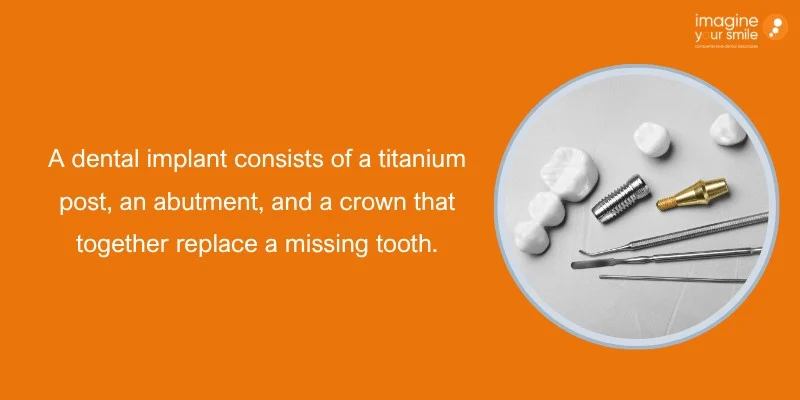
Each dental implant consists of three main parts that work together to replace your missing tooth. The implant itself is the titanium screw placed in your jawbone. It serves as the new root.
The abutment connects to the top of the implant after your bone has healed. This small connector piece holds the visible part of your new tooth. Your dentist attaches it during a separate procedure once the implant has fused with your bone.
The artificial tooth sits on top of the abutment. This crown matches your natural teeth in color and shape. It’s what you see when you smile and what you use for chewing.
These three components create a complete tooth replacement system that mimics how your natural teeth are structured.
Types of Implants and Replacement Options
You have several tooth replacement options depending on how many teeth you need replaced. Single implants work for one missing tooth, with each implant supporting its own crown.
An implant-supported bridge can replace multiple teeth in a row using two or more implants. This eliminates the need for an implant for each missing tooth.
Full arch replacement addresses all upper or lower teeth at once. Full mouth implants use four to six implants per arch to support a complete set of fixed teeth. This provides a permanent solution that you can’t remove.
Implant-retained dentures or overdentures snap onto implants but you can take them out for cleaning. They offer more stability than traditional dentures while remaining removable.
This fixed tooth replacement option costs less than full arch implants but provides better security than regular dentures.
Zygomatic implants anchor into your cheekbone instead of your jaw when you don’t have enough jawbone for standard implants.
Unique Considerations for Seniors
Getting dental implants for seniors involves factors that become more significant after 60. Your jawbone density naturally changes with age, existing health conditions can affect healing, and gum disease becomes more prevalent in older adults.
Bone Density and Jawbone Health After 60
Your jawbone naturally loses density as you age. This happens faster if you’ve had missing teeth for a while because the bone no longer receives stimulation from tooth roots.
Adequate bone density is essential for successful implants for seniors because the titanium post needs solid bone to fuse with during osseointegration.
Your dentist will check your jawbone health with X-rays or CT scans before recommending implants.
If you have experienced jawbone loss, you might need bone grafting before getting implants. This procedure adds bone material to strengthen your jaw and create a stable foundation.
While bone grafting adds time and cost to treatment, it makes implants possible for many seniors who otherwise wouldn’t qualify.
The good news is that age itself doesn’t prevent successful implant placement. Your bone quality matters more than your age.
Impact of Health Conditions and Medications
Certain medical conditions affect how well you heal after implant surgery. Diabetes can slow healing and increase infection risk, making careful blood sugar management important before and after the procedure.
Medications like bisphosphonates for osteoporosis can affect your jawbone’s ability to heal properly. Blood thinners may require adjustment before surgery to prevent excessive bleeding.
Tell your dentist about all medications and health conditions you have. They’ll work with your doctors to create a safe treatment plan. Many seniors with health conditions still successfully receive dental implants when their care team coordinates properly.
Evaluating Gum Health and Periodontitis
Healthy gums are crucial for dental implants to succeed long-term. Periodontitis, or gum disease, becomes more common as you age and can destroy the bone supporting your teeth and implants.
Your dentist must treat any existing gum disease before placing implants. Active infection increases the risk of implant failure significantly. Signs of periodontitis include red or swollen gums, bleeding when brushing, and loose teeth.
After treatment, you’ll need to maintain excellent oral hygiene to protect your implants. This includes brushing twice daily, flossing, and attending regular dental cleanings.
Your commitment to gum health directly impacts how long your implants last.
Dental Implant Process and What to Expect
The dental implant procedure follows specific steps that remain largely the same regardless of age, though older adults may need additional time for healing and bone assessment.
Understanding each phase helps you prepare for the months-long journey from consultation to final tooth placement.
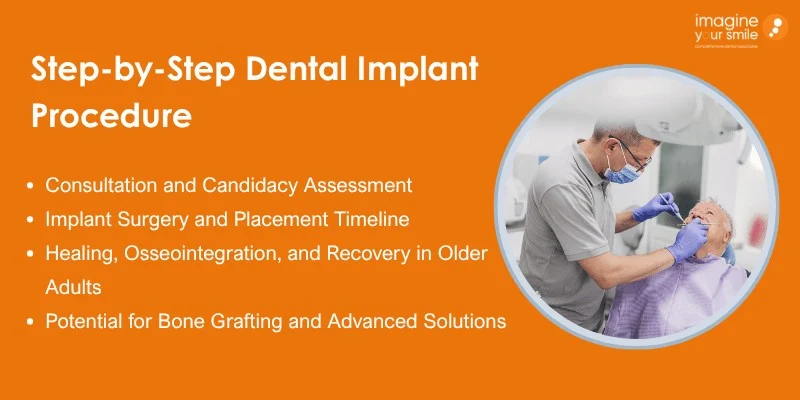
Consultation and Candidacy Assessment
Your first visit involves a complete evaluation of your mouth, jawbone, and overall health. The oral surgeon or dentist will take X-rays and often 3D scans to check your bone density and structure.
They’ll review your medical history and any medications you take.
During this assessment, your dental team determines if you need any preparatory work before implant placement. They’ll check for conditions that might affect healing, like uncontrolled diabetes or osteoporosis.
If you’re missing all your teeth, they may discuss options like All-on-X full-arch implant systems that can restore your entire mouth.
The dentist will create a treatment plan tailored to your specific needs. This plan outlines how many implants you need, where they’ll go, and the expected timeline. You’ll also discuss costs and anesthesia options at this stage.
Implant Surgery and Placement Timeline
The implant placement happens in stages spread over several months. First, the surgeon makes a cut in your gum to expose the jawbone. They drill small holes and insert the metal posts that will serve as artificial tooth roots.
The dental implant surgery is typically done as an outpatient procedure with local anesthesia or sedation. You might have temporary dentures to wear while you heal.
Some patients receive the abutment (the connector piece) during the same surgery, while others need a second minor procedure later.
The total process takes several months because your bone needs time to fuse with the implant. Most people wait three to six months between implant placement and receiving their final crown.
Healing, Osseointegration, and Recovery in Older Adults
Osseointegration is when your jawbone grows into and bonds with the metal implant post.
This process creates a stable foundation for your new tooth. Implant healing in older adults may take slightly longer than in younger patients, but success rates remain high.
After surgery, expect some swelling, minor bleeding, and discomfort for a few days. You’ll need to eat soft foods during the initial healing period. Your dentist may prescribe pain medication or antibiotics.
Common healing timeline for older adults:
- First 1-2 weeks: Initial gum healing
- 3-6 months: Bone integration with implant
- 2+ weeks after abutment placement: Final crown attachment
Your overall health and bone quality affect how quickly you heal. Smoking, diabetes, and certain medications can slow the process.
Potential for Bone Grafting and Advanced Solutions
Many older adults need bone grafting because jawbone naturally shrinks after tooth loss. If your bone is too thin or soft, it can’t support an implant properly.
The surgeon adds bone material to build up the area before or during implant placement.
Bone grafts can come from your own body, a donor, an animal source, or synthetic materials. Minor grafting might happen during the same surgery as implant placement.
More extensive grafting requires several months of healing before you can receive implants.
For patients with severe bone loss in the upper jaw, zygomatic implants attach to the cheekbone instead of the jawbone. These specialized implants avoid the need for extensive bone grafting.
Options like All-on-4 or All-on-6 systems use fewer implants placed at strategic angles to maximize existing bone and support full mouth dental implants.
Benefits of Implants Compared to Other Tooth Replacement Options
Dental implants provide unique advantages that go beyond simply filling gaps in your smile. They help you eat a wider variety of foods, stay firmly in place during daily activities, and protect your jawbone from deteriorating over time.
Restoring Chewing Ability and Nutrition
When you lose teeth, your ability to eat certain foods often suffers. Dental implants function like natural tooth roots, which means they give you much stronger biting force than other tooth replacement options.
With implants, you can eat crunchy vegetables, tough meats, and fresh fruits without worry.
Traditional dentures typically allow only 25% of normal chewing power, which forces many people to avoid nutritious foods. An implant-supported bridge or individual implants restore up to 80% of your natural bite strength.
This improved chewing ability directly affects your health. You can maintain better nutrition when you’re not limited to soft, processed foods.
Many people with traditional dentures struggle to get enough protein and fiber because these foods require more chewing.
Dental implants help you chew your food properly, which improves digestion and allows your body to absorb nutrients more effectively.
Improved Stability and Everyday Comfort
Traditional dentures slip, click, and require messy adhesives to stay in place. Implants anchor directly into your jawbone, so they don’t move around when you talk, laugh, or eat.
You won’t need to worry about embarrassing moments when your teeth shift during conversations. Implant-retained dentures offer much better stability than regular dentures because they snap onto implant posts.
Even a full set of implant-supported overdentures stays firmly attached throughout your day.
The comfort difference is significant. You won’t deal with sore spots from dentures rubbing against your gums. There’s no plastic palate covering the roof of your mouth, which means you can taste food better and speak more naturally.
Jawbone Preservation and Facial Structure Support
Your jawbone needs stimulation from tooth roots to maintain its density and shape. When you lose teeth, the bone in that area starts to shrink.
Dental implants help prevent further jawbone deterioration because they replace the missing tooth root. The titanium post transfers chewing forces into your jawbone, just like a natural tooth would.
This stimulation keeps your bone healthy and strong.
Bridges and dentures don’t stop jawbone loss. In fact, traditional dentures can speed up bone deterioration because they put pressure on your gums rather than stimulating the bone beneath them.
Preserving your jawbone also maintains your facial structure. Without this support, your face can develop a sunken appearance as the bone shrinks.
Implants help keep your natural face shape and prevent the aged look that often comes with significant tooth loss.
Risks, Success Rates, and Cost for Seniors
Dental implants have proven highly effective for older adults, with success rates remaining strong even after age 60. The financial investment can be significant, but understanding what affects outcomes and costs helps you make an informed decision about your tooth replacement options.
Implant Success Rates in Older Adults
You can expect excellent results with dental implants regardless of your age. Research shows a dental implant success rate of 97% at 10 years and 75% at 20 years across all age groups.
A 2019 study compared outcomes between 400 patients over 65 years and younger adults. The results showed only a 2% failure rate across both groups over 10 years.
Even patients over 80 years experienced only slightly higher complication rates.
The prevalence of dental implants among adults over 50 has grown from 1.3% in 1999 to 8.4% in 2020. This increase reflects both improved technology and growing confidence in implant success for older patients.
Factors Affecting Implant Failure
Several health conditions and lifestyle factors can increase your risk of implant failure. Diabetes significantly raises your infection risk after implant surgery. Smoking slows the healing process and reduces blood flow to your gums.
Poor oral hygiene allows bacteria to accumulate around your implant, potentially causing infection. Mechanical issues like loose screws can also lead to problems if not addressed quickly.
Complications can develop immediately after placement or later, ranging from damage to surrounding teeth during surgery to complete implant failure.
However, these issues remain rare when you follow proper care instructions and maintain regular dental checkups.
Age and Implant Longevity

Your age alone doesn’t determine how long your implants will last. The same factors that affect younger patients matter more than the number on your birthday cake.
Your bone density, overall health, and commitment to oral hygiene play bigger roles.
You’ll need to maintain diligent cleaning habits and attend regular dental appointments. Report any looseness or pain to your dentist immediately. Following these practices helps your implants last for decades.
The healing process typically takes several months regardless of your age. Your body needs time to integrate the titanium post with your jawbone before the final crown can be placed.
Cost Considerations and Insurance
A single tooth implant can cost up to $6,000 without insurance coverage. A full mouth of implants becomes significantly more expensive. Your total cost depends on how many implants you need, which type your dentist recommends, and whether you require preparatory procedures.
Factors affecting your cost:
- Number of implants needed
- Type of implant (endosteal or subperiosteal)
- Location in your jaw
- Bone grafting or other prep work
- Geographic location of your dental practice
You should check your private health insurance plan for dental implant coverage details. Many plans cover a portion of the procedure, though you’ll likely have coinsurance responsibilities.
Despite the higher upfront investment, implants often provide better long-term value than dentures since you won’t need to replace them for at least a decade in most cases.
Long-Term Maintenance and Best Practices
Taking care of dental implants requires consistent daily cleaning and regular dental visits. The good news is that proper maintenance of dental implants follows many of the same principles as caring for natural teeth, with a few important differences.
Post-Procedure Care and Professional Check-Ups
Your oral surgeon will schedule follow-up visits during the first few months after placement. These appointments let your dentist check that your implants are healing correctly and integrating with your jawbone.
After the initial healing period, you’ll need professional check-ups every six months.
During these visits, your dentist will examine your implants for signs of problems and perform professional cleaning around the implant sites. They’ll also take X-rays periodically to monitor bone levels around your implants.
Recommended Professional Check-Up Schedule:
- First 3 months: Monthly visits
- 3-12 months: Every 3 months
- After first year: Every 6 months
If you notice any looseness, pain, or swelling between appointments, contact your dentist right away. Early detection of issues helps prevent more serious complications.
Everyday Oral Hygiene for Implant Longevity
You need to brush your dental implants twice daily just like natural teeth. Use a soft-bristled toothbrush and non-abrasive toothpaste to avoid scratching the implant surfaces.
Flossing around implants is essential. Special implant floss or interdental brushes work well for cleaning between implants and around the gum line. Water flossers can also help remove food particles and bacteria.
Your daily routine should include:
- Brushing for two minutes twice daily
- Flossing or using interdental brushes once daily
- Rinsing with an antimicrobial mouthwash
- Avoiding very hard or sticky foods that could damage restorations
Dental implants for seniors work just as well when you maintain good oral hygiene habits. The key is preventing peri-implantitis, which is similar to gum disease but affects the tissue around implants.
Managing Full Mouth and Arch Replacements
Full mouth implants and full arch replacements need extra attention during cleaning. You’ll need to clean under and around the prosthetic arch where food particles can collect.
Your dentist may recommend specific tools like angled brushes or specialized flossers designed for full mouth reconstruction. Some fixed arches can be removed by your dentist for deep cleaning during professional visits.
For implant-supported dentures that snap on and off, remove them daily for thorough cleaning. Clean both the denture and the implant attachments separately.
Soak removable prosthetics in denture cleaner overnight and brush them gently before reinserting.
Frequently Asked Questions
Many people over 60 have questions about costs, age limits, bone health concerns, and how implants compare to other tooth replacement options.
Here’s what you need to know about the practical aspects of getting dental implants as a senior.
How much do dental implants typically cost for older adults, and what affects the price?
A single tooth implant can cost up to $6,000 without insurance coverage. The price you pay depends on how many implants you need, what type of implant works best for your situation, and where in your jaw the implant will be placed.
If your mouth needs preparatory work before the implant can be placed, that will add to the total cost. Some private health insurance plans cover part of the cost, so you should check your plan benefits to see what’s included.
Full-mouth implants will cost significantly more than a single tooth replacement. The exact amount varies based on your specific treatment plan.
Am I too old for dental implants, and is there an upper age limit?
There is no upper age limit for dental implants. Your overall health matters more than your age when it comes to getting implants.
A study comparing 400 patients over 65 years with younger patients found only a 2% failure rate across both groups over 10 years. Even participants over 80 years experienced only slightly higher complication rates.
Your dentist will look at your specific health conditions, medications, and ability to heal rather than your age alone. Age itself is not a risk factor for complications with dental implants.
What options are available if I have bone loss or osteoporosis and still want implants?
If you have lower jawbone height, you might need subperiosteal implants instead of the standard type. These are placed on top of the jaw rather than directly into the bone.
Your dentist might recommend bone grafting to build up the jawbone before placing implants. This adds time to the process but can make implants possible even with bone loss.
Some treatment plans use fewer implants with special attachments to support multiple teeth. This approach can work when you don’t have enough bone density in all areas.
How long does the dental implant process usually take for someone over 60?
The healing process after dental implant surgery can take several months. Your body needs time for the titanium post to fuse with your jawbone before the final tooth can be attached.
If you need preparatory procedures like bone grafting, that extends the timeline even more. The exact length depends on your healing speed and the type of implant you’re getting.
You’ll need to attend regular dental check-ups during the healing period. Your dentist will monitor how well the implant is integrating with your bone.
Are full-mouth dental implants a good option for seniors, and how do they compare to dentures?
Dental implants are more preferred than dentures because they last longer and restore the shape of your mouth. They don’t slip or move around when you eat or talk like dentures sometimes do.
Implants help prevent further jawbone deterioration that happens when teeth are missing. Dentures sit on top of your gums and don’t provide this same bone protection.
In most cases, you don’t need to replace dental implants for at least a decade. This makes them a more permanent solution than dentures, which often need adjustments or replacements.
The main downside is cost, since full-mouth implants are expensive. You’ll need to weigh the higher upfront cost against the longer lifespan and better function.
Are there any programs, grants, or clinics that help seniors get low-cost or free dental implants?
Some dental schools offer reduced-cost implant procedures performed by students under supervision. These programs can lower costs significantly compared to private practice prices.
Community health centers sometimes provide dental services on a sliding fee scale based on your income. Not all of them offer implants, but it’s worth checking what’s available in your area.
Nonprofit organizations occasionally offer grants or assistance for dental care, though programs specifically for implants are limited. Medicare typically doesn’t cover dental implants, and Medicaid coverage varies by state.
You can ask your dentist about payment plans that let you spread the cost over time. Some dental practices work with financing companies that specialize in healthcare expenses.