Getting dental implants changes your life for the better, but the recovery period requires careful attention to what you eat.
Your diet during the first few days and weeks after implant surgery directly affects how well your implants heal and integrate with your jawbone.
Many patients wonder when they can return to their favorite foods and what to eat after dental implant surgery.
The good news is that you won’t be stuck eating only liquids forever. Your diet after dental implant surgery progresses through clear stages, with each phase allowing you to add more variety to your meals.
Understanding what to eat at each stage helps you heal faster and keeps your implants safe.
This guide walks you through every recovery phase, from the first 24 hours to long-term maintenance. You’ll learn which foods support healing, which ones to avoid, and when you can finally bite into an apple again without worry.
Key Takeaways
- Stick to liquids and ultra-soft foods for the first 48 hours, then gradually add soft solids over several weeks
- Avoid hot foods, crunchy items, and using straws during early recovery to protect the surgical site
- Most patients can return to normal eating after 3 to 6 months once the implant fully integrates with the jawbone
Table of Content
- Understanding Dental Implants and Healing Stages
- Immediate Post-Surgery Diet: The First 24–48 Hours
- Transition to Soft Foods: The First Week
- Gradually Expanding Your Diet: Weeks 2 to 6
- Returning to Normal Eating: Long-Term Success
- Frequently Asked Questions
Understanding Dental Implants and Healing Stages
Dental implants replace missing teeth through a surgical process that requires your jawbone to fuse with a titanium post, and what you eat during recovery directly affects how well this fusion happens.
How Dental Implants Work
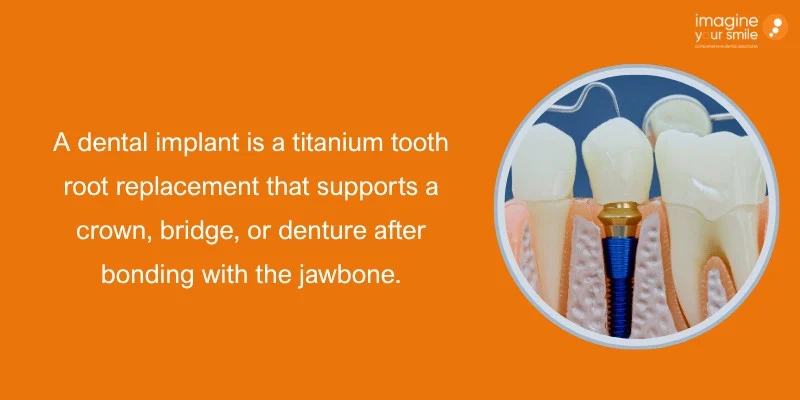
A dental implant is a titanium post that your dentist surgically places into your jawbone. This post acts as an artificial tooth root. After the post is in place, it needs time to bond with your bone.
Once the implant is stable, your dentist attaches an abutment on top. This small connector piece holds the final restoration. The restoration can be a crown, bridge, or denture depending on how many teeth you’re replacing.
The entire process usually takes several months. Your implant needs to be completely integrated with your bone before you can put normal chewing pressure on it. Rushing this process can cause the implant to fail.
What Is Osseointegration?
Osseointegration is the process where your jawbone grows around and fuses with the titanium implant post. This biological bonding is what makes dental implants so stable and long-lasting.
The process typically takes 3 to 6 months to complete. During this time, bone cells attach directly to the implant surface. The bond becomes stronger each week as more bone tissue develops around the post.
Several factors affect how quickly osseointegration happens:
- Bone density – denser bone integrates faster
- Your overall health – conditions like diabetes can slow healing
- Smoking – reduces blood flow and delays bone growth
- Nutrition – proper nutrients support bone formation
You won’t feel osseointegration happening. Your dentist monitors the process through follow-up appointments and imaging.
Why Diet Choices Matter After Surgery
Your food choices directly impact how quickly your implants heal. Hard or crunchy foods can disturb the surgical site and prevent proper bone integration.
Eating the wrong foods too soon can dislodge the blood clot that forms after surgery. This blood clot protects the implant site and helps new tissue grow. Losing it can lead to infection or implant failure.
Nutrient-rich foods help your body build new bone tissue around the implant. Protein supports tissue repair. Vitamins and minerals like calcium and vitamin D strengthen bone formation.
Poor nutrition slows down osseointegration and increases your risk of complications.
Immediate Post-Surgery Diet: The First 24–48 Hours
The first two days after your procedure are the most critical for protecting the surgical site and starting the healing process.
Your mouth will be sensitive, and you need to focus on staying nourished while avoiding anything that could disturb the blood clot or cause pain.
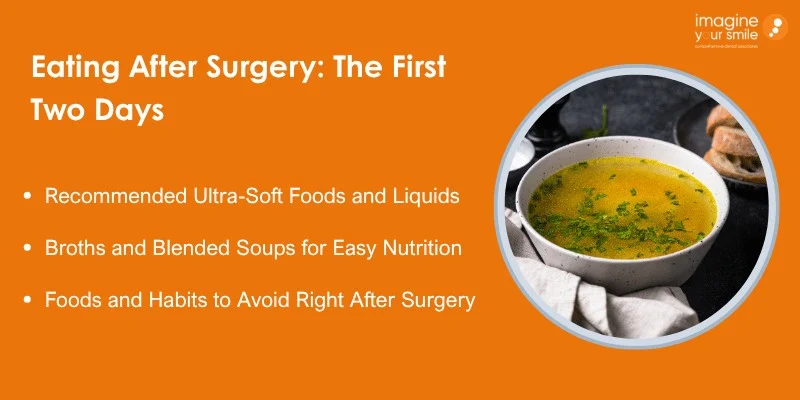
Recommended Ultra-Soft Foods and Liquids
During this initial phase, you should stick to cool liquids and ultra-soft foods that require zero chewing. Water should be your primary drink to stay hydrated throughout the day.
Best liquid options include:
- Milk (plain or flavored)
- Protein shakes
- Smoothies (without seeds)
- Fruit juices without pulp
Ultra-soft foods to eat after dental implant surgery:
- Plain yogurt
- Applesauce
- Pudding
- Gelatin
- Mashed potatoes (lukewarm)
- Ice cream (in moderation)
Keep all foods and drinks lukewarm or cool. Hot temperatures can irritate the surgical area and increase swelling.
Broths and Blended Soups for Easy Nutrition
Clear broths provide important nutrients while keeping you hydrated. Chicken, beef, or vegetable broth works well as long as you let it cool to room temperature first.
Blended soups offer more calories and protein than plain broth. You can puree almost any soup until completely smooth. Popular choices include cream of potato, butternut squash, and tomato soup.
Make sure to remove any chunks before eating. The texture should be completely smooth so you can swallow without chewing.
Foods and Habits to Avoid Right After Surgery
Never use straws during the first 48 hours. The suction can dislodge the blood clot and cause a painful complication called dry socket.
Foods to avoid completely:
- Hot foods and beverages
- Spicy seasonings
- Crunchy items (chips, crackers, raw vegetables)
- Hard foods (nuts, seeds, hard bread)
- Sticky foods (caramel, taffy)
- Alcohol
- Carbonated drinks
You should also avoid smoking and drinking through bottles with sports caps. Rest with your head elevated and eat slowly to give your body the best chance to heal properly.
Transition to Soft Foods: The First Week
During the first week of dental implant recovery, you can slowly add more variety to your diet while still keeping everything soft and easy to chew. This phase helps you get proper nutrition while protecting the surgical site as it heals.

Safe Soft Foods to Start Including
You can now expand beyond liquids to include foods that require minimal chewing. Scrambled eggs are an excellent choice because they’re packed with protein and have a soft texture that won’t irritate your implants.
Oatmeal works well for breakfast, just make sure it’s not too hot when you eat it.
Mashed bananas and cottage cheese are gentle options that provide important nutrients. Soft pasta with a smooth sauce gives you some variety while staying easy on your mouth.
Well-cooked vegetables like steamed carrots or squash can be mashed slightly to make them safer to eat.
Pureed soups offer both nutrition and comfort during this phase. You can blend vegetable or chicken soup to a smooth consistency.
Smoothies with protein powder help you maintain your energy levels without putting stress on the implant site. Yogurt and pudding remain good choices throughout this week.
Tips for Comfortable Eating During Recovery
Chew on the opposite side of your mouth from where your dental implant was placed. This simple step protects the surgical area from pressure and helps prevent complications.
Take smaller bites than usual and eat slowly to give yourself time to adjust.
Keep your food at room temperature or slightly warm. Hot foods can increase swelling and discomfort in the first week after dental implant surgery. Cold foods are generally fine, but very cold items might cause sensitivity.
Stay away from anything crunchy, hard, or sticky. This means no chips, nuts, crusty bread, or chewy candies. Spicy foods should also be avoided since they can irritate the healing tissue.
Oral Care and Chewing Techniques
Brush your teeth gently, being extra careful around the implant site. Use a soft-bristled toothbrush and avoid scrubbing the surgical area directly. Your dentist may recommend a special rinse to keep the area clean without disturbing it.
When eating after dental implants, cut food into small pieces before putting it in your mouth. This reduces the amount of chewing needed and makes it easier to avoid the implant area. Don’t bite down hard on anything, even if it seems soft enough to handle.
Most dentists recommend continuing soft foods for 7-14 days depending on how your healing progresses. If you notice pain, swelling, or bleeding when you eat certain foods, stop eating them and contact your dentist.
Everyone heals at a different pace during foods to eat after dental implant surgery recovery.
Gradually Expanding Your Diet: Weeks 2 to 6
During weeks 2 through 6, your implant site becomes stronger, and you can start adding foods that require gentle chewing. This phase supports the osseointegration process while giving you more variety in your meals.
When to Add Semi-Solid and Tender Foods
Around the two-week mark, you can begin introducing semi-solid foods that don’t put too much pressure on your healing implant.
Ground beef, shredded chicken, and flaky fish are good protein options that break apart easily. You can also add steamed vegetables like carrots, zucchini, and squash that become soft when cooked.
Soft fruits become safe choices during this time. Try ripe bananas, peaches, pears, and avocados that you can mash with a fork. Avoid biting into whole apples or raw vegetables since these require too much force.
For grains, stick with well-cooked rice, quinoa, and soft pasta. These foods provide energy without challenging your healing tissues. You should still chew on the opposite side of your mouth from the implant site whenever possible.
Cut your food into small, bite-sized pieces to reduce the amount of chewing needed. If something feels too hard or causes discomfort, wait another week before trying it again.
Balanced Diet for Healthy Osseointegration
Your body needs specific nutrients to support the osseointegration process where your implant fuses with your jawbone.
Protein helps rebuild tissue and should make up a significant part of your diet through eggs, Greek yogurt, cottage cheese, and tender meats.
Calcium and vitamin D strengthen bone integration. Include milk, cheese, fortified plant milks, and soft tofu in your meals. Vitamin C from cooked sweet potatoes, soft berries, and pureed butternut squash reduces inflammation and speeds healing.
Focus on eating every 3-4 hours to maintain steady nutrition levels. Your body works hard during recovery and needs consistent fuel. Drink plenty of water throughout the day to stay hydrated and flush out toxins.
Monitor your implant site for any increased pain, swelling, or sensitivity after meals. These signs might mean you’re advancing your diet too quickly.
When you’re wondering how long after dental implants can you eat normally, remember that patience during weeks 2 to 6 sets the foundation for returning to your regular diet by month 3 or 4.
Returning to Normal Eating: Long-Term Success
Most people can return to their regular diet between three to six months after surgery. The key to long-term success involves knowing when to reintroduce certain foods and maintaining habits that protect your investment.
Timeline for Resuming Regular Foods
You can typically start eating normally with dental implants after three to six months. Your dentist will confirm that osseointegration is complete before giving you the green light.
This is when your implant has fully fused with your jawbone.
During your dental implant recovery, your dentist will schedule checkups to monitor healing. They’ll check for proper integration and make sure there are no complications.
Once you get clearance, you can gradually add firmer foods back into your diet.
Start by testing how your implant feels with slightly harder foods. Cut items like apples into small pieces rather than biting directly into them. Pay attention to any discomfort or sensitivity as you expand your food choices.
Foods to Avoid for Ongoing Implant Care
Even after full recovery, some foods can damage your implants. Hard candies and ice should never be chewed because they can crack the crown or loosen the implant. Sticky foods like caramel or taffy can pull on your restoration.
Extremely crunchy items such as hard pretzels, popcorn kernels, and nutshells require caution. While you can eat most nuts, be mindful of how you bite down. Non-food objects like pen caps, fingernails, or bottle caps should never go in your mouth.
Your implants can handle most normal foods once healed. The goal is avoiding excessive force or pressure that could compromise the restoration over time.
Maintaining Oral Health in the Long Run
Brush twice daily and floss around your implants just like natural teeth. Use a soft-bristled brush and non-abrasive toothpaste to avoid scratching the crown surface.
Schedule dental cleanings every six months. Your hygienist will use special tools designed for implants that won’t scratch or damage the materials. Regular checkups help catch potential problems early.
Eat a balanced diet rich in calcium, vitamin D, and protein to support your jawbone health. These nutrients keep the bone around your implant strong. Stay hydrated and limit acidic beverages that can affect your oral health.
If you grind your teeth at night, ask your dentist about a nightguard to protect your implants.
Frequently Asked Questions
Many people have similar questions about what they can eat after getting dental implants. The timing depends on your healing progress, the type of procedure you had, and how your mouth feels during recovery.
What are the best soft foods to eat in the first 24–48 hours after dental implant surgery?
The first day or two after surgery calls for foods that need no chewing at all. Your mouth is at its most sensitive during this time.
Lukewarm broths, protein shakes, and smoothies are excellent choices. You can also eat applesauce, plain yogurt, and mashed bananas.
These foods support healing in the early recovery phase without putting any pressure on your implant site.
Make sure everything is room temperature or slightly cool. Hot liquids can increase swelling and discomfort.
Avoid using straws during this period. The suction can disturb the surgical area and slow down healing.
When can I start eating more solid foods again after getting dental implants?
Most people can begin adding soft solid foods around day four after surgery. This includes scrambled eggs, mashed potatoes, well-cooked pasta, and soft rice.
Around the two-week mark, you may slowly introduce firmer textures. Cut your food into small pieces and chew carefully on the opposite side of your mouth if needed.
Your dentist will give you specific guidance based on how you’re healing. Some people need to wait longer depending on their procedure type.
Listen to your body throughout this process. If something causes discomfort or pressure, switch back to softer options.
Why do some dentists recommend avoiding dairy right after implant surgery?
Some dentists suggest limiting dairy products immediately after surgery because they can increase mucus production. This extra mucus might make you want to spit more often, which can disturb the healing site.
Dairy can also coat your mouth and create an environment where bacteria grow more easily. This matters most in the first few days when your surgical site is most vulnerable.
Plain yogurt is usually fine because it’s soft and contains beneficial bacteria. Just avoid milk-based drinks that are too thick or require sucking through a straw.
If your dentist approves dairy, stick to room temperature options. Cold ice cream might seem soothing, but wait until your dentist says it’s safe.
Can I eat rice after dental implant surgery, and if so, when is it safe?
You can typically eat soft, well-cooked rice starting around day four to seven after surgery. The rice should be tender and moist, not dry or sticky.
White rice works better than brown rice in the early stages because it’s softer and easier to chew. Make sure each grain is fully cooked and easy to mash with your tongue.
Small grains can sometimes get stuck near the implant site. Rinse your mouth gently with water after eating to clear away any particles.
If rice feels uncomfortable or gets stuck easily, wait a few more days before trying again. Your comfort level is the best guide.
How long after All-on-4 implants can I eat normally without worrying about damaging anything?
All-on-4 implants usually require a longer soft food period than single implants. Most patients need to stick with soft foods for at least four to six weeks.
Your dentist will monitor your healing and tell you when you can add firmer foods. The transition back to normal eating after All-on-4 happens gradually over several months.
Even after you get clearance to eat normally, you should still avoid extremely hard foods like hard candies or ice. These can damage your restoration.
The bone integration process takes three to six months to complete. Being cautious during this time protects your investment and gives you the best long-term results.
When is it safe to eat crunchy foods like chips after getting dental implants?
You should avoid crunchy foods like chips for at least two to three weeks after implant surgery. Sharp edges can irritate your gums and disturb the healing tissue.
Even after the initial healing period, introduce crunchy foods slowly. Start with softer chips or crackers that dissolve quickly in your mouth.
If you had multiple implants or a more complex procedure, you might need to wait longer. Your dentist will give you specific timing based on your case.
When you do start eating chips again, chew on the opposite side of your mouth from the implant. This reduces pressure on the surgical site and protects your new implant.