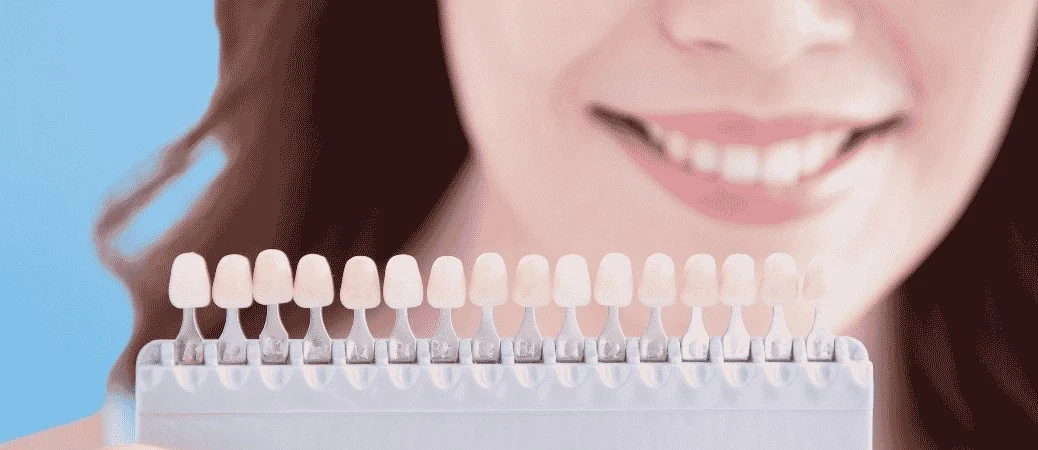
A tiny chip or a slightly overlapping edge can feel like a big deal every time you smile at a photo. The good news is that fixing it does not always mean covering the whole tooth.
When comparing veneers vs teeth contouring, the main question is whether your cosmetic concern requires reshaping the existing enamel or adding material to change the tooth’s appearance.
Teeth contouring removes a small, controlled amount of enamel to smooth or reshape a tooth, while veneers add material to change its color, shape, or size more significantly.
Veneers add a thin layer of material over the tooth to change its color, shape, or size more dramatically. Choosing the smallest treatment that solves your specific concern protects your natural enamel and your wallet.
At Imagine Your Smile, the team sees this decision play out often: a patient worried about one pointed canine or a slightly chipped edge, unsure if they need a full smile makeover or just a quick polish.
The right cosmetic dental treatment matches the size of the fix to the size of the problem, not the other way around.
Key Takeaways
- Minor shape flaws often need only conservative enamel reshaping, not a permanent veneer.
- Veneers make sense when color, volume, or larger structural changes are involved.
- A dentist should check your bite and enamel thickness before removing or covering any tooth structure.
Start With the Smallest Effective Fix
The smartest first step is asking whether your concern is really about shape, color, or missing tooth volume. That answer points you toward the right fix before you ever sit in the chair.
A cosmetic dentist looks at dental imperfections through this lens because each category calls for a different tool.
Uneven edges and slightly overlapping teeth often just need reshaping. Discolored teeth or stained teeth need something that changes color, since enamel removal alone cannot lighten a tooth.
Misaligned teeth with significant rotation may need orthodontics before any cosmetic step. Getting this sorted first keeps your smile makeover proportionate to the actual problem.
Is the concern about tooth shape, color, or missing volume?
Shape problems, like a jagged edge or a slightly pointed canine, respond well to reshaping. If tooth color is the main concern, professional teeth whitening may be considered before treatments that change the tooth’s shape or surface.
When does a minor flaw become a veneer-level concern?
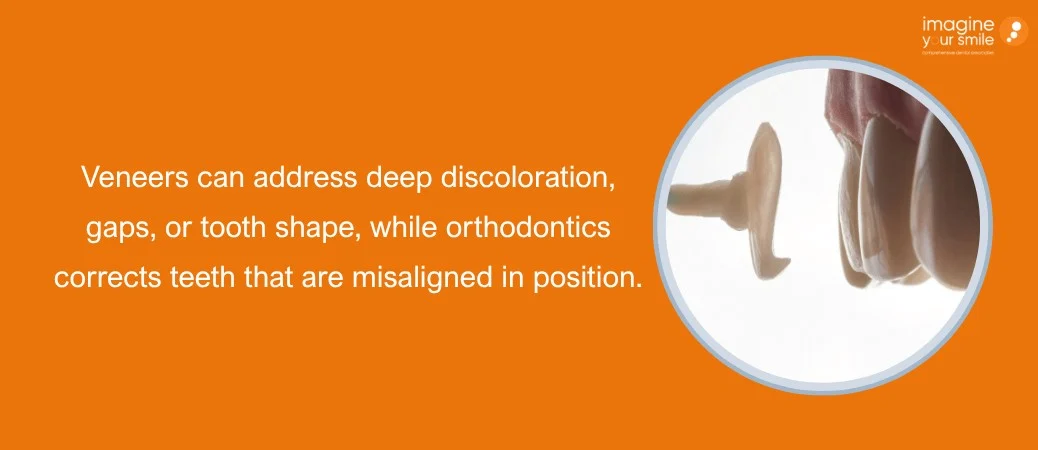
A flaw crosses into veneer territory when it involves more than surface shape, such as deep discoloration, a wide gap, or a tooth that needs to look longer or wider.
At that point, no amount of enamel removal will solve it, since contouring cannot add back what is missing.
When teeth overlap because of their position rather than simply their shape, orthodontic treatment may be more appropriate. Veneers may sometimes change the appearance of minor alignment concerns, but they do not physically move teeth into a new position.
Why a cosmetic dentist should assess the bite before changing enamel
Your bite determines how much force hits each tooth every time you chew, so it has to be checked before enamel comes off or a veneer goes on.
Removing enamel from a tooth that already carries heavy bite pressure can create sensitivity or uneven wear later. This is one reason a full evaluation, not a guess based on appearance alone, should come before any decision about your natural tooth structure.
When Conservative Reshaping Is Enough
Teeth contouring is enough when the only issue is the tooth’s outline, not its color or size.
This procedure, also called odontoplasty or enameloplasty in clinical terms, uses fine tools to smooth or reshape the outer enamel layer without adding any material to the tooth.
For a deeper look at how this procedure works and who it fits best, check our guide on ‘should you consider tooth contouring’.
Which minor flaws can enameloplasty refine?
Enameloplasty works well on slightly pointed canines, small chips on the biting edge, minor length differences between two front teeth, and rough or serrated edges from normal wear.
It can also soften a slight overlap where two teeth meet at the tip, all without touching the tooth’s color or requiring any added material.
How much enamel can safely be removed?
Front teeth carry roughly 1 to 2 millimeters of enamel at the biting edge, and safe contouring generally removes no more than 0.3 to 0.5 millimeters from any one surface.
That is a small enough amount that healthy teeth are not weakened, but it also means contouring cannot fix teeth that are already short or worn down. If enamel thickness is already reduced by grinding or acid wear, removing more is not recommended.
What happens during a tooth contouring appointment?
Most contouring appointments happen in one visit, using fine diamond tools or abrasive strips to smooth and polish the tooth. Local anesthesia usually is not needed since enamel has no nerve supply, and there is no meaningful recovery time afterward.
You can expect to see the result immediately, without waiting on a dental laboratory or healing period, which keeps oral health and daily routines undisturbed.
When Veneers Offer a Better Correction
Veneers offer a better fix when the problem involves color, added volume, or a bigger shape change than reshaping alone can handle.
Dental veneers are thin shells bonded to the front of a tooth, built to cover flaws that enamel removal cannot touch.
What can dental veneers change that contouring cannot?
Veneers can mask certain discoloration, add length or width to a tooth, close some small spaces, and improve the appearance of minor alignment or shape irregularities. They do not move teeth the way orthodontic treatment does.
Since veneers add material instead of only removing it, they can also close small gaps and reshape a tooth’s overall proportions. This makes them the more versatile choice when more than one issue is present.
Porcelain vs. composite veneers: What is the practical difference?
Porcelain veneers are more stain-resistant and durable, generally lasting longer than composite versions, while composite resin veneers cost less upfront and can be applied in a single visit.
Porcelain requires a dental laboratory to fabricate the shells, which adds a short waiting period, while composite is shaped directly on the tooth chairside.
No-prep veneers are a thinner porcelain option that may need less enamel removal, though your dentist will confirm if your teeth qualify.
How preparation, temporary veneers, and the dental laboratory affect treatment
Traditional porcelain veneers usually require a small amount of enamel removal to make room for the shell, done under local anesthesia.
While the dental laboratory crafts your permanent veneers, you may wear temporary veneers to protect the prepared teeth and maintain your appearance.
Some patients notice mild tooth sensitivity during this stage, which typically settles once the final veneers are bonded into place.
Compare Commitment, Cost, and Long-Term Care
Contouring asks for almost nothing in return, while veneers ask for a bigger upfront commitment in exchange for a broader fix.
Comparing cost, how much natural tooth structure each option touches, and what upkeep is involved afterward makes the tradeoffs clear.
| Factor | Teeth Contouring | Veneers |
| Enamel removed | Up to 0.5mm per surface | More with traditional prep, less with no-prep |
| Typical cost | Low, single appointment | $800 to $2,500 per tooth |
| Anesthesia needed | Usually none | Local anesthesia for traditional prep |
| Reversible | No, but no material added | No, enamel removal is permanent |
| Lifespan | Permanent shape change | 10 to 15 years for porcelain |
| Maintenance | Standard oral hygiene | Oral hygiene plus possible night guard |
How do contouring and veneers compare in cost?
Contouring costs less because it involves no lab work, no materials, and one short appointment. Veneers run between $800 and $2,500 per tooth depending on material, reflecting the lab fabrication and bonding process involved.
Which option preserves more natural tooth structure?
For minor shape corrections, contouring can be more conservative than conventional veneer preparation because only a small amount of enamel is selectively reshaped.
The amount of tooth alteration needed for veneers varies with the veneer type and individual treatment plan.
What maintenance do veneers and reshaped teeth need?
Reshaped teeth need nothing beyond your normal oral hygiene routine, since no new material was added.
Veneers benefit from the same brushing and flossing, plus a night guard if you grind your teeth at night, since bite forces can chip or loosen a veneer over time.
Neither option treats gum disease or existing decay, so any active oral health issues need care before cosmetic work begins, a point the American Academy of Cosmetic Dentistry emphasizes when discussing treatment planning.
Choose a Proportionate Plan for Your Smile

The best cosmetic dental treatment is the one that matches the size of your concern, not the one with the most dramatic before-and-after.
A single chipped edge does not need the same plan as a full smile makeover, and a good cosmetic dentist will say so plainly.
At Imagine Your Smile in Woodbury, MN, Dr. Mark W. Wilhelm can evaluate your tooth shape, enamel, bite, and cosmetic goals before recommending an approach.
Whether a small concern can be addressed with conservative contouring or would benefit from porcelain veneers depends on the tooth itself and the result you want to achieve.
Good oral hygiene and, if needed, a night guard keep either choice looking its best for years. The goal is always a natural-looking smile that fits your face and your budget, not a one-size-fits-all upgrade.
Conclusion
Small smile concerns deserve small, proportionate solutions. Teeth contouring handles shape-only flaws with almost no downside, while veneers step in when color, volume, or bigger structural changes are part of the picture.
Whichever path fits, a proper evaluation of your bite, enamel thickness, and oral health should come first, and any active decay or gum disease needs treatment before cosmetic work begins.
Frequently Asked Questions
Why do dentists sometimes discourage veneers for minor flaws?
Veneers involve permanent changes to the tooth, and for a flaw that reshaping could fix, that level of intervention is more than necessary.
A careful dentist will recommend the more conservative option first when the concern is limited to shape, saving veneers for cases where color or added volume are truly needed.
Can teeth contouring fix uneven edges without making teeth look too small?
Yes, when done carefully, contouring can smooth uneven edges without making a tooth look noticeably smaller. Your dentist evaluates the enamel thickness, tooth proportions, and bite before deciding how much reshaping is appropriate.
Do veneers require enamel removal even if I choose no-prep veneers?
No-prep veneers require little to no enamel removal because they are thinner than traditional porcelain veneers. Some tooth surface preparation may still happen depending on your natural tooth shape and alignment, so your dentist will confirm this during your evaluation.
Can teeth rot or decay under veneers?
Yes, the tooth underneath a veneer can still develop decay if oral hygiene is neglected, since the veneer only covers the front surface. Regular brushing, flossing, and checkups protect the natural tooth structure underneath just as they would without a veneer.
Should I whiten my teeth before choosing veneers or contouring?
If whitening is part of your cosmetic goals, your dentist may recommend completing it before finalizing veneers so the restoration shade can be selected after your natural teeth have reached the desired color.
Teeth contouring does not change tooth color, so whitening and reshaping may also be combined when both shade and minor shape concerns are present.