Many people who want veneers to improve their smile don’t realize that their gum line might need attention first.
If you have a gummy smile or your teeth appear short, simply placing veneers on top won’t fix the underlying issue.
Crown lengthening before veneers is necessary because it exposes more of your natural tooth structure by reshaping the gum and bone, creating a stable foundation for veneers to look natural and last longer.
Your gums play a bigger role in your smile than you might think. When dentists need to lower the gum line before fitting a crown, they’re addressing the same principle that applies to veneers.
Without proper gum contouring before crown lengthening, porcelain veneers can look bulky or push too far under the gum tissue, causing inflammation and that telltale red rim around dental work.
A periodontist can evaluate whether you need this procedure to achieve the smile you’re hoping for.
The good news is that crown lengthening changes your anatomy and is typically a one-time procedure. Once your gums and bone are reshaped, they stay stable.
This means you’ll have the right foundation for veneers that look proportionate and healthy for years to come.
Key Takeaways
- Crown lengthening exposes more tooth structure by reshaping gum and bone tissue before veneers are placed
- The procedure is typically permanent and prevents veneers from looking bulky or causing gum inflammation
- A periodontist can determine if you need gum contouring to achieve balanced proportions for your smile makeover
Table of Content
- Understanding Crown Lengthening and Its Role in Smile Makeovers
- When Is Crown Lengthening Necessary Before Veneers?
- Step-by-Step: The Clinical Process and Techniques
- Periodontal Health and Healing After Crown Lengthening
- Alternatives and Sequencing: Veneers, Orthodontic Options, and More
- Frequently Asked Questions
Understanding Crown Lengthening and Its Role in Smile Makeovers
Crown lengthening reshapes your gum tissue and sometimes bone to expose more of your natural tooth surface.
This periodontal maintenance procedure creates the foundation you need for successful veneers and other cosmetic treatments.
What Crown Lengthening Entails
Crown lengthening is a dental procedure that removes excess gum tissue to reveal more of your tooth. Sometimes your dentist also needs to remove small amounts of bone underneath the gums.
The procedure addresses two main concerns. First, it fixes what many people call a gummy smile by creating better balance between your teeth and gums.
Second, it exposes enough tooth structure to properly support dental work like crowns or veneers.
Your periodontist carefully reshapes the gum line around one tooth or multiple teeth depending on your needs. This reshaping creates a more balanced ratio between your visible tooth surface and gum tissue.
The result gives your smile a more symmetrical appearance while preparing your teeth for restorative work.
The Importance of Tooth Structure and Biologic Width
Biologic width refers to the natural space where your gum tissue attaches to your tooth. This protective seal sits between the bottom of the gum pocket and where the tooth’s root meets the crown.
You need to maintain this space for healthy periodontal health.
Your teeth require enough exposed structure above the gum line to support veneers properly. Without adequate tooth surface, veneers won’t bond correctly or may look bulky and unnatural.
Crown lengthening ensures your dentist has the right amount of tooth to work with while preserving your biologic width. Breaking into this natural seal can cause gum inflammation, bone loss, and other problems.
That’s why proper surgical management must account for different periodontal phenotypes and individual tissue patterns.
Crown Lengthening Procedure Basics
The crown lengthening procedure typically takes one to two hours depending on how many teeth need treatment. Your periodontist uses local anesthesia to keep you comfortable throughout the process.
The procedure follows these general steps:
- Your periodontist makes small cuts in your gum tissue
- Excess gum tissue gets removed to expose more tooth
- Bone reshaping occurs if needed for proper contours
- The area gets cleaned and stitched closed
You’ll need time to heal before getting veneers. Most patients wait six to eight weeks for their gums to settle into their new position.
This waiting period lets your periodontist see the final gum line and ensures your veneers will fit correctly.
Crown lengthening serves as a preparatory step before other cosmetic treatments when more exposed tooth surface is necessary.
Your dentist can then place veneers on adequate tooth structure with proper support.

When Is Crown Lengthening Necessary Before Veneers?
Crown lengthening becomes essential when your gum tissue covers too much of your teeth or when the underlying bone structure interferes with proper veneer placement.
The decision to proceed with this surgery depends on your specific gum anatomy, tooth proportions, and the health requirements for long-lasting restorative work.
Identifying Excess Gum and Altered Passive Eruption
Your teeth might look shorter than they actually are because excess gum tissue covers them. This condition often results from altered passive eruption, where your gums don’t recede naturally as your adult teeth come in.
When you have altered passive eruption, your gum line sits too far down on the tooth surface. This makes your teeth appear square or stubby even though they’re normal size underneath.
A gummy smile can result from several causes:
- Altered passive eruption – gums that didn’t recede properly during tooth development
- Vertical maxillary excess – when your upper jaw is longer than average
- Short upper lip – which reveals more gum tissue when you smile
- Hyperactive lip muscles – pulling your lip up too high
Crown lengthening for a gummy smile removes this excess tissue to reveal the proper tooth shape.
Without this step, your porcelain veneers would need to be placed on top of covered tooth structure, creating an unnatural, bulky appearance.
Supporting Restorative Outcomes and Avoiding Common Pitfalls
Your body maintains a biological space between where your bone ends and where dental work begins. This space is called the biologic width and measures about 2-3 millimeters.
If your restorative dentist places veneers too deep under your gum line without adjusting the bone, your body reacts with inflammation.
Your gums become red, swollen, and bleed easily because the restoration invades this protected zone.
Crown lengthening helps ensure proper fit by creating adequate tooth structure for bonding. You need enough exposed tooth surface for your veneers to stay attached for 15-20 years.
Uneven gum lines also require correction before veneers. If one tooth’s gum line sits higher than its neighbor, your smile looks crooked even with perfectly shaped veneers.
Evening out the gum contours creates symmetry that your eye naturally finds attractive.
Diagnosis and Treatment Planning with a Board-Certified Periodontist

A board-certified periodontist examines your gum tissue thickness, bone levels, and how much tooth structure needs exposure. They measure the distance from your gum line to where your bone sits around each tooth.
Your dental team works with your restorative dentist to plan the final result before any surgery happens. They often use digital imaging to show exactly where your new gum line needs to be positioned.
This planning phase determines:
- How much gum tissue needs removal
- Whether bone recontouring is necessary
- How many teeth require treatment
- The ideal tooth proportions for your face
The periodontist evaluates periodontal health to ensure you’re a good candidate for the procedure. Active gum disease must be treated first before any cosmetic work begins.
The diagnosis reveals whether you need crown lengthening for one tooth or multiple teeth across your smile zone.
This comprehensive assessment protects both the appearance and longevity of your final porcelain veneers.
Step-by-Step: The Clinical Process and Techniques
The crown lengthening procedure follows a precise sequence from your first appointment through healing. Your periodontist uses specific surgical techniques based on whether you need bone work or just gum reshaping.
Initial Consultation and Smile Analysis
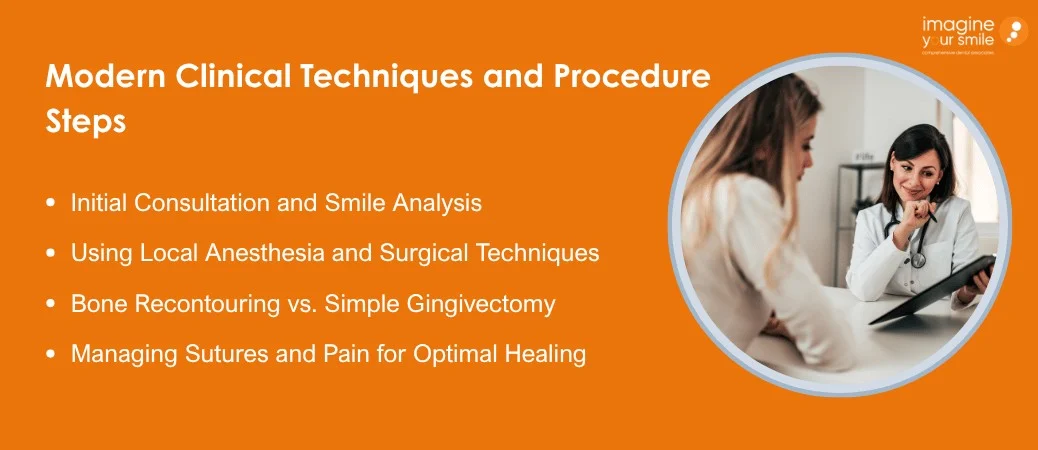
Your periodontist starts by examining your gum tissue and measuring how much tooth structure is currently visible.
They’ll take photos and sometimes digital scans to plan exactly where your new gum line should sit.
This planning phase involves working with your cosmetic dentist to make sure the exposed tooth length will match your future veneers perfectly.
You’ll discuss whether you have a gummy smile, uneven gum levels, or teeth that look too short.
Your periodontist checks something called biologic width, which is the natural space your body needs between the bone and where the veneer will sit. Violating this space causes inflammation and red, puffy gums later.
The team will show you the expected results using digital imaging. This step ensures everyone agrees on the final look before any surgery happens.
Using Local Anesthesia and Surgical Techniques
On surgery day, your periodontist numbs the treatment area completely with local anesthesia. You won’t feel pain during the procedure.
Once you’re numb, they make small, precise cuts to lift back the gum tissue and expose the tooth underneath.
The procedure typically uses microsurgical techniques to minimize trauma to your tissues. Your periodontist works carefully to reshape the gum line to the planned position.
The entire appointment usually takes about an hour, depending on how many teeth need treatment.
Bone Recontouring vs. Simple Gingivectomy
The type of periodontal surgery you need depends on what lies beneath your gums. A gingivectomy simply removes excess gum tissue when the bone level is already correct. This is the faster, simpler option.
Bone recontouring becomes necessary when the bone sits too high on the tooth. Your periodontist uses specialized instruments to carefully reshape the bone around the tooth roots.
This maintains the healthy biologic width and prevents future gum problems.
Whether addressing a gummy smile or preparing for restorations, bone work adds time to the procedure but ensures long-term stability. Your periodontist determines which approach you need during the planning phase.
Managing Sutures and Pain for Optimal Healing
After reshaping your gums and bone, your periodontist positions the tissue against your teeth and places sutures to hold everything in place. These stitches typically come out during a follow-up visit one to two weeks later.
For pain management, most patients only need over-the-counter medications.
Your periodontal team will recommend holding ice packs over swollen areas and eating soft foods for the first few days. Many patients return to normal activities the next day.
You’ll receive a special mouth rinse to keep the surgical site clean. Keeping your head elevated when sleeping the first night reduces swelling. Most people describe the discomfort as mild soreness rather than sharp pain.
Periodontal Health and Healing After Crown Lengthening
Your gums need time to heal properly after this periodontal procedure, and understanding the recovery process helps you prepare for what’s ahead.
The healing timeline typically spans several weeks to months, and taking good care of your mouth during this time protects your investment in veneers.
Healing Timeline and What to Expect
The crown lengthening healing stages follow a predictable pattern. You’ll experience the most discomfort in the first few days after your periodontal surgery.
Initial Recovery (Days 1-7)
- Swelling and minor bleeding are normal
- Pain management with prescribed medication keeps you comfortable
- Soft foods only during this period
Early Healing (Weeks 2-4)
- Gum tissue begins to attach to your teeth
- You can return to most normal activities
- Discomfort decreases significantly
Tissue Maturation (Weeks 6-12) Most patients need to wait for complete tissue adaptation before getting their final veneers. Your gums will continue to settle into their new position during this time.
The waiting period ensures your veneers fit correctly and look natural once placed.
Maintaining Gum and Tooth Health
Your daily care routine directly affects how well you heal. Keeping the surgical area clean prevents infection without disturbing the healing tissue.
Care Instructions You Should Follow
- Rinse gently with warm salt water 2-3 times daily
- Brush other teeth normally but avoid the surgical site initially
- Use prescribed antibacterial mouthwash as directed
- Attend all follow-up appointments
You’ll need to avoid hard, crunchy, or sticky foods for several weeks. Smoking slows healing and increases your risk of complications, so stopping is strongly recommended.
Good periodontal health after your procedure means watching for warning signs. Call your dentist if you notice increased swelling, persistent bleeding, or severe pain that doesn’t improve with medication.
Risks, Complications, and Long-Term Care
Most people heal without problems, but you should know what could go wrong. Understanding potential complications helps you recognize issues early when they’re easier to treat.
Possible Complications
- Infection at the surgical site
- Tooth sensitivity to hot or cold
- Uneven gum line requiring adjustment
- Bone loss if proper care isn’t maintained
Long-term success depends on your commitment to periodontal health. You’ll need regular cleanings every 3-6 months to keep your gums healthy around your new veneers.
Proper brushing and flossing techniques protect the investment you’ve made in your smile.
Some patients experience tooth sensitivity that can last several months. This usually improves over time as your teeth adjust to having more exposed surface area.
Alternatives and Sequencing: Veneers, Orthodontic Options, and More
Crown lengthening isn’t always the only path to a better smile. Porcelain veneers can extend teeth without surgery, while orthodontic extrusion moves teeth into better positions before any cosmetic work begins.
Comparing Crown Lengthening with Veneers for Gummy Smiles

You have two main options when fixing a gummy smile. Crown lengthening removes excess gum tissue surgically to show more of your natural tooth structure. Veneers can make your teeth look longer without cutting into your gums.
Crown lengthening is more invasive because it involves surgery on bone and tissue. But it creates permanent changes to your gum line.
Porcelain veneers offer a less invasive approach, though they work best when your gummy smile is mild.
Your restorative dentist might suggest both treatments together. The crown lengthening creates the right proportions first. Then veneers complete your smile makeover with improved shape and color.
Some patients need gum contouring before veneers to get the best results. This ensures your new veneers have enough tooth structure for proper attachment during crown preparation.
When Orthodontic Extrusion or Dental Implants Are Recommended
Orthodontic extrusion offers another alternative to crown lengthening. This process slowly moves teeth downward to expose more tooth structure without surgery.
Moving teeth can reduce gum display and create better proportions before placing veneers.
Your dentist might recommend extrusion when you have enough healthy tooth above the gum line. It takes longer than surgery but avoids cutting tissue or bone.
Dental implants become necessary when teeth have deep cavities or severe damage below the gum line. Sometimes a tooth can’t support crown preparation even after lengthening procedures.
Treatment sequencing matters for success:
- Orthodontic work typically comes first to position teeth correctly
- Crown lengthening follows to adjust gum levels
- Final restorations like veneers complete the smile makeover
Timing depends on your specific case, including how much tooth structure you have and your cosmetic goals.
Frequently Asked Questions
Many people have concerns about crown lengthening before veneers, from timing and recovery to how it affects their final smile. Understanding what to expect can help you feel more confident about the process.
How do I know if I need crown lengthening before getting veneers?
You might need crown lengthening if your teeth look short or square, even though they may actually be normal sized underneath excess gum tissue.
A gummy smile is one of the most common reasons dentists recommend this procedure before veneers.
Your dentist will also check if you have enough tooth structure showing above the gum line. Veneers need adequate surface area to bond properly and stay in place for years.
If your gum line is uneven or asymmetrical, crown lengthening can create symmetry that makes your final smile look balanced. Without it, veneers placed on uneven gums often look lopsided.
Another key factor is something called biologic width, which is the natural space your body needs between bone and any dental work. If veneers invade this space, your gums may become inflamed and bleed easily.
What happens during a crown lengthening procedure, and how long does it take?
Your dentist will numb the area completely with local anesthesia so you won’t feel pain during the procedure. They make small incisions to gently pull back the gum tissue and expose more of your natural tooth.
Sometimes only gum tissue needs to be removed. In other cases, bone reshaping may be necessary to maintain proper spacing and prevent future gum problems.
The dentist then repositions the gums against your teeth and places a few stitches to hold everything in place while you heal. The entire appointment typically takes about one hour, depending on how many teeth are being treated.
How long should I wait after crown lengthening before my veneers are placed?
You need to wait for your gums to heal completely before getting your final veneers. If veneers are placed too soon, the gums might shrink back slightly and expose the veneer edges.
Most dentists recommend waiting six to twelve weeks after the procedure. For front teeth where appearance matters most, waiting about three months is ideal.
During the first week or two, your gums heal rapidly and you’ll return for suture removal. The tissue looks healthy quickly, but the microscopic attachment to your tooth is still forming.
Your dentist can place temporary veneers during this waiting period. This lets you test your new smile and make sure you’re happy with the tooth length and shape.
Does crown lengthening change my smile line or make my teeth look longer?
Crown lengthening reveals more of your natural tooth that was hidden beneath the gums. Your teeth don’t actually grow longer, but they will appear longer because more tooth structure is now visible.
This change usually improves your smile by creating more elegant, rectangular tooth shapes instead of short, square ones.
When done properly, the procedure creates a natural-looking result that doesn’t look fake or overdone.
Your smile line may shift slightly depending on how much gum tissue is removed. Dentists carefully plan the new gum line to match your lip movement and facial features.
Do your gums grow back after crown lengthening?
Your gums do not grow back to their original position after crown lengthening. The procedure permanently reshapes your gum tissue and sometimes the underlying bone.
However, if bone wasn’t adjusted during the procedure, gum tissue can sometimes creep back slightly over time. This is one reason why dentists often need to lower the gum line and recontour bone together for lasting results.
Proper oral hygiene after the procedure helps maintain your new gum line. Regular brushing, flossing, and dental cleanings prevent gum disease that could change your gum position.
What are the risks or side effects of crown lengthening, and how can I prevent complications?
You may experience mild swelling and sensitivity for the first few days after the procedure. Most people manage this discomfort with over-the-counter pain relievers and return to normal activities the next day.
Some bleeding is normal immediately after surgery. Using ice packs and keeping your head elevated when sleeping helps reduce swelling.
Infection is rare but possible with any surgical procedure. Following your dentist’s instructions about oral rinses and keeping the area clean greatly reduces this risk.
Your teeth might feel more sensitive to hot and cold temperatures after more tooth structure is exposed. This sensitivity usually decreases over time as your teeth adjust.
Avoiding hard or spicy foods for the first few days makes healing more comfortable. Stick to soft foods and don’t disturb the surgical site with your tongue or fingers.