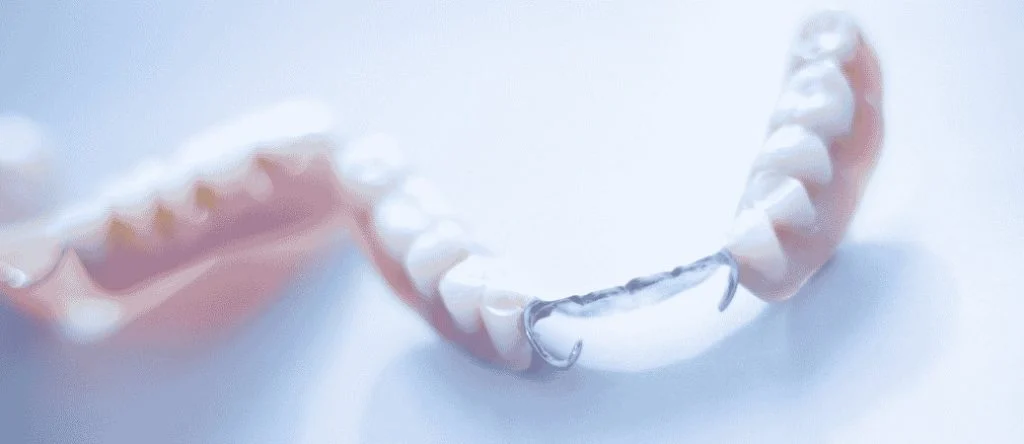
Deciding between dental implants and dentures? Yeah, it can feel overwhelming. The best choice really comes down to your health, lifestyle, and budget.
If you want a long-lasting solution that feels and functions like your own teeth, dental implants are usually the better option. They help preserve your jawbone and give you more comfort and stability when you eat or talk.
Dentures are a more affordable, non-surgical way to replace missing teeth. They’re removable and pretty easy to adjust, but they can feel less natural and might need frequent replacements.
Knowing the pros and cons of each can help you figure out what works for your smile and your daily life. Whether you want something permanent or just a quick fix, it helps to really understand how implants and dentures work.
Dental Implant vs Denture: Core Differences
If you need to replace missing teeth, it’s important to know how dental implants and dentures differ. These differences shape how your new teeth work, how they feel, and how you’ll care for them every day.
Tooth Replacement Methods
Dental implants replace your missing teeth by acting like real tooth roots. Dentists place a small titanium screw in your jawbone, and over time, your bone grows around it to keep it secure.
A crown that looks like a natural tooth goes on top, helping your jawbone stay healthy. Dentures, on the other hand, are false teeth set on a gum-colored base that just rests on your gums or the roof of your mouth.
They don’t replace tooth roots or fuse with your jawbone. Dentures stay in place with suction or adhesives, and you’ll need to remove them every day for cleaning.
Fixed vs Removable Options
Dental implants are a fixed option. Once they heal, they stay put—permanently.
You brush and floss them like natural teeth, and they don’t move when you eat or talk. Dentures are usually removable, so you’ll take them out at night and soak them to keep them clean.
Some dentures (the implant-retained kind) use a few implants for extra hold but are still removable. Removable dentures can slip or shift, especially as your jawbone changes over time.
Impact on Oral Function
Dental implants give you strong support for chewing and talking. You get almost full biting power, so eating most foods isn’t a problem.
They also help prevent jawbone loss by mimicking tooth roots, which keeps your face from sagging. Dentures restore your smile and mouth shape but don’t offer as much chewing strength.
Food can sneak under dentures, and they might feel less natural when you speak. As your mouth changes, dentures often need adjustments to fit right.
Schedule your tooth replacement consultation with Imagine Your Smile in Woodbury, MN to explore whether dental implants or custom dentures are the best fit for your needs.
Dental Implants vs. Dentures: Core Differences
| Category | Dental Implants | Dentures |
| Tooth Replacement Method | Replace missing teeth by acting as artificial tooth roots. A titanium post is surgically placed into the jawbone, and a crown is attached on top. | Replace missing teeth using a gum-colored base with artificial teeth that rest on top of the gums. |
| Placement | Surgically inserted into the jawbone. | Non-surgical; rest on gums or the roof of the mouth. |
| Stability | Fixed and permanent — they don’t move while eating or speaking. | Usually removable and may require adhesives or suction to stay in place. |
| Bone Support | Stimulate and preserve the jawbone, preventing bone loss. | Do not stimulate the jawbone, which can lead to bone shrinkage over time. |
| Maintenance | Cared for like natural teeth — brush and floss daily. | Must be removed nightly for cleaning and soaked in solution. |
| Comfort & Feel | Feel and function like natural teeth; no slipping. | May feel less secure and require adjustments as the mouth changes. |
| Chewing Ability | Provides near-full biting power for normal eating. | Offers limited chewing strength; some foods may be difficult to eat. |
| Longevity | Long-term or permanent solution with proper care (10–20+ years). | Typically lasts 5–10 years before needing replacement or relining. |
| Procedure Type | Surgical process involving healing and osseointegration. | Non-surgical and faster to fit, but may need ongoing adjustments. |
| Cost Range | Higher upfront cost; long-term value due to durability. | Lower initial cost; may require more frequent replacements. |
Types of Dental Implants vs. Types of Dentures: Key Differences
The main difference between types of dental implants and types of dentures lies in how they are supported and how permanently they restore missing teeth. Dental implants, such as endosteal, subperiosteal, and mini implants, are surgically placed into or onto the jawbone, creating a secure foundation that acts like natural tooth roots.
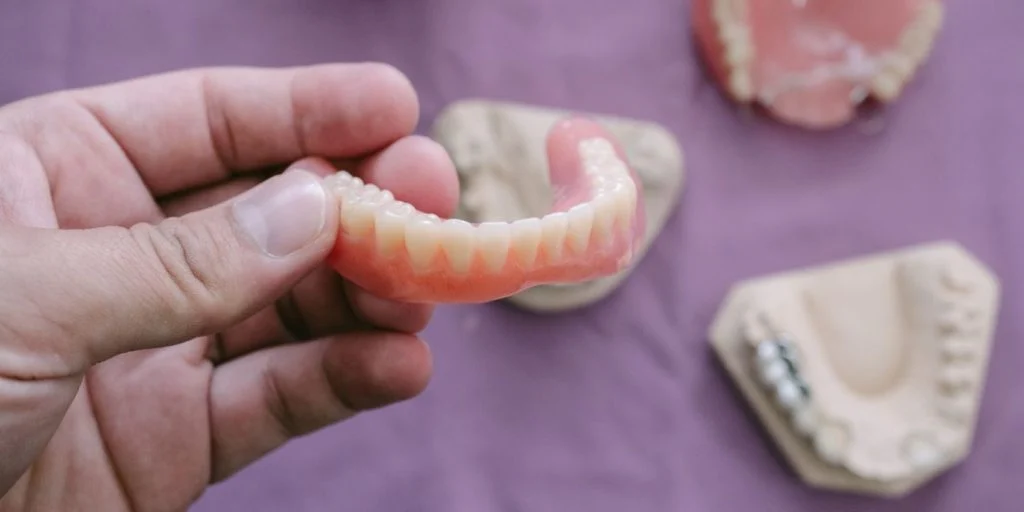
They can support single teeth, bridges, or even full dentures, and they help preserve bone health through ongoing stimulation. In contrast, dentures—including complete, partial, immediate, and removable types, rest on the gums rather than integrating with the bone.
While dentures offer a quicker and less invasive replacement option, they can shift over time and may require adjustments as the jawbone changes. Implants provide a long-term, stable, and natural-feeling solution, whereas dentures offer flexibility and affordability but may need more maintenance and replacement in the long run.
Dental Implant Procedure and Process vs. Dentures
The dental implant procedure involves several precise steps designed to create a lasting and natural-feeling result. It begins with oral surgery, where a titanium post is placed into the jawbone to act as an artificial tooth root.
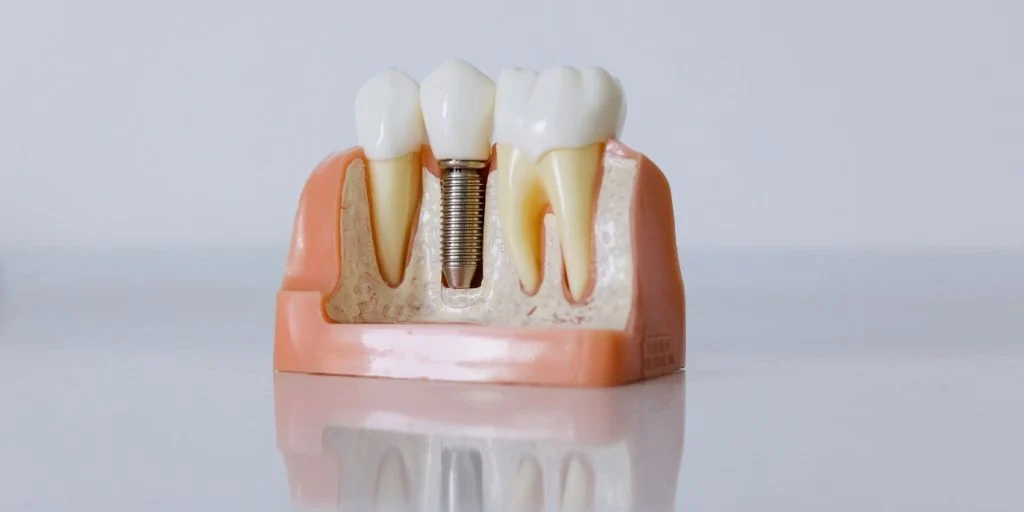
If the jawbone lacks sufficient strength, bone grafting may be done beforehand to rebuild the foundation.
After placement, a healing phase called osseointegration allows the implant to fuse securely with the bone, forming a stable base for a crown or denture. This process can take several months but results in a strong, permanent restoration.
In contrast, the denture process is non-surgical and typically faster. It starts with taking impressions of your gums and creating custom dentures that fit your mouth’s shape.
Once fitted, adjustments or relining may be needed over time as your gums and jawbone naturally change. Dentures rest on the surface of the gums and do not integrate with the bone, which means they can occasionally shift and require maintenance for continued comfort and function.
Schedule a personalized consultation with Imagine Your Smile dentist in Woodbury, MN to learn whether dental implants or dentures are right for you.
Long-Term Considerations: Comfort, Durability, and Maintenance
Choosing between dental implants and dentures isn’t just about looks or cost. You’ll want to think about your daily comfort, how your jawbone changes, and how long each option really lasts.
Chewing Efficiency and Diet
Dental implants act like real tooth roots. They’re secure and stable, letting you chew a wide range of foods with confidence.
You can eat crunchy or sticky foods—things that dentures might make tricky. Implants give you more bite strength, which helps your overall chewing efficiency.
Dentures can slip, especially with tougher foods. You might start avoiding foods that cause discomfort or irritation.
Over time, this can change your diet. You may end up eating mostly softer foods, which isn’t always great for nutrition.
Jawbone Changes Over Time
Losing teeth makes your jawbone shrink because it doesn’t get stimulation from roots anymore. Dental implants help stop this bone loss.
The implant post acts like a natural root, keeping your jawbone active and your face shape steadier.
Dentures don’t prevent bone loss since they just rest on your gums. As your jawbone shrinks, your dentures might not fit as well, and you’ll probably need adjustments or new ones after a few years.
Longevity and Durability
Dental implants are famous for their long-term durability. With good care, they can last decades—sometimes a lifetime.
They’re made of strong materials like titanium, which bond well with your bone and rarely need replacement.
Dentures don’t last as long. Most need replacing or relining every 5 to 8 years, since your gums and jawbone shift over time.
Daily wear can also damage dentures more easily than implants.
Oral Health Impact
Implants help your oral health by keeping your jawbone strong and stopping other teeth from moving around. They’re fixed in place, so cleaning them is easier and they don’t trap as much food or bacteria.
This lowers your risk of gum disease and further tooth loss. Dentures need daily cleaning and soaking, and if you slack off, you risk infections or sores.
Since dentures don’t support your jawbone or natural teeth, your remaining teeth can weaken or shift. Keeping dentures clean takes more effort, but it’s necessary.
Cost Comparison: Implants vs Dentures
The price of dental implants and dentures jumps around a lot depending on your needs and location. Implants cost more upfront because of surgery and materials. Dentures are cheaper at first, but you might spend more on upkeep and replacements later.
Dental Implants Cost Breakdown
Dental implants usually have a higher upfront cost. One implant with a crown often runs between $4,000 and $5,000.
This covers the titanium post, abutment, and crown. If you need multiple teeth replaced, the total can hit $30,000 or more for several implants or full arch replacements.
Extra steps like bone grafts or scans add to the bill. The surgery and healing can feel intimidating, but implants are meant to last a long time if you take care of them.
Dentures Cost Factors
Dentures cost less to start. A full set runs from $1,000 to $8,000, depending on what they’re made of and how well they fit.
Basic dentures cost less but might not feel as good or last as long. Partial dentures are usually between $700 and $1,800, but strong materials like metal raise the price.
Dentures don’t need surgery, which saves money and recovery time. Still, they’ll probably need adjustments or replacement every few years.
Long-Term Value Considerations
Implants seem pricey at first, but they can save you money down the road. They last longer and don’t need regular replacement like dentures.
Dentures might need replacing every 3 to 6 years, and you’ll spend more on adhesives or adjustments.
Implants help keep your jawbone healthy, which can cut down on future dental problems and costs. Dentures can cause bone loss, changing your face shape and how your dentures fit over time.
Thinking about how long each lasts and the extra costs can help you decide what’s best for your wallet.
Choosing Between Dental Implants and Dentures: Factors to Consider
When you’re deciding between dental implants and dentures, think about your bone health, the care each option needs, and what fits your lifestyle. Your choice will affect your daily routine and comfort for years to come.
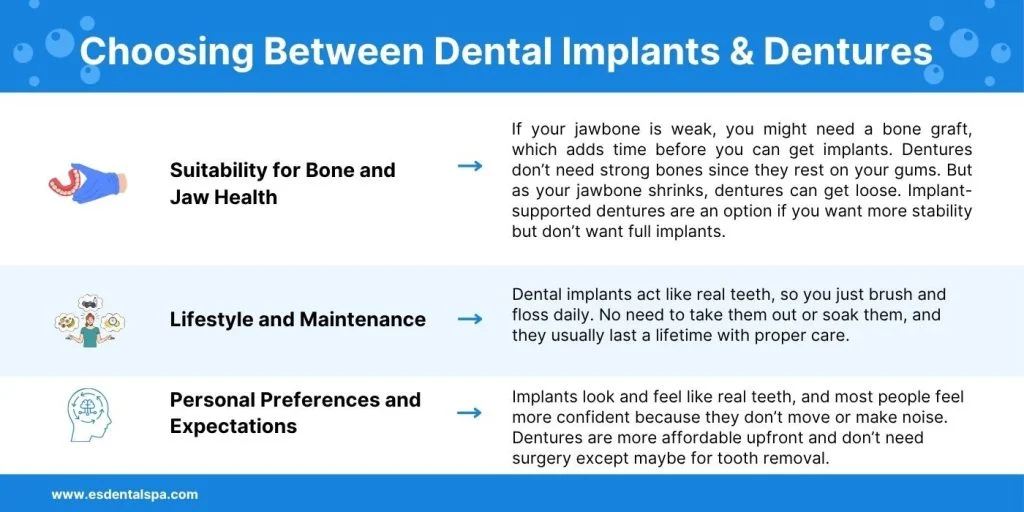
Suitability for Bone and Jaw Health
Your jawbone’s health matters a lot here. Implants need enough strong bone to attach to and help keep your bone from shrinking after tooth loss.
If your jawbone is weak, you might need a bone graft, which adds time before you can get implants. Dentures don’t need strong bones since they rest on your gums.
But as your jawbone shrinks, dentures can get loose. Implant-supported dentures are an option if you want more stability but don’t want full implants.
Your dentist will use scans to check your bone before recommending the best option.
Lifestyle and Maintenance Needs
Dental implants act like real teeth, so you just brush and floss daily. No need to take them out or soak them, and they usually last a lifetime with proper care.
They’re steady when you eat or talk, which makes life easier for a lot of people. Dentures need daily cleaning and soaking overnight, and sometimes adhesives to keep them in place.
You’ll need regular adjustments as your mouth changes. Dentures can irritate your mouth or affect taste and speech at first, but most people get used to it. Flexible dentures are easier to clean and might not need adhesive.
Personal Preferences and Expectations
How do you want to look and feel with new teeth? Implants look and feel like real teeth, and most people feel more confident because they don’t move or make noise.
Dentures are more affordable upfront and don’t need surgery except maybe for tooth removal. Some folks find them less comfortable or worry about the fit changing over time.
You might like dentures if you want a removable option or if you’re watching your budget. Talk to your dentist about your goals and concerns—they’ll help you pick what fits your health and lifestyle best.
Frequently Asked Questions
When you’re choosing between dental implants and dentures, you’ll want to weigh cost, benefits, and what works for your age or lifestyle. Some options mix features of both, so you’ve got choices depending on what feels right.
What are the cost differences between dental implants and dentures?
Dentures are usually much less expensive, costing around $800 to $1,500 for a full set. Implants, on the other hand, can range from $1,500 to $6,000 per tooth.
Full-mouth implants may cost tens of thousands, so they’re a bigger investment.
Can you list the pros and cons of choosing dental implants over dentures?
Pros of implants:
- They look and work a lot like real teeth.
- Implants help keep your jawbone healthy by replacing lost tooth roots.
- Most last for decades, sometimes a lifetime.
- You’ll notice better stability when eating or talking.
Cons of implants:
- You’ll need surgery, so there’s some pain and recovery.
- The whole process can stretch out over months.
- Implants usually cost more than other options.
- Sometimes, you might need extra procedures like bone grafts.
What are the considerations for the elderly when choosing between implants and dentures?
Older folks might run into trouble with implants if they’ve lost bone or have health concerns. Dentures are easier to get and maintain, but they don’t stop jawbone shrinking.
Your health, bone strength, and how well you can care for your mouth should all play a part in your decision.
How do snap-in dentures compare to traditional implants?
Snap-in dentures hook onto implants, but you can still take them out to clean. They feel more secure than regular dentures, but they aren’t as locked-in as full implants.
If you want a better fit but don’t need or can’t swing full implants, snap-ins hit that sweet spot.
What are hybrid dentures, and how do they differ from standard implants?
Hybrid dentures stay in place with a handful of implants—usually four to six for each jaw. You can’t take them out like regular dentures, and chewing feels more natural.
They’re less pricey than a full set of implants, but you’ll still need surgery and some healing time.
What are the benefits of selecting dentures when compared to dental implants?
Dentures usually cost less and you won’t need surgery. That’s a relief for plenty of folks who aren’t keen on invasive procedures.
If you want a quicker fix, dentures often take less time from start to finish. You can also get them adjusted or swapped out pretty easily as your mouth changes over time.
Another thing—dentures can help prevent your facial muscles from sagging, which is something most people don’t really think about until it happens.