A sore spot from your dentures should heal within a few days. If it keeps coming back or won’t go away, this usually means your dentures no longer fit your gums the way they should.
Well-placed dentures can help you eat, speak, and smile more comfortably. But ongoing denture pain is a sign that something may need attention.
It could come from a rough edge, a change in your gum shape, or pressure that lands in the same spot every time you bite down.
This guide walks you through why these painful spots stick around, what your dentist can do to fix them, and simple steps you can take at home for denture sores that won’t heal while you wait for an appointment.
Key Takeaways
- A sore that won’t heal often points to a fit problem with your dentures, not just normal irritation.
- Several factors, like gum changes or rough spots, can keep soreness from going away on its own.
- Quick home care can ease pain, but seeing your dentist soon is the best way to stop sores from coming back.
When a Persistent Sore Signals a Denture Fit Problem
A sore that keeps coming back is usually your body’s way of telling you something is off with your dentures. Most of the time, it points to pressure points, a loose fit, or an uneven bite that needs a dentist’s attention.
Pressure Points and Repeated Friction
Pressure points happen when one small area of your denture pushes harder against your gum than the rest of it does. Every time you bite down or talk, that spot gets squeezed again and again.
This repeated friction wears down the tissue faster than it can heal. Over time, you get denture sore spots that just won’t go away on their own.
You might notice the same red or raw patch showing up in the exact same place each time you take your dentures out. That pattern is a clue.
It usually means the denture surface needs to be smoothed or reshaped so the pressure spreads out more evenly across your gums.
Loose Dentures, Uneven Bite, and Poorly Fitting Dentures
Loose dentures shift around while you eat or speak, and that movement rubs your gums raw. An uneven bite adds to the problem because it forces certain teeth to hit harder than others every time you chew.
Poorly fitting dentures don’t just cause pain. They can also make it harder to eat certain foods or speak clearly.
Common signs your denture fit is off include:
- Clicking or slipping when you talk
- Food getting trapped underneath more often
- Sore spots that return in the same location
- Uneven pressure when you bite down
Any of these signs mean it’s time to get your dentures checked. Ill-fitting dentures rarely fix themselves, and waiting can make the irritation worse.
Why New Dentures May Need Early Adjustments
New dentures almost always need a little fine-tuning. Your mouth needs time to adjust to something new sitting against your gums, and some soreness in the first few weeks is normal.
But if a sore spot sticks around longer than a week or two, that’s a different story. It usually means the denture needs a small adjustment rather than more time to “break in.”
Dentists often ask new denture wearers to come back for a follow-up visit within the first month. This lets them catch and fix small denture fit issues early, before they turn into bigger problems.
Speaking up about denture irritation early on can save you weeks of discomfort.
Other Reasons Denture Sores May Not Heal
Ill-fitting dentures aren’t always the reason a sore won’t go away. Sometimes the problem comes from how you care for your dentures, changes in your mouth, or an infection that needs treatment.
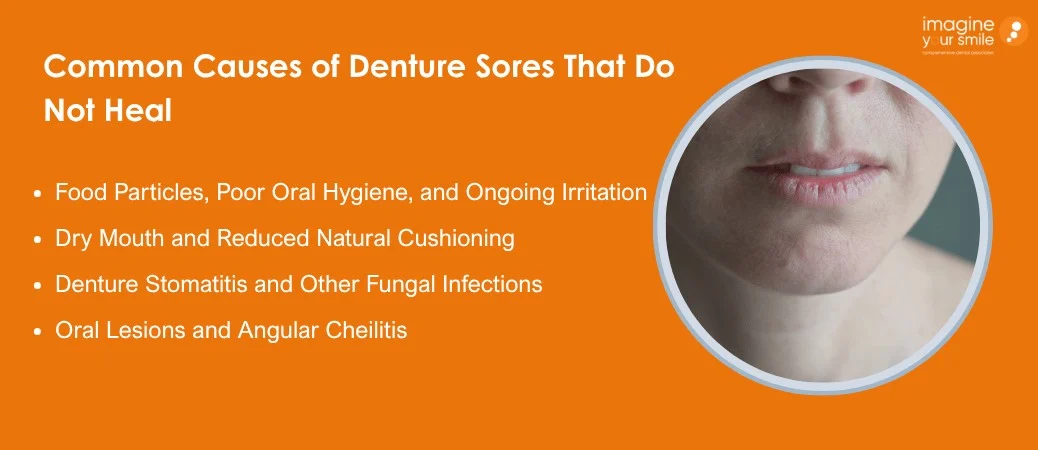
Food Particles, Poor Oral Hygiene, and Ongoing Irritation
Tiny food particles can get trapped between your dentures and gums. This creates constant friction and can keep a sore irritated instead of letting it heal.
Poor oral hygiene makes things worse. If you’re not cleaning your dentures and mouth well each day, bacteria can build up and cause gum irritation that lasts.
Good denture hygiene means brushing your dentures daily and rinsing your mouth after meals. You should also soak your dentures overnight to remove buildup you can’t see.
Skipping these steps gives bacteria more chances to irritate healing tissue.
Dry Mouth and Reduced Natural Cushioning
Your saliva does more than keep your mouth moist. It also acts as a cushion between your dentures and gums.
When you have dry mouth, also called xerostomia, this natural cushioning disappears. Your gums end up taking more direct pressure from your dentures, which can lead to sores that are slow to heal.
Dry mouth often comes from medications, aging, or certain health conditions. You might also notice a burning sensation in your mouth along with the dryness.
Drinking more water and using saliva substitutes can help protect your gums.
Denture Stomatitis and Other Fungal Infections
Denture stomatitis is a common fungal infection that affects people who wear dentures. It shows up as red, swollen tissue under the denture base, and it often causes ongoing soreness.
This condition happens when yeast builds up on your dentures or gums, especially if you wear your dentures overnight or don’t clean them properly.
A fungal infection like this won’t heal on its own with regular sore treatments.
Signs of infection include persistent redness, swelling, and sometimes a burning feeling. If you notice these symptoms, you’ll likely need antifungal medication from your dentist to clear it up.
Oral Lesions and Angular Cheilitis
Some sores that won’t heal aren’t caused by your dentures rubbing at all. Oral lesions can form from other health issues, and they may look similar to typical denture sores.
Angular cheilitis is another condition to watch for. This causes cracking, redness, and irritation at the corners of your mouth, often linked to ill-fitting dentures or dry mouth.
Unlike simple sore spots, these issues usually need targeted treatment beyond adjusting your dentures.
Your dentist can check for oral lesions and other signs that point to a specific cause, so you get the right care instead of guessing.
Safe Ways to Ease Soreness While Your Mouth Heals
While you wait for a sore spot to heal or for your dentist to adjust your fit, a few simple habits can keep you more comfortable.
Gentle rinses, softer foods, and the right products can calm irritation, but it helps to know which remedies actually work and which ones just mask a bigger problem.
Saltwater Rinses and Gentle Denture Care
A warm salt water rinse is one of the easiest home remedies for denture sores. Mix about half a teaspoon of salt into a cup of warm water and swish it around your mouth for 30 seconds.
Do this a few times a day, especially after meals. It helps clean out food particles and may reduce swelling in the sore area.
Along with saltwater rinses, good denture care matters just as much. Clean your dentures every day with a soft brush and a cleanser made for dentures, not regular toothpaste, which can be too rough.
Take your dentures out at night so your gums get a break. This gives your tissue time to recover without constant pressure.
Soft Foods, Hydration, and Resting Your Gums

When you have a sore spot, soft foods put less strain on your gums. Try things like mashed potatoes, yogurt, scrambled eggs, or soup while you heal.
Avoid anything crunchy, sticky, or hard, since these can rub against the sore or get stuck under your dentures. Cutting food into smaller pieces also helps you chew with less pressure.
Staying hydrated matters too. A dry mouth can make gums more likely to get irritated, so drink water throughout the day.
Try to stick to a balanced diet even with softer foods. Getting enough vitamins and protein helps your body repair tissue faster, so your gums heal instead of staying inflamed.
Topical Oral Gel, Cold Compresses, and Pain Relievers
A topical oral gel made for mouth sores can numb the area and ease discomfort for a short time. Some people also use aloe vera gel, which is known for having a soothing effect on irritated skin and gums.
If your gum feels swollen or hot, holding a cold compress against your cheek near the sore spot can help. Ten to fifteen minutes at a time is usually enough.
For pain that gets in the way of eating or talking, over-the-counter pain relief like ibuprofen or acetaminophen can take the edge off.
Always follow the dosage instructions on the label, and check with your pharmacist if you’re unsure it’s safe with your other medications.
What Home Remedies Cannot Fix
These remedies can calm irritation, but they don’t fix the actual cause of a sore that keeps coming back. If your dentures don’t fit right, no rinse or gel will stop the rubbing that started the sore in the first place.
A sore that lingers for more than two weeks, or one that keeps returning in the same spot, usually means your dentures need an adjustment or reline. Home care can only manage symptoms, not correct a fit problem.
Watch for signs that go beyond normal soreness, like pus, a foul smell, or white patches inside your mouth.
These can point to an infection, such as denture stomatitis, which needs treatment from your dentist rather than home remedies alone.
When to See a Dentist Promptly
Some denture sores heal on their own with rest and rinsing. Others are a sign that something is wrong and need a dentist’s attention right away.
Warning Signs That Need a Professional Exam
If a sore has not healed within a week or two, it is time to make an appointment. Do not wait it out longer than that.
You should also watch for signs of infection. These include redness, swelling, warmth, or pus around the sore area. A fever along with mouth pain is another red flag.
Other warning signs include:
- Sores that keep coming back in the same spot
- Pain that gets worse instead of better
- Numbness or a burning feeling in your gums
- Any oral lesions that grow, change color, or bleed without cause
- Difficulty chewing or speaking due to denture pain
These symptoms often point to ill-fitting dentures or other denture problems that need a professional fix, not a home remedy.
What to Expect From a Denture Adjustment or Reline
When you see a dentist for denture sores, they will first check your mouth for pressure sores and look at how your dentures fit. This exam is quick and should not hurt.
If your dentures are rubbing in one spot, a simple denture adjustment often solves the problem. The dentist will file down a small area of the denture to relieve pressure. This can be done in one visit.
If your gums have changed shape over time, you may need a reline instead. This adds new material to the inside of the denture so it fits your gums again.
At Imagine Your Smile, Dr. Mark W. Wilhelm can evaluate your denture fit and determine whether an adjustment, reline, or another solution is appropriate for your needs.
Why You Should Not File or Alter Dentures at Home
It might be tempting to file down a sore spot yourself with a nail file or sandpaper. This is a bad idea and can make things worse.
Filing the wrong area can throw off the whole fit of your denture. This may create new pressure points and more sores in different spots.
You could also damage the denture itself, which means paying for a repair or replacement.
A dentist has the tools and training to fix the exact spot causing pain. They can do this without harming the rest of the denture.
Home fixes are a short-term guess, while a professional adjustment is a precise and lasting solution.
Preventing Repeat Sore Spots
Keeping sore spots from coming back takes a mix of good habits at home and paying attention to how your dentures fit over time.
Small changes in your routine can make a big difference in how comfortable your mouth feels every day.
Daily Cleaning and Overnight Denture Removal

Good denture hygiene is one of the easiest ways to protect your gums from repeat irritation. Brush your dentures every day, both inside and outside, to remove food particles and plaque that can build up along the edges.
Bacteria that collect on dirty dentures can make sore spots worse and slower to heal. This buildup can also lead to infections that add to your discomfort.
Taking your dentures out at night gives your gum tissue time to rest and breathe. Wearing them while you sleep can lower saliva flow, which raises your risk of a dry mouth and bacterial growth.
Soak your dentures in a cleaning solution overnight instead. This simple step supports both your oral hygiene and the health of your gums.
Using Denture Adhesive Safely
Denture adhesive can help hold your dentures in place and reduce the rubbing that causes sore spots.
But using too much or using the wrong type can actually create new problems, including sores that show up in different spots each time.
Follow the instructions on the product label and clean off old adhesive completely before applying a new layer. Do not use adhesive to try to fix a denture that no longer fits well.
Denture adhesives are meant to improve comfort, not cover up bigger fit issues.
If you find yourself using more adhesive than usual just to keep your dentures in place, that is often a sign you need to see your dentist.
Planning for Fit Changes Over Time
Your jawbone and gums change shape over the months and years after you start wearing dentures.
This process, called bone resorption, happens gradually but steadily, and it can make even well-fitted dentures start to feel loose.
A loose denture shifts more during eating and talking, which raises your chances of getting sore spots. Regular dental checkups let your dentist catch these changes early, often through small adjustments or a reline.
Planning ahead for these changes, rather than waiting until pain shows up, can help you avoid longer stretches of discomfort.
Considering More Stable Tooth-Replacement Options
If you keep dealing with sore spots no matter how often your traditional dentures or partial dentures are adjusted, it may be worth looking at other options.
Implant-supported dentures attach to small posts placed in your jawbone, which gives them a much steadier hold than dentures that rest on your gums alone.
This added stability can lower the friction and pressure that lead to sores in the first place. Dental implants also help slow down bone loss in your jaw, since they keep stimulating the bone the way natural tooth roots once did.
Switching to an implant-supported option is a bigger step, but for many people it solves the sore spot problem for good instead of just managing it.
Talk with your dentist about whether this route makes sense for your mouth and your budget.
Frequently Asked Questions
Here are answers to common questions about denture sores that won’t heal, what causes them, and when you should worry.
Why are my dentures causing sores that will not heal?
Sores that won’t heal usually mean your dentures don’t fit right anymore. Your jawbone changes shape over time, so dentures that fit well at first can start to rub in the wrong spots.
Pressure points, sharp edges, or a loose fit can all rub the same area over and over. If a sore keeps coming back in the same place, it’s a sign your dentures need to be adjusted or relined by your dentist.
How long should denture sores take to heal?
Most minor denture sores heal within a few days to a week, especially if you give your gums a break from wearing the dentures. If you follow tips like using a pain relief gel and salt water rinses, healing often speeds up.
If a sore lasts longer than two weeks, that’s a red flag. You should not wait it out, see your dentist so they can check the fit and rule out other problems.
What do denture ulcers look like, and when should I be concerned?
Denture ulcers often look like small, red, or white sores with a sunken center. They can feel sore to the touch and may sting when you eat or drink something hot, cold, or spicy.
You should be concerned if a sore doesn’t shrink or improve after a week or two. A sore that grows larger, changes color, or feels hard around the edges needs to be checked by a dentist right away.
Can loose or poorly fitting dentures cause sores on the gums or roof of the mouth?
Yes, loose dentures are a common cause of gum sores and irritation on the roof of the mouth. When dentures shift or slide while you eat or talk, they rub against soft tissue and create friction.
This friction can wear down the skin and lead to open sores. A denture that’s too loose or too tight puts extra pressure on certain spots, which makes sores more likely to form there.
What can I do to relieve painful denture sores while waiting to see my dentist?
A few simple home steps can ease the pain until you get to your appointment. Try rinsing with warm salt water a few times a day to reduce swelling and keep the area clean.
Give your gums a rest by leaving your dentures out as much as you can, especially overnight. You can also use an over-the-counter oral pain relief gel to numb the sore spot temporarily.
Avoid eating hard, crunchy, or spicy foods that might make the sore worse. If the pain is severe or you notice swelling in your face, call your dentist sooner rather than later.
Could persistent denture sores be a sign of denture stomatitis or another oral health problem?
Yes, sores that keep coming back can point to denture stomatitis, which is swelling caused by a fungal infection under the denture. This condition often happens when dentures aren’t cleaned properly or are worn too long without a break.
Persistent sores can also signal a poor fit, gum disease, or in rare cases, something more serious that needs medical attention.
If sores don’t heal or keep returning, don’t ignore them, your dentist can figure out the real cause and get you back to feeling comfortable.