Snap-on dentures give you more security than regular dentures, but they can still click or slip at times.
If you are dealing with snap on dentures clicking slipping problems, you may notice your dentures shift while eating, talking, or laughing. These issues can be frustrating and make you wonder if something is wrong.
The good news is that clicking and slipping with snap-on dentures usually happens because the attachment parts have worn out over time, and your dentist can fix this with a simple replacement procedure.
Worn attachment components are the main reason these dentures lose their grip. Just like any mechanical system that you use every day, the snap mechanisms naturally wear down from repeated insertion and removal.
Most people with implant-supported dentures will experience some loosening after a few years of normal use.
Understanding why this happens and what you can do about it helps you get back to eating and speaking with confidence. Your loose dentures don’t mean your implants have failed or that you need major dental work.
Key Takeaways
- Clicking and slipping usually means your snap attachments have worn down from regular use and need replacement
- Most snap-on denture attachments last 3 to 5 years before they need to be changed out
- Simple maintenance appointments with your dentist can restore your dentures to full stability
Table of Content
- Understanding Snap-On Dentures and How They Work
- Why Snap-On Dentures Might Click or Slip
- Solutions for Preventing and Fixing Denture Slippage
- Implant Options to Enhance Denture Stability
Understanding Snap-On Dentures and How They Work
Snap-on dentures combine dental implants with a removable dental prosthetic to create a more stable option than traditional dentures. The implants anchor into your jawbone and connect to your dentures through special attachments that click into place.

What Sets Snap-On Dentures Apart from Traditional Dentures
Traditional dentures rest directly on your gums and rely on suction or adhesive to stay in place. They can shift when you eat or talk, which causes discomfort and embarrassment.
Snap-on dentures clip onto dental implants for a secure fit you can still remove for cleaning. These implant-supported overdentures attach to posts in your jawbone instead of sitting loose on your gum tissue.
The key difference is stability. Regular removable dentures move around in your mouth throughout the day. Implant dentures stay locked in position because they connect directly to anchors in your jaw.
You can remove snap-on dentures when needed, but they won’t slip during normal activities. This gives you more confidence when eating tough foods or speaking in public.
Key Components: Dental Implants, Abutments, and Attachments
Your snap-on denture system has three main parts working together. Dental implants are titanium posts surgically placed into your jawbone that act as artificial tooth roots.
Abutments connect to the top of each implant after your jaw heals. These small connectors stick up through your gums and provide the attachment point for your dentures.
Attachments come in different types, but they all work like snaps on clothing. The male part attaches to the abutment, and the female part sits inside your denture.
When you press the denture down, you hear and feel a click as the pieces lock together.
Most people need two to four implants for a lower denture and four to six for an upper denture. The implants stimulate your jawbone and help prevent bone loss that typically happens with traditional dentures.
Benefits Over Regular Removable Dentures
Implant-supported dentures won’t slip or move while you eat or talk, giving you a secure fit throughout the day. You can eat tougher foods without worrying about your dentures shifting out of place.
Your speech stays clearer and more natural because the dentures don’t move around in your mouth. You won’t deal with the whistling or slurred words that sometimes happen with loose traditional dentures.
These dentures don’t need messy adhesives to stay in place. The snap mechanism holds them firmly without any extra products.
You also preserve your jawbone better with this option. The dental implants act like natural tooth roots and keep your bone from shrinking over time. Traditional dentures actually speed up bone loss because they put pressure on your gums.
Why Snap-On Dentures Might Click or Slip
Snap-on dentures can lose their secure fit when the jawbone changes shape over time or when the parts that hold them in place wear down.
Your mouth goes through natural changes that affect how well the dentures stay put during eating and talking.
Jawbone Resorption and Loss of Fit
When you lose your natural teeth, your jawbone starts to shrink through a process called resorption. This happens because the bone no longer gets stimulation from tooth roots.
The bone resorption speeds up in the first year after tooth loss but continues slowly throughout your life.
As your jawbone density decreases, the shape of your jaw changes. The implants that hold your snap-on dentures stay in the same position, but the denture base that rests on your gums no longer fits as well.
This gap between the denture and your gums creates space for movement.
The clicking you hear often comes from this loose fit. Your dentures shift slightly when you chew or speak, then snap back into position on the implants.
Even though the implants themselves stay firmly in the bone, the changing jawbone shape affects how the denture sits in your mouth.
Gum and Soft Tissue Changes
Your gums and soft tissues change over months and years, just like your jawbone does. The gum tissue can shrink or change shape as you age.
Some denture wearers experience inflammation or swelling that temporarily changes how the dentures fit.
Weight changes also affect your facial tissues and gums. If you lose or gain weight, the soft tissues in your mouth may reshape themselves. The denture that once fit perfectly might now have small gaps where it should sit flush against your gums.
Poor oral hygiene can cause gum problems that lead to tissue changes. When gums become irritated or infected, they may swell or recede. These changes create an uneven surface that makes it harder for your dentures to stay stable during normal activities.
Worn Attachments or Denture Parts
The attachments that connect your dentures to the implants wear out over time with daily use. These small connectors are designed to snap firmly onto the implant posts, but they gradually lose their grip strength.
Most attachments need replacement every one to two years depending on how often you remove and reattach your dentures.
The denture base itself can also wear down or develop small cracks. Daily wear and tear from chewing puts stress on the material. If you grind your teeth at night, the damage happens even faster.
The metal or plastic components inside your dentures can loosen from their original positions. This internal shifting creates an unstable foundation even when the attachments themselves are still in good shape.
Bite Force and Daily Wear Issues
Your bite force puts constant pressure on your snap-on dentures every time you eat. Hard or sticky foods create extra stress on the connections between your dentures and implants. This repeated pressure can gradually loosen the fit or cause denture problems over time.
The way you chew affects how much your dentures move. If you favor one side of your mouth, that side experiences more wear. Uneven bite force distribution can cause one side to click or slip while the other side stays secure.
Some foods require more aggressive chewing that puts extra strain on the implant connections. Tough meats or crunchy vegetables demand stronger bite force than soft foods.
If your dentures are already slightly loose, these challenging foods make the slipping more noticeable.
Solutions for Preventing and Fixing Denture Slippage
Fixing slipping dentures usually involves simple adjustments like relining or replacing worn attachments. Regular maintenance and knowing when to use adhesives keep your snap-on dentures secure and comfortable.
Proper Denture Relines and Adjustments
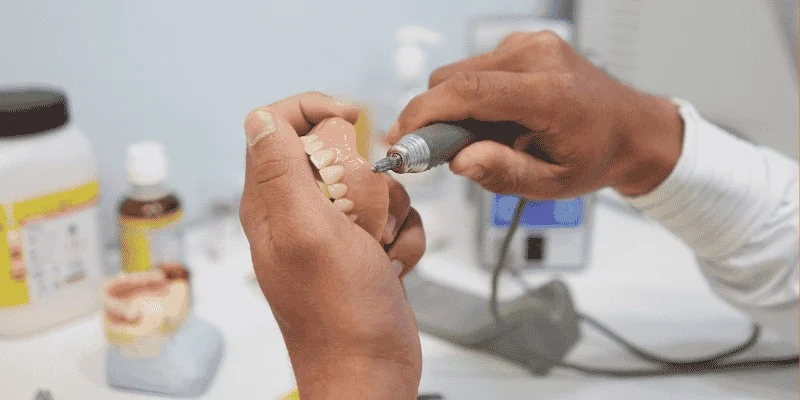
A denture reline updates the fit of your denture to match changes in your gum and bone structure. Your jawbone naturally changes shape over time, which means even well-fitting dentures eventually need adjustment.
Your dentist can perform a soft reline using a pliable material that cushions your gums. This option works well if you have sore spots or tender areas. A hard reline uses rigid acrylic to reshape the denture base for a more permanent fix.
Most people need a denture reline every 1-2 years. You might need one sooner if your denture feels loose or creates gaps between the base and your gums.
Chair-side relines happen in your dentist’s office during a single visit. Lab relines require sending your denture out for a few days but provide more precise results.
Your dentist examines your specific situation to recommend which type works best for your removable dentures.
Replacing Attachments and Denture Maintenance
Worn snap-in denture attachments are the most common reason your denture stops clicking firmly into place. The metal housings that connect your denture to implants wear down from repeated insertion and removal.
Typical attachment replacement schedule:
- Locator attachments: 3-5 years
- Ball attachments: 2-4 years
- Bar attachments: 5-7 years or longer
Your dentist simply unscrews the old attachment and replaces it with a new one. This process usually takes less than an hour.
Clean your attachments daily with a soft denture brush and water. Avoid regular toothpaste since it scratches the components. Remove your denture at night to reduce wear on the attachment system.
Schedule checkups every 6 months so your dentist can spot attachment wear early. Regular professional maintenance prevents your denture from becoming uncomfortably loose.
When to Try Denture Adhesives
Denture adhesives work as a temporary solution while you wait for professional repairs. They should not replace proper adjustments or attachment replacement.
Appropriate times to use adhesive:
- Waiting for a scheduled reline appointment
- Minor fit issues during healing after new dentures
- Extra security during important events
Apply a small amount to clean, dry dentures. Too much adhesive makes removal difficult and creates a messy buildup. Avoid using denture adhesive repeatedly to mask attachment problems since this delays necessary repairs.
Never use adhesives to compensate for severely worn attachments or ill-fitting dentures. This approach damages your denture components and makes professional evaluation harder.
If you need adhesive daily just to keep your denture secure, schedule a denture consultation right away.
Professional Denture Consultation
Your dentist evaluates why your denture slips and determines the best fix. They check attachment wear, examine your gum tissue, measure bone changes, and assess your denture fit.
A thorough examination reveals whether you need attachment replacement, a reline, or complete denture replacement. Sometimes multiple denture problems combine to cause slippage.
Bring a list of specific issues to your appointment. Note when the clicking started, which foods cause problems, and how often your denture pops loose. This information helps your dentist diagnose the issue faster.
Don’t wait until your denture becomes impossible to wear. Early intervention prevents discomfort and protects your implants from damage caused by a loose, rocking denture.
Ask about all your options during the consultation. Some situations benefit from converting to a different attachment system or upgrading to a bar-supported design for better stability.
Implant Options to Enhance Denture Stability
Dental implants provide several attachment methods to keep your dentures secure and comfortable. The right solution depends on your jawbone health, budget, and whether you want removable or permanent teeth.
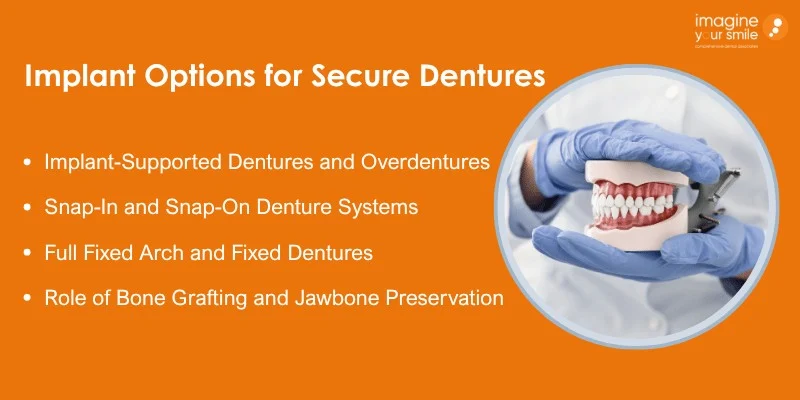
Implant-Supported Dentures and Overdentures
Implant-supported overdentures attach to dental implants in your jaw but you can still remove them for cleaning. These dentures typically use 2-4 implants in your lower jaw or 4-6 implants in your upper jaw.
The implants act as anchors that hold your dentures firmly in place while you eat and talk. You won’t need messy adhesives anymore because the implants provide the stability your dentures need.
Implant-supported dentures offer improved stability compared to traditional dentures that just rest on your gums. Lower dentures especially benefit from this approach since they tend to move around more than upper dentures.
Your dentist places small titanium posts into your jawbone during a surgical procedure. After these implants heal and fuse with your bone over several months, your dentures can attach to them securely.
Snap-In and Snap-On Denture Systems
Snap-in dentures use special attachments that click onto implants like buttons snapping together. This gives you a more stable denture option you can remove for cleaning each day.
The system includes ball attachments, locator attachments, or bar attachments connected to your implants. Your denture has matching sockets that snap onto these connection points.
You’ll feel and hear a click when your snap-on dentures lock into place properly. Most people find this design reduces reliance on adhesives and makes daily life more predictable.
These implant dentures stay secure during normal activities but you can pop them out when needed. The snap mechanism is strong enough to hold during eating but easy enough for you to remove at night.
Full Fixed Arch and Fixed Dentures
Full fixed arch solutions permanently attach to your implants and only your dentist can remove them. This option uses 4-6 implants per arch to support a complete set of replacement teeth.
Fixed dentures feel and function more like natural teeth than removable options. You brush and care for them just like regular teeth without taking them out.
TheAll-on-4 or All-on-6 approaches are common fixed arch treatments that provide a complete set of upper or lower teeth. Your new teeth attach to a framework secured by the implants.
These permanent solutions prevent the denture movement that causes clicking or slipping. You won’t experience any shifting during meals or conversations because the teeth are screwed directly into the implants.
Role of Bone Grafting and Jawbone Preservation
Your jawbone needs enough height and width to support dental implants properly. Bone grafting adds material to your jaw when you don’t have sufficient bone for implant placement.
Years of wearing traditional dentures often causes bone loss in your jaw. This happens because dentures don’t stimulate your bone the way natural teeth or implants do.
Bone grafting procedures rebuild lost bone structure before or during implant surgery. Your dentist may use your own bone, donor bone, or synthetic materials to strengthen weak areas.
Implants themselves help with bone preservation once they’re in place. They transfer chewing forces into your jawbone just like tooth roots, which keeps your bone healthy and prevents further shrinkage.
The healing period after bone grafting typically takes 3-6 months before implants can be placed. This extra step ensures your implants and dentures will have a solid foundation for long-term success.