You may not notice it, but you could grind your teeth for hours while you sleep. This habit, called bruxism, puts strong pressure on your teeth and dental work.
Crowns, veneers, fillings, and even implants can crack, loosen, or wear down over time.
Teeth grinding at night destroys restorations by placing repeated, heavy force on them, but a prosthodontist can protect your oral health with custom devices and precise treatment that general care often does not provide.
When you clench and grind, you create more force than normal chewing. That stress weakens dental restorations and strains your jaw.
You deserve dental work that lasts. When you understand the connection between teeth grinding and dental restorations and how a prosthodontist approaches diagnosis and treatment differently, you can take steps to protect your teeth and your investment.
Key Takeaways
- Nighttime teeth grinding places heavy force on teeth and dental restorations.
- Early signs include worn teeth, jaw pain, and damaged dental work.
- A prosthodontist uses custom treatment to protect and restore your smile.
Table of Content
- How Nighttime Grinding Harms Your Teeth and Dental Work
- Detecting the Warning Signs of Bruxism and Restoration Damage
- Root Causes: Why Do People Grind Their Teeth at Night?
- Prosthodontist Approach: Diagnosis, Treatment, and Restoration
- Prevention and Home Strategies to Protect Your Smile
- Costs and Insurance Considerations for Bruxism Care
- Frequently Asked Questions
How Nighttime Grinding Harms Your Teeth and Dental Work
When you grind or clench in your sleep, you place extreme force on your teeth and any dental work in your mouth.
That repeated pressure can lead to cracked enamel, loose crowns, and changes in how your bite fits together.

The Forces Behind Bruxism Damage
When you have teeth grinding or bruxism at night, your jaw muscles tighten without control. During sleep, you can clamp down with very high force.
The Sleep Foundation explains that sleep bruxism can involve up to 250 pounds of force. That pressure spreads across a small surface area, which increases stress on enamel and restorations.
You do not feel this force while asleep. That means you do not ease up when it starts to hurt.
Over time, this constant clenching and grinding force leads to:
- Flattened chewing surfaces
- Microcracks in enamel
- Loose dental work
- Sore jaw muscles
Grinding damage builds slowly. You may not notice a problem until you see chipped teeth, feel pain, or break a crown.
Why Restorations Like Crowns and Veneers Are Vulnerable
Dental crowns and veneers restore shape and strength, but they still depend on the tooth underneath. When you grind at night, you stress both the restoration and the natural tooth.
Bruxism can cause real harm to restorations. The long-term effects of teeth grinding include damage to crowns, fillings, and implants. That damage often shows up as cracks, loose margins, or full fractures.
Veneers are thin shells bonded to the front of your teeth. Strong sideways grinding can shear them off.
Crowns cover the entire tooth, but heavy nighttime grinding can:
- Crack porcelain
- Wear down the biting surface
- Loosen cement
- Fracture the root under the crown
If your bite is uneven, the pressure may hit one crown harder than the rest. That single point of contact increases the risk of fractured teeth and failed dental restorations.
Tooth Wear, Fractures, and Bite Changes
Severe tooth wear often starts with small flat spots. Over time, these spots grow wider and deeper.
With ongoing bruxism damage, you may develop:
- Severe tooth wear
- Shorter teeth
- Sharp edges
- Increased tooth sensitivity
As enamel thins, the softer dentin layer shows through. That can make cold drinks or sweets uncomfortable.
Teeth grinding damage can also change how your upper and lower teeth meet. When teeth wear down unevenly, your bite shifts.
A shifted bite places more strain on certain teeth and on your jaw joints. This cycle increases the risk of chipped teeth and fractures. It may also cause morning headaches or jaw pain.
Nighttime vs. Daytime Grinding: What’s Worse?
You can grind during the day or while asleep. Daytime grinding often links to stress, and you may catch yourself doing it.
Nighttime grinding tends to be more harmful. You cannot control it, and you may clench harder because you are unaware of pain signals.
Sleep bruxism episodes happen during light stages of sleep and often go unnoticed. Nighttime grinding can lead to damaged teeth, jaw pain, and other problems. Because you repeat this force night after night, the damage adds up.
A custom night guard creates a barrier between your upper and lower teeth. It does not cure bruxism, but it spreads out pressure and protects dental restorations from direct grinding force.
Detecting the Warning Signs of Bruxism and Restoration Damage
Teeth grinding at night often stays hidden until real damage appears. You can catch problems early by watching for specific symptoms in your teeth, restorations, and jaw.
Early Symptoms You Shouldn’t Ignore
Many signs of bruxism show up when you wake up.
You may feel jaw soreness, tight facial muscles, or dull morning headaches at your temples. Some people notice neck pain or a feeling that their jaw does not open smoothly. These are common bruxism signs.
Your teeth can also send signals. You might feel tooth pain when biting or new tooth sensitivity to cold drinks. Worn enamel can expose inner tooth layers and make hot or sweet foods uncomfortable.
The symptoms and causes of bruxism include flattened or chipped teeth, which often point to grinding at night.
If you grind loudly, your partner may hear it before you notice anything yourself.
Pay attention to small changes. Early action can prevent serious bruxism damage to crowns, veneers, and natural teeth.
Checking for Wear Patterns and Damage
Grinding leaves clear wear patterns on teeth and restorations.
You may see flattened biting edges, small chips, or tiny cracks in porcelain crowns. Veneers can look thinner at the edges. Fillings may loosen or break under heavy pressure.
Look for these signs in the mirror:
- Shorter front teeth
- Rough or sharp edges
- Cracks in ceramic restorations
- Gum recession near worn teeth
A dentist can spot damage you cannot see. During dental checkups, they check for enamel loss, fractured restorations, and muscle tenderness.
The National Institute of Dental and Craniofacial Research explains how dentists diagnose bruxism by examining tooth wear and jaw muscles and may suggest a custom guard to limit further harm.
Early detection protects expensive dental work from repeated stress.
Jaw Pain, TMJ, and Related Discomfort
Grinding does not only damage teeth. It also strains your jaw joints.
Your temporomandibular joint (TMJ) sits just in front of each ear. When you clench at night, you overload this joint and the surrounding muscles. This can lead to jaw pain, clicking sounds, or limited movement.
Common TMJ-related symptoms include:
- Pain when chewing
- A locked or stuck jaw
- Clicking or popping sounds
- Ongoing chronic jaw pain
Severe grinding can lead to TMJ disorders, which affect how your jaw opens and closes. You may also feel pain that seems like an earache but starts in the joint.
If jaw discomfort lasts more than a few days, schedule an exam. Early TMJ treatment can reduce muscle tension and prevent long-term joint damage.
Root Causes: Why Do People Grind Their Teeth at Night?
Teeth grinding at night, also called bruxism, rarely has one single cause. Your habits, your stress level, your bite, and even your breathing during sleep can all play a role.
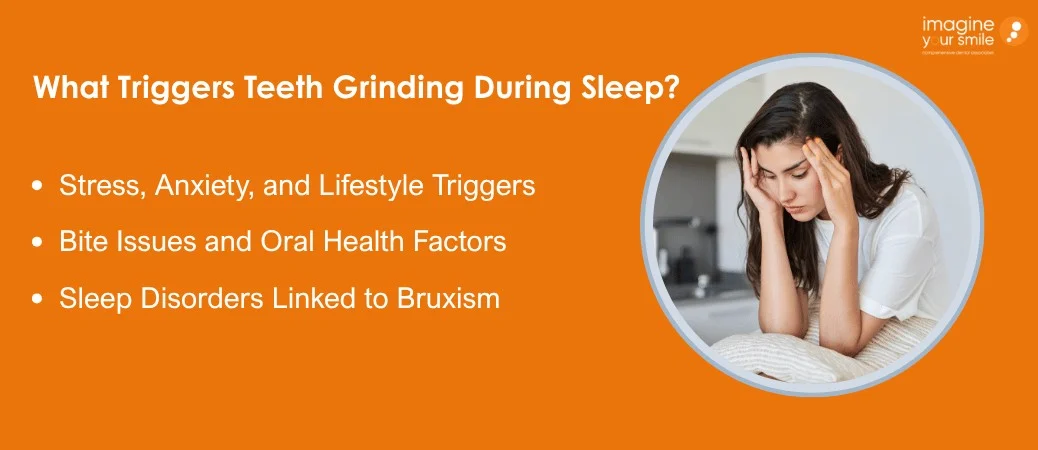
Stress, Anxiety, and Lifestyle Triggers
Stress and anxiety are some of the most common reasons you grind or clench your teeth at night. When your body stays tense during the day, that tension can carry into sleep.
Awake bruxism often links to emotions like anxiety, frustration, and tension. Sleep bruxism may connect to brief sleep arousals.
Your daily habits also matter. Caffeine, alcohol, and tobacco can increase your risk of teeth grinding. Late-night coffee or frequent drinking may make clenching worse.
You can lower your risk by focusing on:
- Stress management techniques such as deep breathing or exercise
- Limiting caffeine, especially in the evening
- Reducing alcohol before bed
- Improving your sleep hygiene
These steps will not cure bruxism on their own, but they can reduce the triggers that fuel it.
Bite Issues and Oral Health Factors
Your bite can affect how your jaw muscles work during sleep. If your teeth do not fit together well, your jaw may shift or tighten in response.
Some people grind because of uneven tooth contact, worn enamel, or missing teeth. Over time, bruxism can flatten or chip teeth and strain the jaw joint.
You may notice:
- Jaw soreness in the morning
- Clicking or popping in the TMJ
- Sensitive or cracked teeth
A prosthodontist may look at your bite closely. In some cases, bite correction or restoring worn teeth helps balance forces and reduce muscle strain.
While a bad bite does not always cause bruxism, uneven forces can make the damage worse.
Sleep Disorders Linked to Bruxism
Teeth grinding at night often links to other sleep disorders. If your breathing stops and starts during sleep, your jaw muscles may activate as your body briefly wakes up.
People with snoring or sleep apnea face a higher risk of bruxism. Sleep problems, stress, alcohol, and certain medicines can all contribute.
You might suspect a sleep issue if you have:
- Loud snoring
- Daytime fatigue
- Morning headaches
- Dry mouth upon waking
In these cases, treating sleep apnea can reduce clenching episodes. Improving sleep hygiene also helps. Go to bed at a regular time, limit screens before sleep, and keep your bedroom dark and quiet.
When you address both breathing and sleep quality, you reduce one of the key drivers of nighttime bruxism.
Prosthodontist Approach: Diagnosis, Treatment, and Restoration
A prosthodontist looks beyond the surface damage. You get a clear diagnosis, a plan to control grinding forces, and restorations designed to last under pressure.
Comprehensive Examination and Diagnosis
When you see a prosthodontist for bruxism, the visit starts with a detailed exam. The goal is to diagnose bruxism and measure how much grinding damage has already occurred.
Your prosthodontist checks for worn enamel, cracked fillings, chipped teeth, loose crowns, and jaw tenderness. They also review your bite and how your upper and lower teeth meet.
Small changes in contact points can overload dental restorations.
X-rays and photos often document bone levels and tooth structure. In complex cases, digital scans help map bite forces.
Planning matters. Chronic clenching can harm both teeth and jaw alignment. A prosthodontist uses this information to guide safe, long-term restorative treatment instead of quick fixes.
If you need specialty care, you can find a prosthodontist through professional organizations or referrals from your general dentist.
Custom Night Guards and Occlusal Splints
Most bruxism treatment starts with protection. A custom night guard or occlusal splint creates a barrier between your teeth while you sleep.
Unlike store-bought night guards, custom night guards fit your exact bite. Your prosthodontist takes impressions or digital scans to design a custom night guard that spreads pressure evenly.
This reduces stress on crowns, veneers, and natural teeth.
A night guard does not repair existing damage. It prevents more wear and lowers the risk of cracked dental restorations. Many patients with sleep bruxism benefit from this step.
You may need adjustments over time. Grinding patterns change, and your appliance must match your current bite to stay effective.
Modern Restorative Options: Crowns, Veneers, Bonding
Once you control the grinding forces, your prosthodontist focuses on repair. The choice depends on how much tooth structure remains.
Dental bonding uses composite resin to rebuild small worn areas or chipped edges. It is conservative and easier to repair if it fractures.
Veneers cover the front surface of teeth. They improve shape and protect enamel, but they must be handled carefully in cases of bruxism.
Dental crowns cover the entire tooth. They work well when teeth are severely broken down, but strong bite forces can shorten their lifespan.
Planning plays a key role in durability, especially when nighttime grinding can undo fragile work.
Your prosthodontist designs each dental restoration with your grinding pattern in mind. Material choice and bite design both affect success.
Full-Mouth Rehabilitation for Severe Damage
If grinding has destroyed many teeth, you may need full-mouth rehabilitation. This is also called full-mouth reconstruction.
Your prosthodontist rebuilds your bite at a stable vertical height. Treatment may include crowns, bridges, implant-supported teeth, or removable prosthetics.
The goal is to spread forces across the entire arch instead of overloading a few teeth.
Cases with heavy wear require careful staging. Studies on reconstruction in bruxism patients show that strong bite forces can shorten the life of some materials, so treatment must balance strength and repair options, as reviewed in research on the impact of bruxism on reconstruction published in Nature.
You will also continue using custom night guards after treatment. Long-term follow-up visits help protect your new restorations and manage ongoing grinding forces.

Prevention and Home Strategies to Protect Your Smile
You can lower the damage from nighttime grinding by changing daily habits, using simple home tools, and keeping up with dental visits.
Small steps done often can protect your smile and extend the life of your restorations.
Lifestyle Adjustments and Stress Relief
Stress plays a major role in sleep bruxism. If you carry tension into bed, your jaw muscles often stay tight all night.
Use stress management tools every day. Try short breathing exercises, light stretching, or guided relaxation before bed. Meditation, calm music, and warm showers can also relax your jaw muscles.
Good sleep hygiene matters just as much. Go to bed at the same time each night. Keep your room dark and cool.
Avoid caffeine and alcohol in the evening since they can worsen grinding, as explained in this guide on lifestyle and home remedies for bruxism.
If anxiety drives your grinding, speak with a medical or mental health professional. Treating the root cause often reduces clenching and protects your dental work.
At-Home Techniques for Minimizing Damage
A custom night guard remains one of the most effective tools to protect your smile. It creates a barrier between your upper and lower teeth and helps prevent cracks, fractures, and wear on crowns or veneers.
Avoid over-the-counter guards if you have complex restorations. A poorly fitted guard can shift pressure to the wrong teeth.
During the day, check your jaw position. Your lips should close, but your teeth should not touch. This simple habit reduces muscle strain.
You can also:
- Stop chewing gum.
- Limit hard foods like ice.
- Avoid biting pens or fingernails.
- Use warm compresses for sore jaw muscles.
The Role of Regular Dental Checkups
Regular dental checkups help catch damage early. Your dentist looks for flattened teeth, chipped restorations, and jaw tenderness during exams.
Early signs of bruxism often show up before you feel pain. During routine visits, dentists check for changes linked to teeth grinding and bruxism diagnosis.
If you already have crowns, bridges, implants, or dentures, exams matter even more. Your prosthodontist can adjust your bite, refine your nightguards, and monitor pressure points before serious damage occurs.
Staying consistent with visits protects your oral health and lowers repair costs over time.
Costs and Insurance Considerations for Bruxism Care
You need clear numbers before you commit to bruxism treatment. Costs depend on the type of appliance you need and how much damage your grinding has already caused.

Average Expenses for Appliances and Restorations
A custom night guard from a prosthodontist often costs between $300 and $1,500. The fee depends on the material, lab work, and how complex your bite is.
Basic over‑the‑counter guards cost less, but they do not fit your bite precisely. A poor fit can increase jaw strain and fail to protect existing dental restorations.
If grinding has already damaged your teeth, restorative treatment raises the total. A single crown may cost $900 to $3,500 depending on the material and lab design.
Veneers and other cosmetic dental restorations fall into similar price ranges per tooth. Replacing multiple crowns or veneers can quickly add up to several thousand dollars.
Prosthodontists may recommend stronger materials, such as high‑strength ceramic or metal‑based crowns, if you show heavy grinding patterns. These choices can increase upfront cost but reduce repeat repairs.
Understanding Dental Insurance Coverage
Dental insurance usually helps with part of a custom night guard if your plan defines it as medically necessary. Many plans cover 50% to 80% after your deductible.
Coverage rules vary. Some plans limit replacement of a dental crown to every five to seven years, even if bruxism caused the damage.
Veneers often fall under cosmetic care, so insurance may not pay for them at all. If grinding breaks a veneer, you may face the full replacement cost.
Ask your provider three clear questions:
- Does my plan cover a custom night guard?
- How often will it replace crowns?
- Are there annual maximum limits?
Most plans cap yearly benefits at $1,000 to $2,000. Major restorative treatment can exceed that amount quickly.
Navigating Payment and Financing Options
If your insurance only covers part of the cost, you still have options. Many prosthodontists offer in‑office payment plans for larger restorative treatment cases.
Third‑party financing companies also allow you to split payments over 6 to 24 months. Interest rates vary, so review the terms before you sign.
You can also use:
- Health savings accounts (HSA)
- Flexible spending accounts (FSA)
- Care credit lines for dental restorations
If you have extensive damage, ask for a phased treatment plan. Your prosthodontist can stabilize your bite with a night guard first, then replace damaged dental crowns in stages.
This step‑by‑step approach protects your teeth now while spreading out costs in a manageable way.
Frequently Asked Questions
Nighttime teeth grinding can be hard to spot, yet it can wear down enamel, crack teeth, and break dental work.
You can protect your smile when you understand the warning signs, repair options, costs, and the role of a prosthodontist.
How can I tell if I’m grinding my teeth at night if I don’t wake up?
You may not hear or feel it, but your body often gives clues.
You might wake up with a dull headache, jaw soreness, or tight facial muscles. Tooth sensitivity and ear pain can also point to grinding.
Your dentist may see flat or shiny spots on your teeth. Small cracks, chipped edges, and gum recession can also signal damage. In some cases, a partner hears the grinding sound while you sleep.
Can worn or chipped teeth from grinding be repaired, and what options last the longest?
Yes, you can repair most damage from grinding. The right option depends on how much tooth structure you have lost.
For minor wear or small chips, your dentist may use bonding. Bonding is less invasive but may not last as long under heavy grinding forces.
For moderate to severe damage, crowns often provide stronger coverage. Grinding can create high pressure during sleep, which makes protection important.
When you pair crowns with a custom night guard, they usually last longer than untreated teeth under constant stress.
Why do crowns, veneers, and fillings fail more often in people who grind their teeth?
Grinding places repeated force on your teeth without the cushion of food between them.
Some reports show that sleep grinding can reach up to 250 pounds of force per square inch, which explains why it can damage even strong materials.
This force can loosen crowns, crack porcelain, and break fillings. Veneers may chip at the edges. Over time, cement can weaken, and the restoration may come off.
If your bite is not balanced, certain teeth may take more pressure. That uneven load increases the risk of failure.
What do prosthodontists do differently to protect restorations for patients with bruxism?
A prosthodontist focuses on complex restorative care. They assess your bite, jaw joints, and muscle patterns before placing new restorations.
They often design crowns and bridges with materials that handle higher stress. They also adjust your bite so forces spread more evenly across your teeth.
Many prosthodontists provide a custom splint, also called a night guard, to protect your teeth and restorations.
How much does it typically cost to fix teeth damaged by grinding, and what factors change the price?
Costs vary based on the extent of damage and the type of repair.
Bonding for small chips usually costs less than crowns. A single crown costs more because it requires lab work and multiple visits. If you need several crowns, root canal treatment, or implant therapy, your total cost increases.
Location, material choice, and whether you need a custom night guard also affect the price. Insurance may cover part of the treatment, especially if damage affects function.
What are the best ways to reduce or stop nighttime grinding, including natural approaches and night guards?
You can reduce grinding, even if you cannot fully stop it.
Stress often plays a role, so relaxation methods like deep breathing, stretching, and regular sleep routines may help. Limiting caffeine and alcohol before bed can also reduce muscle activity at night.
A dentist-made night guard remains one of the most effective tools. It creates a barrier between your upper and lower teeth and absorbs much of the force.
Early treatment with a custom device can help prevent cracks and broken dental work.
When you combine stress control, bite evaluation, and a well-fitted guard, you give your teeth and restorations stronger protection.